Tunisia Phosphate Project Valued at $732m in Study
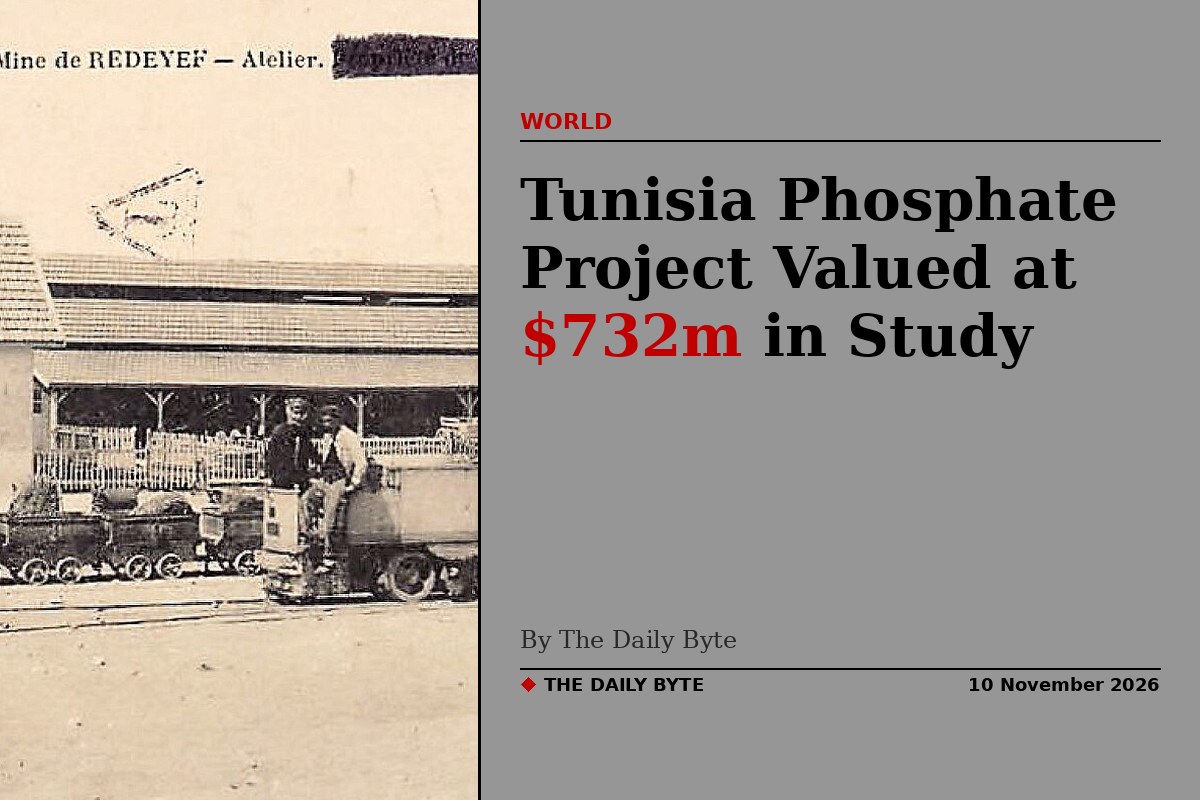
Australian-listed PhosCo Ltd has unveiled an updated scoping study for its Gasaat phosphate project in Tunisia, valuing the development at US$732 million and projecting a 52% internal rate of return.
The study, published on Monday 9 November, puts the project's after-tax net present value at US$732 million and forecasts total revenue of US$10 billion over its life. It projects a payback period of just 20 months from the start of commercial production.
What the study found
The Gasaat project, in Tunisia's northern phosphate basin, is planned as an open-pit mine producing 1.4 million tonnes a year of phosphate concentrate. Development capital is estimated at US$199 million, and the project is expected to run for 49 years, producing 134 million tonnes of ore at 19.9% P2O5, the measure of phosphate content.
The study outlines production of both premium concentrate, at about 33% P2O5, and standard grade concentrate at about 30% P2O5, aimed at meeting global demand for new fertiliser sources. PhosCo said the results were significantly stronger than its previous study in 2022.
Government and EBRD backing
PhosCo said the project had secured backing from the Tunisian Government and the European Bank for Reconstruction and Development (EBRD). The support secured the Gasaat project solely for PhosCo and was accompanied by a memorandum of understanding with the Tunisian Ministry of Industry, Mines and Energy and the EBRD.
The agreement covers collaboration on developing the northern phosphate basin as a hub, as well as work on processing technology. The EBRD is also involved in financing the project's feasibility study and in developing a financing package.
Communities to share in the project
Local communities are to hold a 10% participation in the project through community companies, under arrangements agreed with community representatives. PhosCo has said the project is intended to create lasting economic opportunities in the region, including local employment, skills development and business opportunities, alongside its contribution to Tunisia's phosphate industry.
Next steps for Gasaat
PhosCo will now move to a preliminary feasibility study and then a bankable feasibility study, the detailed engineering and financial work needed before a final investment decision. The company has also signed a strategic partnership with Tunisian engineering firm STUDI, including a A$1.4 million investment, and is working with the CrossBoundary Group to attract up to US$100 million for the project, supported by a US government funding programme.
Tunisia is one of the world's established phosphate producers, and Gasaat is presented by PhosCo as the anchor for a new phosphate hub in the country's north. The study's findings will now be tested in the feasibility work that follows.


