Tunisia rights group counts 30 prison deaths in hot summer
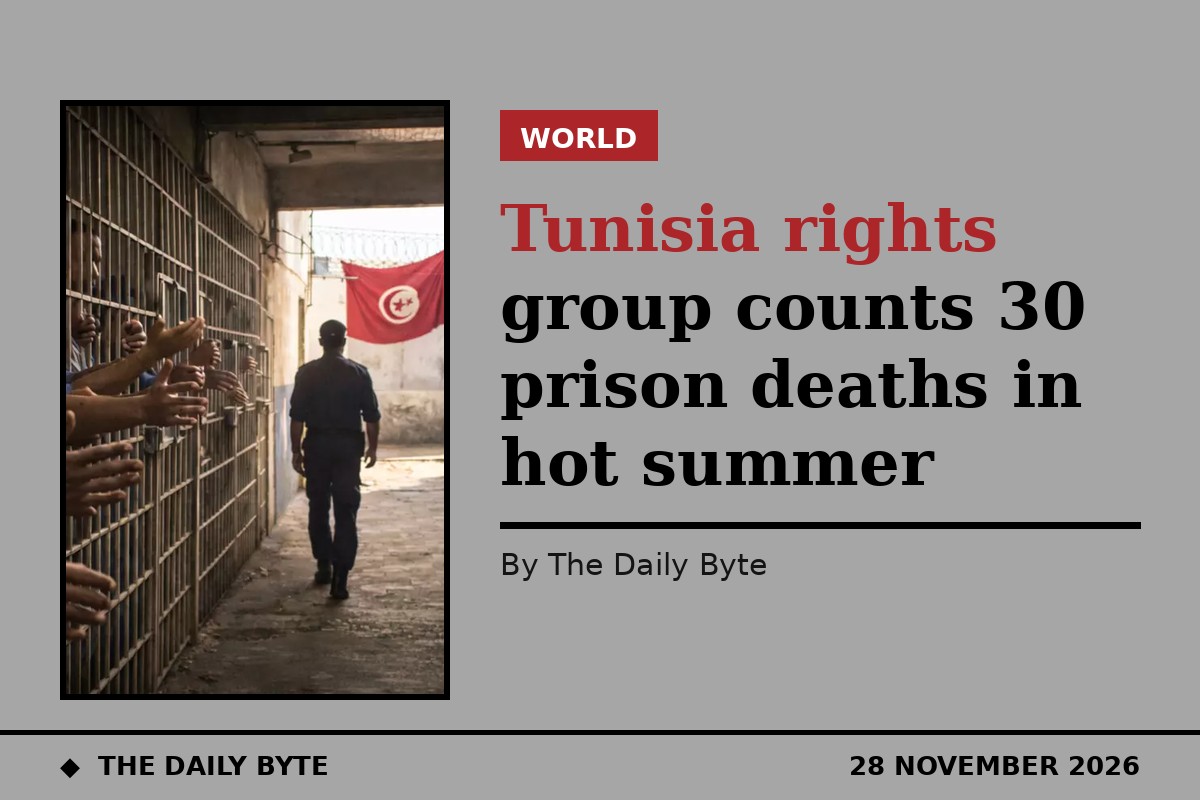
Tunisia's leading human rights group says 30 inmates have died in the country's prisons since the start of a summer that became the hottest on record, and it has formally demanded that the authorities explain the circumstances of each death.
The Tunisian League for the Defence of Human Rights said on Friday 27 November that conditions inside the facilities are inhumane and catastrophic. Its president, Bassem Trifi, pointed to overcrowding and inadequate healthcare as the central problems, and said the organisation was formally asking the authorities to account for all 30 deaths.
A record-hot summer
Tunisia's summer in 2026 was the hottest recorded since 1950, according to the country's weather authority. Temperatures reached 49.7 degrees Celsius in Kairouan in the middle of July, and the season was marked by repeated heatwaves, water shortages and power cuts across the country.
The league's tally has grown in recent weeks. In September, the organisation said it had recorded 23 deaths in detention over the summer, drawing on information from doctors, relatives and lawyers. That figure has now risen to 30, and the group says the authorities have yet to publish their own figures for prison deaths over the summer.
Amnesty International, which called on 12 November for independent investigations, said the league had confirmed at least 23 prisoner deaths between July and August, and that Amnesty itself had independently verified 12 cases. Deaths were reported across several facilities, including Mornaguia, Gafsa, Gabes, Kairouan and Sfax.
The government's response
Justice Minister Leila Jaffel told parliament last week that some prisons in Tunisia were indeed overcrowded. She also confirmed there had been some deaths among prisoners, but said all those who died had suffered from chronic illnesses and had died in hospitals rather than inside prison facilities.
Trifi rejected that distinction. It does not matter whether a prisoner died in an ambulance or in a hospital, he said, because all of the dead were in the legal custody of the justice ministry and the prison authorities. The league wants the circumstances of each death clarified, not a general assurance about where the deaths occurred.
The scale of overcrowding is part of the concern. Amnesty reported that Tunisia's prison system was running at about 194 percent of capacity in 2025, according to Prison Insider, leaving inmates facing acute water shortages and delayed medical care during the extreme heat.
One case among many
Amnesty highlighted the case of Alaa Eddine Abdelkader, a 24-year-old university student held in pre-trial detention at Mornaguia Prison, who died on 28 August after about four months in detention. Amnesty said it had documented 12 cases in which prison management failed to tell families promptly that a relative was seriously ill or had died, with families learning the news only days or weeks later during visits, or when they tried to deposit money in a dead relative's prison account.
The league has also reported repeated denials of access to prisons since November 2025, limiting its ability to monitor conditions and investigate complaints. Its branches in Sousse and Gafsa were prevented from visiting prisons in July and September.
The rights group has not said what the specific causes of the 30 deaths were, and the authorities have yet to respond publicly to its latest demand for clarification. For the families waiting for answers, the question is now whether the government will publish its own figures and open the prisons to independent scrutiny, or whether the death toll will keep rising without a full public account.


