TV licence fee may extend to Netflix and streaming
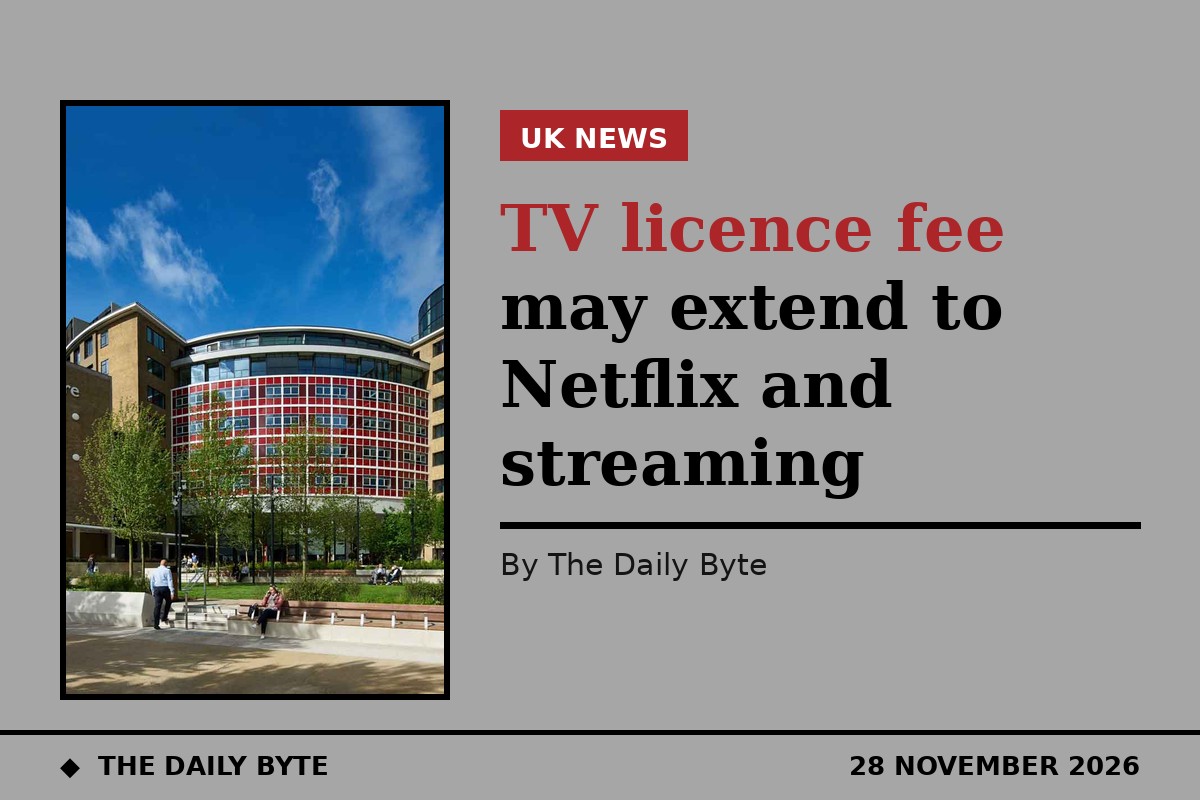
People who only watch streaming services such as Netflix could soon need a TV licence, under options the government is considering to fund the BBC. A white paper on the BBC's future is expected before the end of this year, and no final decision has been taken.
Research by Ampere Analysis found extending the licence fee to on-demand streaming could raise up to £1.6 billion extra a year for the BBC by 2032. The government is understood to believe the current licence scheme is outdated and no longer fit for purpose.
What would change for viewers
At present, a household needs a TV licence, costing £180 a year, to watch live television or use BBC iPlayer. Households that only watch on-demand services such as Netflix, Disney+ or Amazon Prime Video do not need one.
Under the option, any household using covered streaming platforms would need a valid licence, even if it watches no live broadcast channels, closing a gap that has grown as viewing has shifted online.
Funding pressure on the BBC
The BBC lost 539,000 licence-fee payers last year, leaving 23.3 million, although fee income rose to £3.9 billion after the charge increased with inflation. Ampere said the extra £1.6 billion would need near-universal payment and tough enforcement; with current enforcement the gain would be closer to £1 billion.
An alternative would see the fee fall to £150 in 2028, paired with stronger enforcement.
More than 19,500 people have signed a petition opposing the extension. The Department for Culture, Media and Sport said the government was keeping an open mind on future BBC funding and that no final decisions had been taken.


