UAE reopens beaches after tanker oil spill
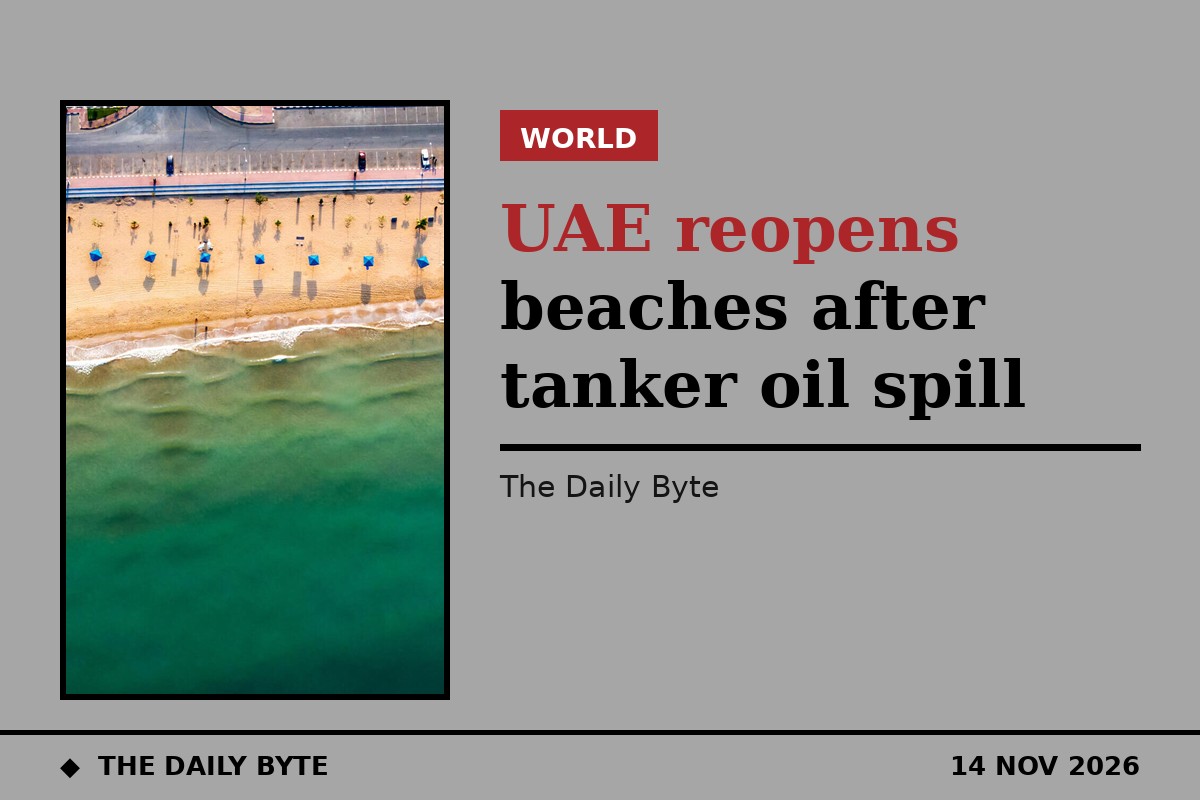
Authorities in the United Arab Emirates' Ras Al Khaimah and Sharjah emirates have reopened several beaches after closures caused by an oil spill from a tanker damaged in a suspected attack in the Gulf last month. Sharjah's media office said the beaches had reopened after authorities brought the pollution under control, Reuters reported on 12 November.
"The relevant authorities confirm that the emirate's beaches and marine environment are safe, allowing the public to visit and enjoy various marine activities safely," Sharjah's media office said. The spill had spread along parts of the UAE's northern coastline and prompted authorities to close beaches in Ras Al Khaimah, Sharjah and Umm Al Quwain amid concerns over environmental contamination.
Clean-up continues on the northern coast
Hundreds of workers are still removing oil from the northern coastline, even as beaches reopen, Arabian Post reported on 13 November. Sharjah and Ras Al Khaimah announced the reopening of several beaches on Thursday after containment and cleaning operations, marking a significant easing of the restrictions imposed when oil reached coastal areas. Environmental monitoring and remediation remain necessary where contamination persists.
The pollution came from the tanker Gem No. 2, which was damaged in an incident in UAE territorial waters in October. Authorities said on 30 October that leakage from the vessel had stopped and no fresh discharge had been detected, while technical teams continued to assess the ship's condition. Satellite observations at the end of October showed the slick concentrated off Umm Al Quwain, with pollution extending towards Ras Al Khaimah, Ajman and Sharjah.
The Ministry of Climate Change and Environment said its response involved coastal surveys, field cleaning, mechanical oil recovery and controlled use of chemical dispersants under approved technical guidelines. The work is being coordinated with the Ministry of Energy and Infrastructure, the National Emergency Crisis and Disaster Management Authority and local agencies.
Drinking water and food safety checks
The spill raised concerns about desalination facilities, a crucial source of drinking water in the Gulf, although no shutdowns have been reported. Etihad Water and Electricity said it had strengthened checks on seawater entering desalination facilities, alongside testing of treated and distributed drinking water, and said these precautions would not interrupt supplies. The environment ministry said fish and other food products available in local markets remained safe for consumption.
The spill has underlined the environmental risks from attacks on commercial shipping in the Gulf since the US-Israeli war on Iran began in February. October saw the highest number of attacks on commercial vessels in the Strait of Hormuz and surrounding waters since the conflict began, according to data compiled by the Washington Institute for Near East Policy.
In a separate incident, British maritime security firm Ambrey said a merchant vessel had been struck by an unknown projectile about 14 nautical miles north-west of Ras Al Khaimah the previous day. The strike caused a fire in the vessel's engine room, but no injuries or pollution were reported at the time, and its crew was evacuated safely. Shipping through the strait, a vital route for global oil and gas supplies, remains disrupted as uncertainty persists over efforts to reach a US-Iran agreement to end the war and restore maritime traffic.


