UBS tips Persimmon and Barratt Redrow shares for 2027
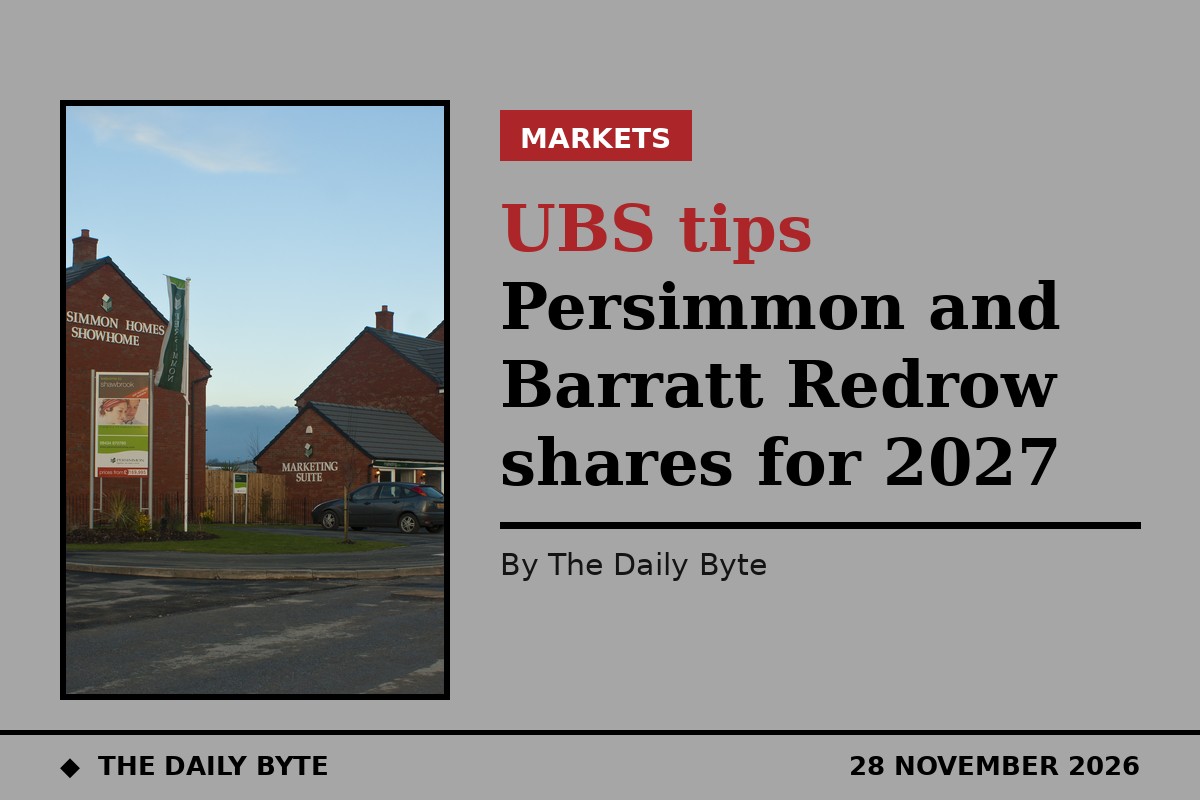
UBS has named Persimmon its top pick among UK housebuilders for 2027 and backed Barratt Redrow to rise by almost a third, while warning that the sector faces another subdued year for sales volumes and house prices.
The Swiss bank said Persimmon, which yields 4.9%, remains its preferred stock in the sector alongside a Buy stance on Barratt Redrow. It argued that both companies offered either operational resilience or scope for self-help, at a time when earnings delivery and returns will matter more than any broad re-rating of the sector.
UBS has a price target of 1,485p on Persimmon, against a share price of 1,254p at the time of the note, after raising the target from 1,325p. The York-based builder recently reported a 3% year-on-year improvement in its private forward sales position to £2.15 billion. UBS pointed to its record of resilient trading, strong planning and land execution, and exposure to more affordable northern markets.
Barratt Redrow is backed to move 29% above its Monday price to reach 395p, which would return the shares to where they were in February. UBS said the merged builder offered significant earnings recovery potential through outlet expansion and margin improvement, and that a stronger self-help focus by a new management team should help rebuild operational credibility.
Flat year expected for volumes and prices
The bank's report assumes that sector volumes and house prices will be broadly flat in 2027, with 10-year gilt yields estimated to be still around 5% at the year-end. That outlook leaves little room for the sector as a whole to re-rate, so UBS is backing individual companies it believes can improve earnings and returns from their own actions.
Taylor Wimpey has been upgraded to Neutral from Sell after a 31% slide in its shares in the year to this week. UBS believes the valuation is now close to trough levels after a period of underperformance caused by persistent margin pressure and slow progress on phasing out legacy underperforming sites. Its price target was nudged up to 76p from 75p.
Bellway remains the bank's Sell in the sector, with a price target of 1,960p against a share price of £21.96. UBS pointed to weak trading so far this year, the sector's tightest owned land bank for detailed planning permission at 2.8 years of supply, and below-average returns by 2030.
Vistry Group, the sixth housebuilder in UBS's coverage, stays at Neutral, with its price target cut to 235p from 270p after sharp downgrades to profit forecasts. Its shares have fallen by about 69% in 2026, and UBS said the risk-reward was skewed towards progress on debt refinancing. Berkeley Group is unchanged at Neutral with a 3,740p target, as challenges in the London housing market temper the potential upside from a significant capital unwind.
The market value of the five builders UBS tracks most closely is down by about 18% this year, with Berkeley and Persimmon down by around 10% and Bellway and Barratt Redrow down by some 20%. That fall reflects a year in which high borrowing costs and stretched affordability have kept a lid on demand.
Your First Home scheme no quick fix
The government's Your First Home scheme, set up to support 70,000 households over five years, has given a boost to sentiment around the sector, but UBS does not expect its impact to be transformational in the near term. Funding constraints and tight affordability mean the bank estimates only a 1% or 2% incremental volume benefit in 2028, with a further 1% in 2029.
UBS also cautioned that optimism about the scheme has made the market more forgiving of trading disappointments or sharper volume declines, which has limited the upside for Persimmon in particular. Once the scheme moves into its delivery phase in 2027, the bank expects share price performance to line up more closely with earnings and returns.
For investors, the message is selective rather than sweeping: two builders are tipped to rise by 20% or more, while the rest of the sector is expected to tread water. Analyst price targets are not guarantees, and share prices can fall as well as rise, so anyone considering acting on the note should weigh the risks and, if unsure, seek advice from a qualified adviser.


