UCU academic boycott hits Goldsmiths over job cuts
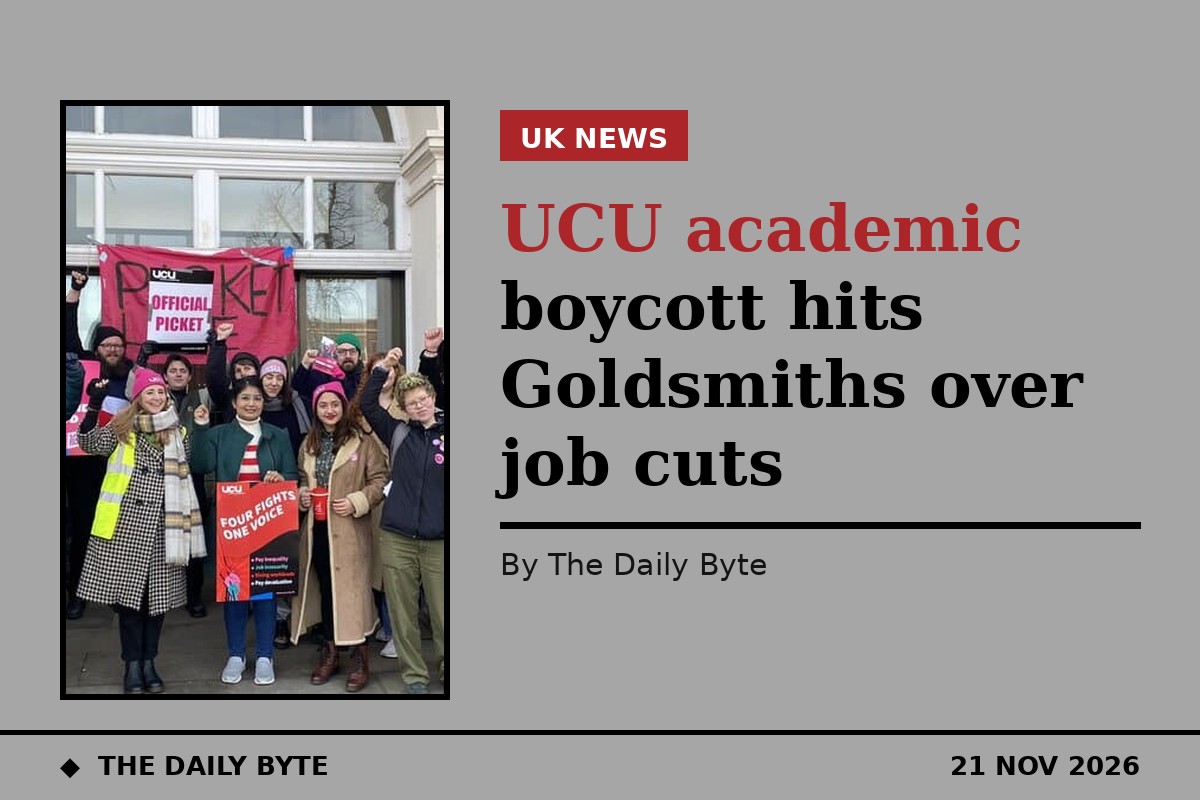
The University and College Union has called a global academic boycott of Goldsmiths, University of London, in the latest escalation of a long-running dispute over job cuts at the New Cross institution.
The union announced the boycott on 19 November. It is the third time in four years that UCU has taken the step, following similar moves in 2022 and 2024, and it comes as staff continue what is thought to be the longest-running strike in university history.
What the boycott asks academics to do
Under the boycott, UCU members are asked not to apply for jobs at Goldsmiths, and not to organise conferences, lectures or other collaborative activities with the university. Visiting professorships, external examiner roles and research projects involving Goldsmiths are also ruled out.
UCU confirmed the boycott in an update on 20 November, calling on members, university workers, trade unionists and supporters worldwide to observe it. The list also asks academics not to give lectures or lead workshops, not to write for journals edited or produced at Goldsmiths, and not to collaborate on new research or on teaching for Goldsmiths programmes, including activities hosted off site.
The cuts behind the dispute
The action is a response to plans to make 22 million pounds worth of cuts by the end of the next academic year, the third academic restructure at the university in five years. UCU says 20 million pounds of the cuts are due to come from staffing, representing a quarter of Goldsmiths' overall staff budget of 83 million pounds, according to its latest accounts.
If the staffing cuts were split proportionately across the workforce, the union said, it would mean around a quarter of the university's 1,230 staff facing the axe. UCU is calling for a halt to compulsory redundancies.
Staff have already taken sustained industrial action. Members voted for action in April, with 81 per cent backing strike action and 92 per cent backing action short of a strike, on a turnout of 63 per cent. A marking and assessment boycott began on 27 April, followed by indefinite strike action from 8 June. Last month the strike passed the 129 days of walkouts carried out by union members at the University of Brighton in 2023.
Two sides of the argument
Goldsmiths' new vice-chancellor, Joanna Newman, told Times Higher Education last month that the cuts were needed after the university's total income dropped by 16 per cent, with student numbers falling by a third since the pandemic.
A Goldsmiths spokesperson said the boycott was counterproductive, risking damage to the university's reputation in the UK and internationally and undermining confidence in the institution. The spokesperson added that the financial challenges facing Goldsmiths were real and that the university could not spend money it did not have, and said UCU leaders had failed to offer credible proposals addressing declining student recruitment, rising costs and the institution's long-term future.
The university said its focus was on securing the future of Goldsmiths, protecting students and sustaining an institution that plays an important role in the local community and UK culture, and pointed to an enhanced voluntary severance scheme intended to reduce the need for compulsory redundancies.
UCU contests the need for cuts on this scale. The union has called on the university to open the books, arguing that the latest publicly available accounts do not show a deficit.
General secretary Jo Grady said cuts of this scale would leave Goldsmiths a shell of its current self and cause irreparable damage to current and future students as well as the local community. She said it was staggering that Goldsmiths was still refusing to back down even with members undertaking a marking boycott and indefinite strike action, and that the decision to implement an academic boycott was never taken lightly.
What happens next
Grady said the union stood prepared to escalate further, but that there was still time for Professor Newman to step back and negotiate. The boycott adds international pressure to a dispute that has already disrupted teaching, marking and graduation for students, with no resolution yet in sight.