Uganda bans gatherings in 34 districts over Ebola
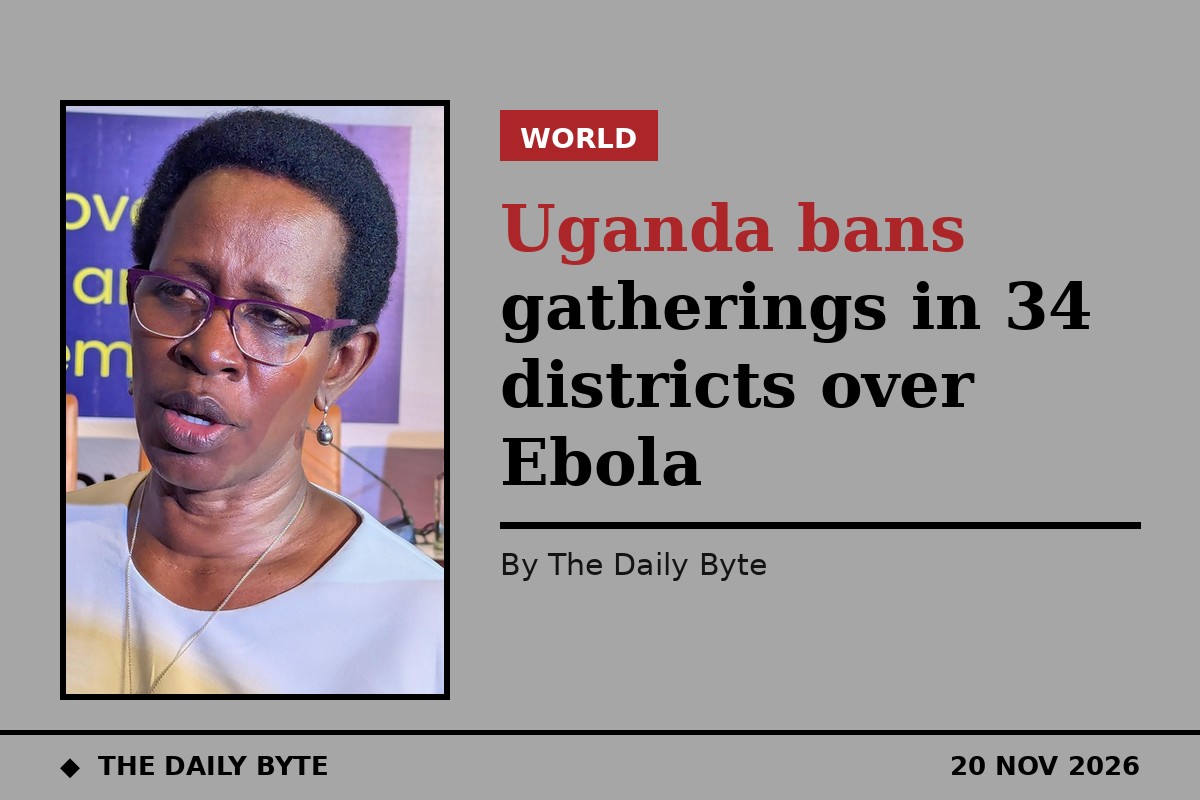
Uganda has suspended concerts, festivals and political rallies in 34 high-risk border districts and tightened controls on travel from the Democratic Republic of Congo, as it tries to stop Ebola reaching the country from a large outbreak next door.
The measures were announced by the Health Ministry on Thursday, 19 November, and took immediate effect. They were adopted by the National Task Force on Epidemic Preparedness and Response, the ministry's Permanent Secretary, Dr Diana Atwine, said in a statement.
No concert, festival, rally or similar event may now be held in the designated districts without written clearance from the ministry. The ban covers districts along the border with the DRC, where officials say people continue to cross through unofficial crossing points, raising the risk that the virus could be carried into Ugandan communities.
Quarantine and tighter border controls
Ugandans returning from the DRC must undergo a mandatory health risk assessment, followed by 21 days of quarantine or monitored self-isolation. People who cross the border illegally, and anyone who helps them do so, face prosecution or other penalties under the law.
Humanitarian workers travelling from the DRC must first obtain clearance from the Director General of Health Services, and the transfer of the bodies of dead people into or out of Uganda now also requires clearance from the same office. All new arrivals and people relocating into the high-risk districts must be reported immediately to their local council chairpersons.
Schools are also affected. Day scholars may no longer travel between the DRC and Uganda in the 34 districts, and boarding students who may have been exposed to Ebola must complete 21 days of quarantine in designated facilities before returning to school. Hotels and other accommodation must keep accurate guest registers, check visitors against valid identification and make the information available to the authorities. Schools, health facilities, transport terminals, places of worship, hotels and other public places must provide handwashing facilities, while radio stations in the border districts have been told to dedicate at least two hours a month to Ebola prevention messages.
Screening stepped up at Entebbe airport
Screening has been intensified at Entebbe International Airport for arriving and departing passengers. All air passengers must complete a passenger locator form before boarding so that contact tracers can reach them if a suspected case is identified. Airlines and other transport operators that knowingly carry unauthorised or improperly documented travellers face sanctions.
Dr Atwine reminded the public that Ebola spreads through direct contact with the blood or body fluids of an infected or dead person, or of infected animals. Symptoms can include sudden fever, headache, muscle pain, weakness, vomiting, diarrhoea and unexplained bleeding, and people were urged to report suspected cases to the nearest health facility or call the ministry's toll-free line.
A regional outbreak still growing
The measures come against a major outbreak of Bundibugyo virus disease in the DRC. According to the World Health Organization's regional situation report of 15 November, the DRC had recorded a cumulative 11,432 confirmed cases and 5,593 confirmed deaths, with the disease spread across 68 health zones in eight provinces.
Uganda itself reported 20 confirmed cases and two deaths during the 2026 outbreak, 15 of them imported from the DRC and five secondary infections among contacts. That outbreak was declared over on 27 August after 42 consecutive days without a new confirmed case. Kenya reported nine confirmed cases, including two deaths, by 9 November; its last patient was discharged on 11 November, starting a 42-day countdown towards the outbreak being declared over there.
Uganda has faced Ebola before. A Sudan virus outbreak that began in Mubende district in September 2022 recorded 164 cases and 77 deaths before it was declared over in January 2023, and a further outbreak in January 2025 recorded 14 cases and four deaths before it was declared over in April 2025. The latest measures are designed to make sure the country does not have to fight the disease again.
Sources: Daily Express, Capital FM


