UK Banks Slide as Standard Chartered Falls 5.6%
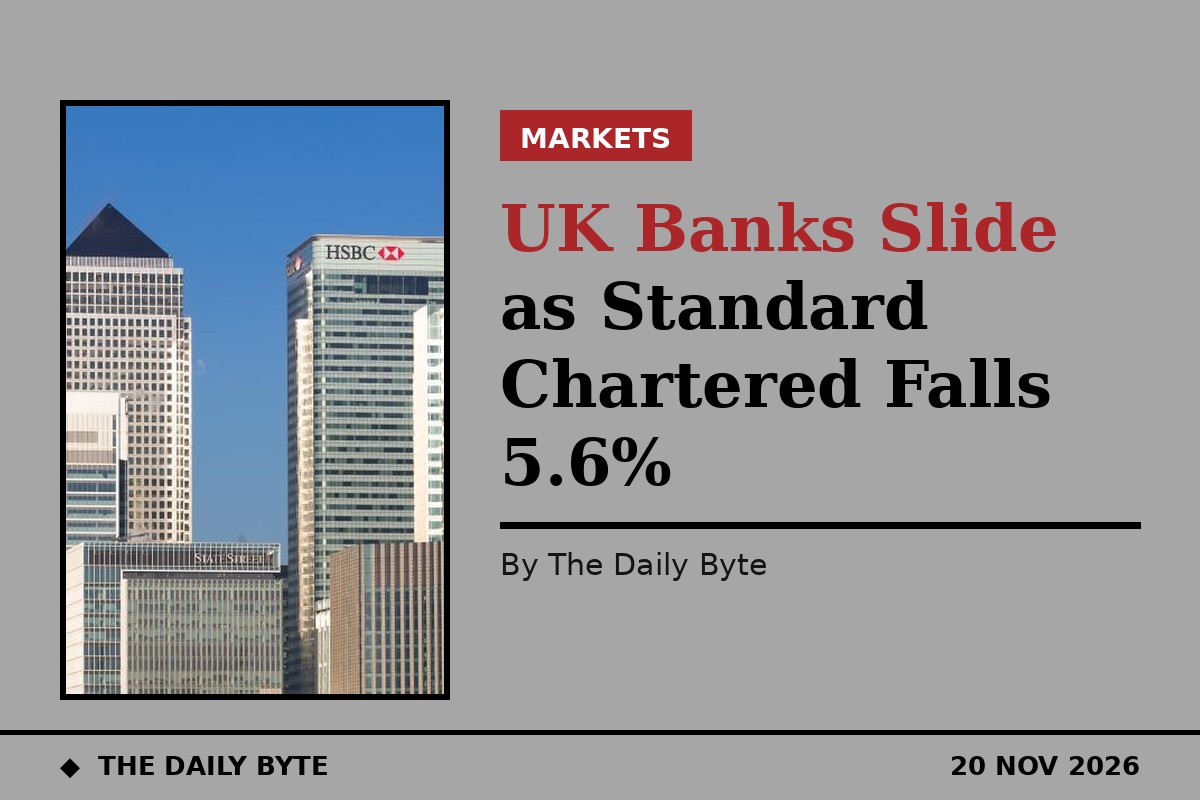
Shares in Britain's biggest banks slid on Friday, with Standard Chartered falling 5.6% and HSBC dropping 3.6%, as lenders became the biggest drag on the FTSE 100 in a broad global sell-off.
Standard Chartered closed 5.59% lower at 19.16 pounds, according to MarketWatch, while Barclays fell 3.3% and NatWest Group slipped 2.5%, according to Reuters. The FTSE 100 ended down 106.34 points, or 1.0%, at 10,346.34, its lowest close in five months, and the mid-cap FTSE 250 fell 2.2% to 23,651.73.
Banks led the London sell-off
The financial sector was the biggest drag on the London market, according to Reuters, as investors pulled back from riskier assets. The selling was part of a global rout driven by worries about the valuations of artificial intelligence companies and expectations that US interest rates will stay higher for longer.
Decliners outnumbered advancers by a ratio of 5.7 to 1 in the London market. The domestically focused FTSE 250 logged its seventh straight day of declines, its longest losing streak since November 2025, after touching a four-month low.
For the week, the FTSE 100 was down 5.1%, its sharpest weekly fall in eight months, according to Alliance News. Banks were caught in the same downdraught as miners and technology-exposed stocks, with little shelter anywhere in the market for lenders whose earnings depend on confidence in the wider economy.
Miners and energy added to the pressure
Precious and industrial metal miners were among the worst-performing sectors, on course for a loss of more than 10% over the week as gold and copper prices fell. Gold was quoted at 3,545.53 dollars an ounce at the London close, down from 3,686.50 dollars on Thursday, according to Alliance News.
Energy shares also weakened as oil prices slipped. Shell dropped 1% and Ithaca Energy fell nearly 5%, with Brent crude down about 1% to 91.88 dollars a barrel, against 92.56 dollars late on Thursday.
Strong retail sales failed to lift the market
The selling came despite better-than-expected news on the British economy. UK retail sales volumes rose 0.7% in October from September, according to the Office for National Statistics, beating expectations of no change. On an annual basis, sales rose 2.3%, up from 0.4% in September.
The statistics office said supermarkets reported stronger demand for long-life products, including tinned goods and UHT milk, after government advice on emergency preparedness, while clothing stores also traded well. Government borrowing came in at 17 billion pounds in October, below forecasts of 18 billion pounds, and consumer confidence rose two points to minus 22.
Defensive shares offered some support. Unilever rose 2.2% to lead the FTSE 100 gainers, while National Grid added 1.1% and GSK rose 0.8%. The pound was little changed, quoted at 1.3098 dollars at the London close, against 1.3105 dollars on Thursday.
Investors will look to Monday's UK composite PMI figures for the next read on the economy, after a week in which strong data did little to stop the selling in bank shares.