UK Black Friday: record £1.3bn online as high street falls
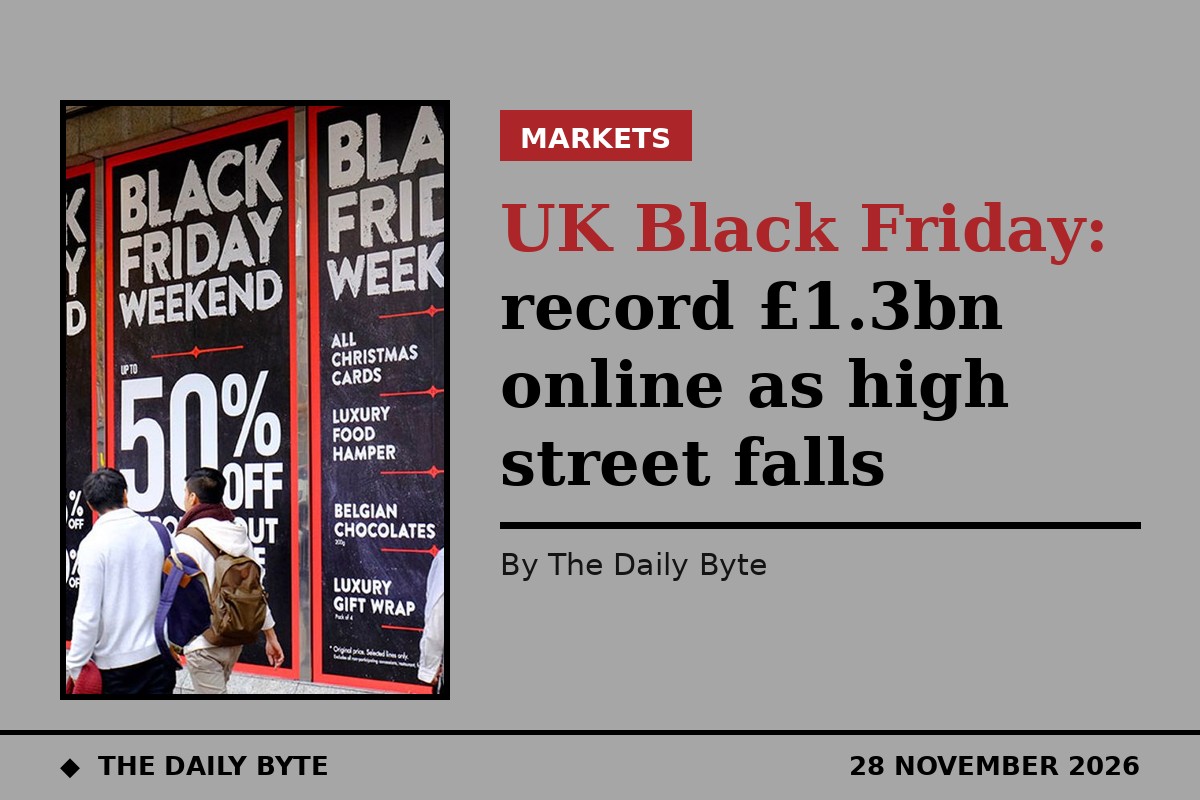
Black Friday 2026 was the biggest online spending day the United Kingdom has ever seen, but the high street did not share in the boom. British shoppers spent 1.3 billion pounds online on Friday 27 November, up 9.1 per cent on last year, according to research from Adobe Digital Insights, while footfall on the high street fell sharply.
Mobile phones drove the online surge, accounting for 786 million pounds of sales, or 62 per cent of the total. Shoppers increasingly turned to artificial intelligence tools such as ChatGPT, Claude and Google Gemini to find deals, with AI's share of traffic to retail sites jumping 163 per cent year on year. Social networks drove 78 per cent more traffic than last year, and natural search rose 13 per cent, while affiliates and paid search both slipped slightly.
Shoppers used the day to upgrade devices and trade up on gifts. Smartwatches were the strongest performing product, up 553 per cent, followed by tablets at 458 per cent, headphones and speakers at 442 per cent and televisions at 426 per cent. Across retail, goods were 18 per cent cheaper on average, with the deepest discounts on apparel at 24 per cent off, televisions at 22 per cent off and electronics at 20 per cent off.
High street footfall falls sharply
The picture on the ground was very different. Black Friday failed to boost the UK high street, which suffered a huge blow this week as Poundland collapsed into administration. Footfall fell 11.4 per cent year on year, according to MRI Software's full-day analysis, with every type of retail destination falling short of last year's levels. High streets were hit hardest, down 14 per cent, and coastal towns recorded a drop of 22.5 per cent. Despite a slight recovery later in the day, overall footfall finished just 1.1 per cent higher than the previous Friday.
Separate figures from Sensormatic Solutions tell a similar story. Its ShopperTrak data put the fall in store traffic at 9.9 per cent year on year, with high streets seeing the biggest decline in store visits, down 15 per cent. Black Friday still delivered a 51.7 per cent rise in shopper traffic week on week, and the week leading up to Black Friday saw store visits improve 23.4 per cent on the week before, showing that shoppers were out in force compared with an ordinary week, just not in the numbers of last year.
Deliberate shoppers, not absent ones
The figures point to shoppers being deliberate rather than absent. Andy Sumpter, head of consulting and analytics at Sensormatic Solutions, said looking at traffic alone could sometimes obscure what was really happening with consumers, and that consumer caution and considered purchasing were driving more intentional spending. Research of more than 1,000 UK consumers found that 43 per cent plan to focus their Golden Quarter spending on discounting events such as Black Friday and Boxing Day to make squeezed festive budgets work harder.
Retailers will now be looking ahead to the rest of the weekend. Sensormatic's analysis expects today, Saturday 28 November, to be the busiest single in-store shopping day of the festive period, followed by Boxing Day on 26 December and Super Saturday on 19 December. Discounting days and sales events are expected to make up three of the top five busiest in-store shopping days of the festive season this year.
For the high street, the split between a record online day and falling footfall underlines how far Christmas shopping has moved onto phones and laptops. For retailers, the test now is whether the weekend's in-store crowds, and Cyber Monday on 30 November, can close some of the gap with last year.


