UK Cuts Tariffs on 101 Foods in £185m Cost-of-Living Move
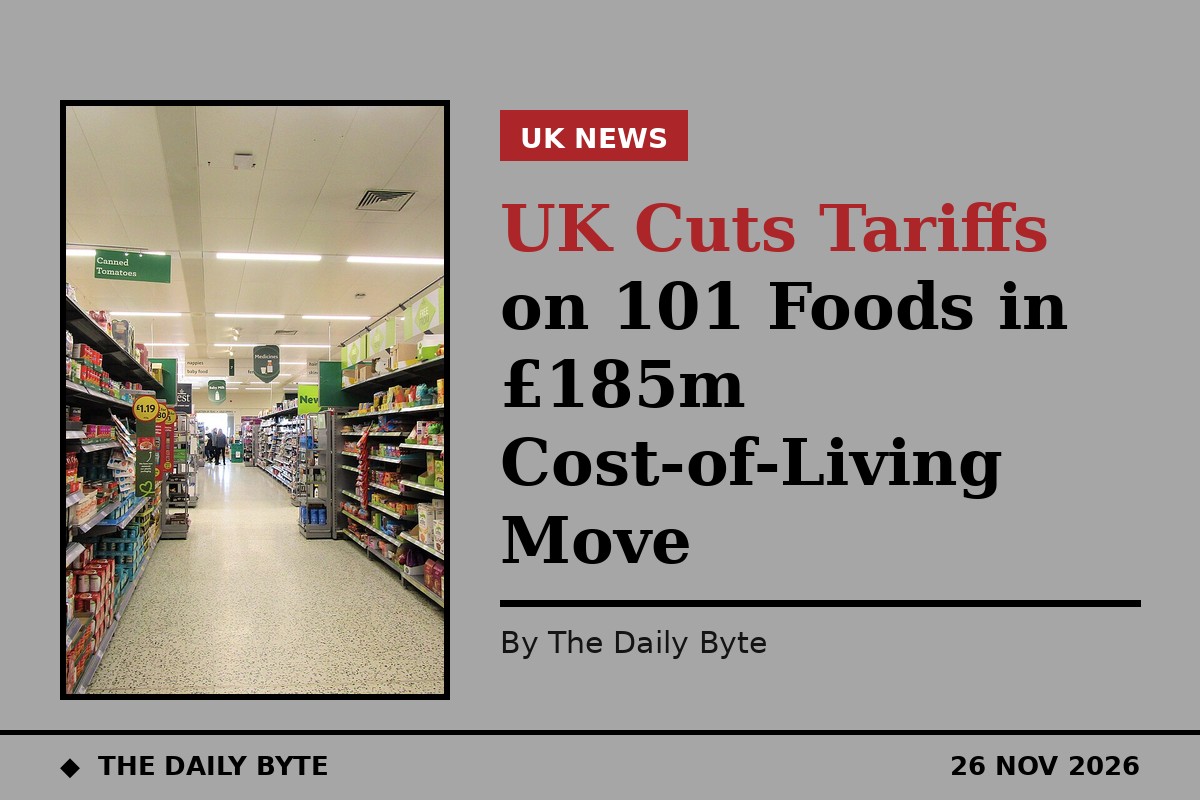
Import tariffs on 101 food products, fertilisers and kerosene heating oil were suspended from Thursday 26 November, in a government package aimed at easing the cost of the weekly shop.
The Treasury expects the food suspensions to cut consumer costs by between £120 million and £185 million a year, with the headline figure of up to £185 million a year. Combined with a first set of suspensions introduced in June, covering pasta, fruit juice and tuna, the two packages are expected to reduce consumer costs by up to £595 million a year.
Tariffs on baked beans, previously 16%, aubergines, previously 12%, and chocolate, previously 8%, are reduced to zero. Garlic loses a rate of 8% plus £100 per 100 kg, while citrus jams, marmalades and pastes lose 20% plus £19 per 100 kg. Throat pastilles and cough drops, boiled sweets, toffees and caramels, plant-based drinks and chocolate-coated wafers, each previously carrying an 8% tariff, are also covered.
Kerosene, which carried a 4% tariff, is suspended until 31 December 2028. The fuel is used as heating oil by some households, including a majority of households in Northern Ireland, as well as by some businesses. Fertiliser tariffs, which ranged from 2% to 6.5%, are suspended until 31 December 2027, and the government said it would review them before they expire.
Chancellor of the Exchequer John Healey said families were still feeling the impact of global conflicts on the weekly shop. "We can't control what happens around the world, but we will help where we can," he said. "That's why from today we're removing tariffs on more than 100 products, helping bring down food costs and putting up to £185 million a year back into families' pockets."
The government said lower-income households would benefit most from the savings, and that farmers should gain from greater security of supply and potential cost reductions from the fertiliser suspension.
Announced at the Budget, in force today
The tariff suspensions were first announced by the Chancellor at last month's Budget, but only came into force today. The government said the measures responded to price pressures linked to the conflict in the Middle East, and that the suspensions on food and kerosene would remain in place until 31 December 2028.
Not every product suggested during the government's call for input made the list. Some bakery lines, including rusks, toasted bread products and biscuits, were excluded because of concern for domestic producers. Bananas were excluded because of preferences enjoyed by developing countries, and dried apples were omitted because a separate business suspension already cuts their tariff to zero.
The suspensions do not apply to VAT or to trade remedy duties such as anti-dumping duty, and imports from Russia and Belarus are not eligible. The government also said no further products would be added to this package, although businesses can ask for further suspensions through the regular application window, which opened on 11 November and closes at 11:59pm on 3 February 2027.
Whether shoppers see the full benefit remains an open question. Some respondents to the government's consultation doubted how much of the saving would reach customers. The government replied that a highly competitive grocery sector would give supermarkets reason to pass the cost reductions on. The £120 million to £185 million figure is a national estimate for consumers as a whole, not a saving for any single household.
The package sits alongside other Budget measures aimed at household costs, including keeping fuel duty down, £100 towards energy bills for 20 million households, scrapping electricity standing charges and the £2 cap on bus fares.


