Electric cars hit record 32% of UK October sales
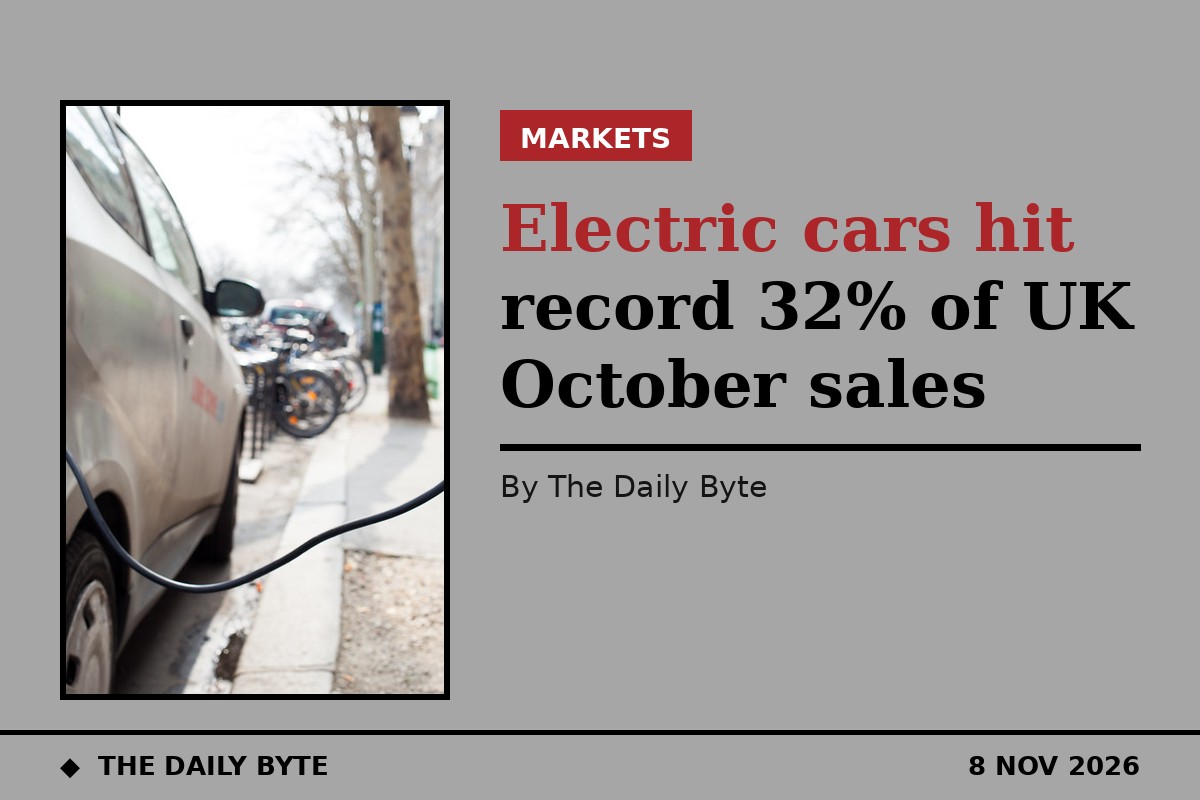
Battery electric cars took a record 32% of the UK new car market in October, as registrations rose for an eleventh month in a row and petrol's share of sales fell sharply, figures from the Society of Motor Manufacturers and Traders (SMMT) show.
The UK registered 152,730 new cars in October, up 5.4% on the same month last year. Battery electric vehicles accounted for 48,858 of those registrations, a rise of 32.7% year on year, giving them their highest monthly share of the year so far. Plug-in hybrids also grew strongly, up 30.1% to 22,898 cars and a 15% share.
Petrol cars, by contrast, fell 11.6% to 56,876 registrations, taking 37.2% of the market against 44.4% a year earlier. Diesel dropped 15.9% to 5,811 cars, a 3.8% share, and conventional hybrids fell 5% to 18,287. Taken together, electrified cars made up almost six in ten registrations in October, at 59%.
All of October's growth came from plug-in cars. Fleet registrations rose 5.4% to 89,985, or 58.9% of the market, while private demand increased 4.1% to 58,229 and business registrations climbed 24.5% to 4,516.
Across the first ten months of 2026, the market is 9.8% ahead of last year at 1,892,000 registrations. More than half a million battery electric cars have been registered so far this year, 503,805 in total, up 30.4% on a year ago. Even so, the year-to-date electric share stands at 26.6%, well short of October's record month.
That gap matters because manufacturers must hit rising sales targets under the zero-emission vehicle mandate. The SMMT's latest outlook expects the battery electric share to reach 27.2% this year, against a 33% mandated target. By 2028, it expects a 37.5% share against a required 52%, a shortfall more than double this year's.
The industry body says manufacturers are spending billions on discounts, zero-percent finance, deposit contributions and subsidised charging to push sales beyond underlying demand, and that heavy discounting is cutting trade-in values for owners. It is calling for substantive reform of the mandate, with targets revised down to reflect demand and full flexibilities kept in place.
Policy added to the pressure. The SMMT said last week's Budget contained little to drive the market, and pointed to the confirmation of a new electric-vehicle-only tax from 2028 and plans to keep VAT on public charging at 20% while home charging remains VAT-free.
SMMT chief executive Mike Hawes said almost one in three new cars registered in October was electric, calling it great progress in the transition, but one that comes at enormous cost. He warned that support cannot be sustained indefinitely with the gap to mandated targets set to more than double by 2028.
The figures also show how far the market has already moved. Manufacturers have committed £14.3 billion to UK electric vehicle manufacturing since 2020, and buyers can now choose from more than 180 battery electric models with an average range above 300 miles. Rising fuel costs, driven by global oil shocks from the Iran war, are also steering customers away from combustion vehicles, according to Reuters.
The best-selling car overall in October was the Jaecoo 7, with 3,412 registrations, ahead of the Ford Puma on 3,369. For the industry, the question now is whether the record month was a turning point or a year-end push driven by discounts ahead of tougher targets.