EU tuition fees: UK and EU haggle over student charges
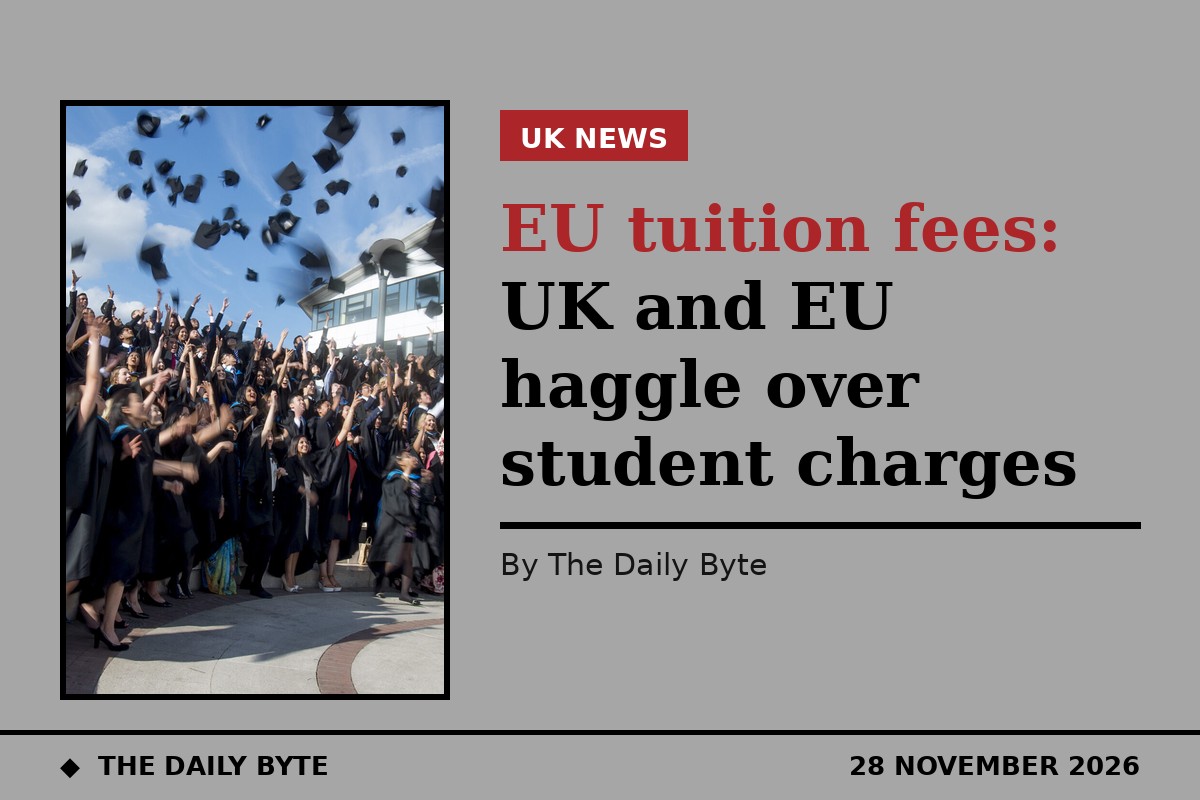
Talks continue after the Brussels summit
The UK and the EU are still negotiating over how much EU students should pay at British universities, after the issue was left unresolved at a Brussels summit on 20 November. At the summit, Prime Minister Andy Burnham and EU leaders signed three agreements, covering food and drink export checks, linked carbon trading and a youth mobility scheme. Fees were set aside for further talks, with both sides giving themselves six months, a deadline of May 2027.
The two positions
The EU wants its students to pay the same fees as British students, capped at £9,790 a year in England and Wales. The Russell Group of 24 leading universities estimates that would cost institutions £570 million. Mr Burnham told Parliament on Wednesday that equal fees for EU students would not be put on the table. UK media have reported that London could offer a discounted rate of about £12,000 a year, and pay universities £450 million to cover lost income.
What changed after Brexit
Before Brexit, EU undergraduates generally paid the same fees as British students. After Brexit they were charged international rates, with fees rising from around £9,000 a year to between £15,000 and £35,000. The Higher Education Policy Institute estimates first-year EU students fell from 60,220 in 2015/16 to 27,195 in 2024/25.
What happens next
Foreign Secretary Ed Miliband has said the wider deal will come into force regardless of a fees agreement. The food and drink agreement is due to take effect in March 2028, and the youth experience scheme for 100,000 under-30s from each side is expected to be running by 2030. Anyone planning to study in the UK should check the current fees and visa rules on GOV.UK, as these may change while talks continue.


