UK Fixes Fridge Hack Flaw After Europe Freezer Attacks
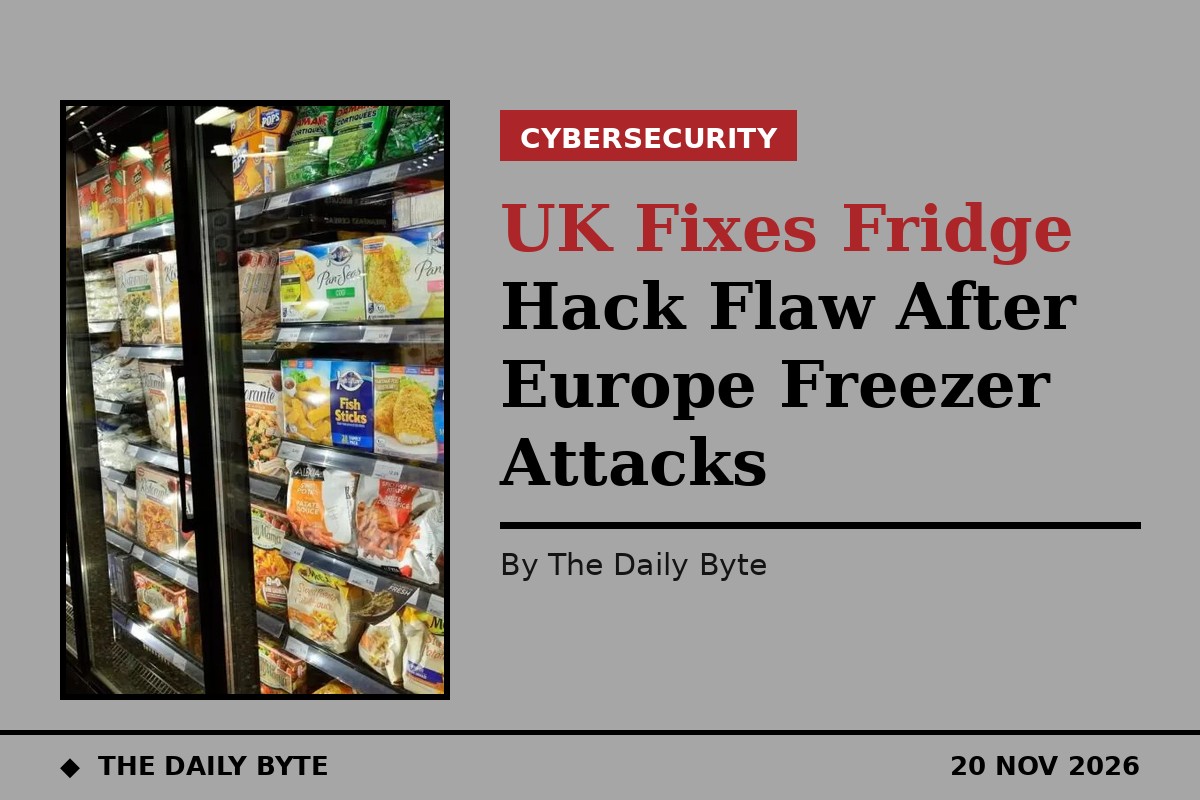
A British cybersecurity operation has fixed a flaw in the operating systems of commercial fridges and freezers used by supermarkets, warehouses and restaurants, closing a gap that could have let hackers repeat attacks that struck stores across Europe in recent weeks. The fix has been developed and rolled out, according to a report published on Friday.
The UK is thought to have escaped the worst of the attacks by luck rather than design. Its refrigeration industry relies on different equipment from the systems targeted on the continent, but investigators found a flaw in British systems that could have provided hackers with an opening all the same.
A narrow escape for Britain
The vulnerability in British refrigeration systems was identified by ethical hackers at Omega Systems, the BBC reported. Before the fix could be made, supermarkets removed fridges from the open internet and prioritised efforts to secure the devices.
The behind-the-scenes operation was described by one BBC source as a "race against time". Thousands of refrigeration controllers were taken off the open internet, remotely or in some cases physically, to protect tens of thousands of fridges and freezers at major supermarkets, stadiums, warehouses, restaurants and petrol stations, according to Cybernews.
The flaw was discovered by Neil McCourt, an ethical hacker at Omega Solutions, and verified by security specialists at Pen Test Partners, who raised the alarm. The supplier RDM, short for Resource Data Management, has released new firmware addressing the issue. Britain's National Cyber Security Centre eventually issued an urgent alert after multiple supermarkets, retailers and supply chain operators were found to be exposed. It declined to comment on the report.
How the European attacks unfolded
The European attacks came in two waves. The first hit France on the night of 11 to 12 October, when refrigeration controllers in hundreds of supermarkets were remotely switched into defrost mode while cabinets were still full of food. French intelligence and cyber agencies accused Iran's Revolutionary Guards of carrying out that attack, which targeted 700 commercial sites and caused 15 fires after hackers raised temperatures in refrigeration systems.
A second wave followed overnight into Monday 2 November, reaching between seven and ten European countries, from Belgium to Sweden. Fridges and freezers were again pushed into defrost mode, with temperatures reported at about 50 degrees Celsius, forcing stores to throw away food. In Belgium alone, federal prosecutors opened a criminal investigation covering at least 76 locations.
Most of the equipment hit on the continent was made by Danish manufacturer Danfoss. Its older AK-SM 800 and AK-SC 355 controllers have reached end of life and no longer receive security updates. Germany's information security office has warned of continuing vulnerabilities in some of Danfoss's industrial cooling appliances.
Smaller operators still at risk
Experts say the danger has not fully passed. "Significant efforts were made to address it in a very short space of time, resulting in teams at retailers working evenings and weekends. The issue has been largely mitigated, though smaller cold chain operators may still be exposed," Pen Test Partners said in its write-up of the operation.
The US Federal Bureau of Investigation and the Cybersecurity and Infrastructure Security Agency have also warned that they are observing malicious cyber activity targeting industrial refrigeration and cold-chain monitoring systems around the world, noting that weaknesses in unpatched or internet-accessible controllers can allow attackers to change system settings, causing stock losses and equipment damage.
The episode has exposed how much of Europe's food chain depends on small, internet-connected controllers that were never designed with modern cyber threats in mind. The UK fix closes one gap, but the wider lesson, security researchers say, is that any refrigeration controller left reachable from the public internet is a target.


