Flu Cases Climb Sharply in England, UKHSA Warns
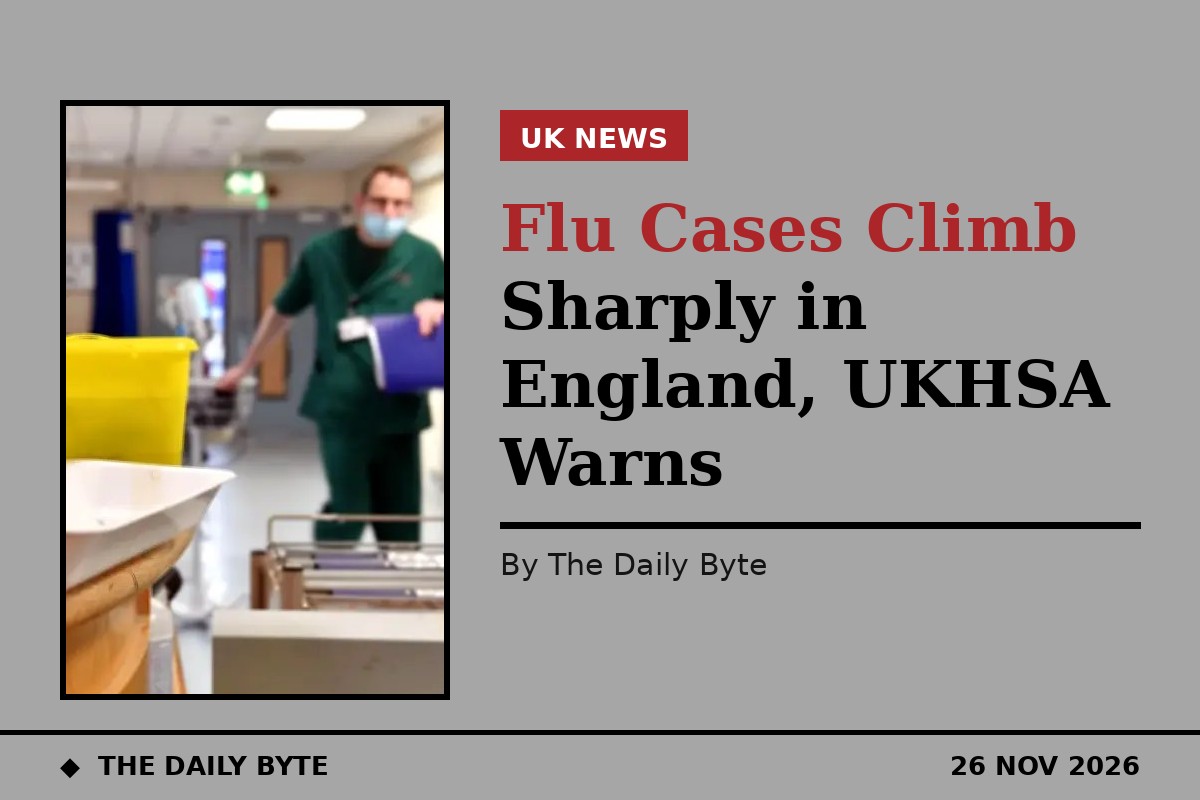
Flu is rising sharply across England, with hospital admissions jumping by almost 80 per cent in a single week, according to the latest weekly surveillance figures published by the UK Health Security Agency (UKHSA) on Thursday 26 November.
The national flu and COVID-19 surveillance report for week 48, based on data up to week 47 (16 to 22 November), says influenza activity increased and is now circulating at moderate levels, up from low levels the previous week. Emergency department attendances for flu-like illness increased and were above the level normally expected for the time of year, and a briefing note has been issued to inform the NHS that flu activity is now above baseline levels.
Dr Ellen Fragaszy, lead epidemiologist at UKHSA, said: “Flu levels are now rising sharply with hospital and intensive care admission rates increasing by almost 80% this week.”
Positivity and admissions jump
The figures show the scale of the rise. The share of laboratory tests coming back positive for flu reached 17.8 per cent on the most recent Sunday, up from 11.5 per cent the previous Sunday. Among GP swabbing samples, 21.1 per cent tested positive for influenza in week 47, compared with 14.1 per cent the week before. GP consultations for flu-like illness rose to 12.7 per 100,000 registered patients, up from 9 per 100,000.
Hospital admissions tell the same story. The overall weekly hospital admission rate for flu increased to 8.98 per 100,000 people, compared with 5.03 per 100,000 in the previous week. Admissions to intensive care and high dependency units rose to 0.28 per 100,000, up from 0.16 per 100,000. The number of confirmed flu outbreaks in hospitals and care settings also increased compared with the previous week.
COVID-19 and RSV also rising
COVID-19 activity also increased, although it remains at low levels. COVID-19 positivity edged up to 7.1 per cent from 6.7 per cent, and the hospital admission rate for COVID-19 rose to 2.96 per 100,000 from 2.29 per 100,000. By the end of week 47, 56.1 per cent of people aged 75 and over in England had received an autumn 2026 COVID-19 vaccine dose. Respiratory syncytial virus (RSV) activity increased too, still at low levels, with hospital admissions rising to 2.34 per 100,000 from 1.66 per 100,000.
Flu vaccine uptake is trailing last winter among older people. Uptake among patients aged 65 and over stood at 67.6 per cent, below the 69.6 per cent comparison figure in the report. Monthly vaccine uptake data for GP patients, school-aged children and frontline healthcare workers is being reported for the first time this season.
Nottingham hospitals declare critical incident
The national picture is already biting locally. Nottingham University Hospitals declared a critical incident on 23 November after a sharp increase in flu and COVID-19 infections added to mounting pressure on its emergency departments. The trust reported that flu cases among its hospital patients had risen from 14 to 60 in just one week, while COVID-19 cases rose from 53 to 73. Around 200 patients were in the emergency department at Queen’s Medical Centre, with some ambulance arrivals facing waits of up to four hours and almost 100 people waiting for beds in hospital wards.
Andrew Hall, chief operating officer at Nottingham University Hospitals, warned that flu numbers had exceeded predictions for this time of year and were higher than those recorded during the same period last year.
UKHSA publishes its surveillance figures every Thursday, and flu usually peaks in England between December and February. The agency has repeatedly urged people who are eligible for a flu vaccine, including older adults, young children and people with certain long-term health conditions, to take up the offer. Vaccines do not guarantee that someone will avoid infection, but they help reduce the risk of severe disease and hospital admission.
The NHS advises people with respiratory symptoms to stay at home and avoid contact with others where they have a high temperature or feel too unwell to carry out normal activities, and to seek urgent medical advice if they have difficulty breathing or their condition suddenly gets worse.


