UK Linker Gilt Sells at Record Real Yield of 2.52%
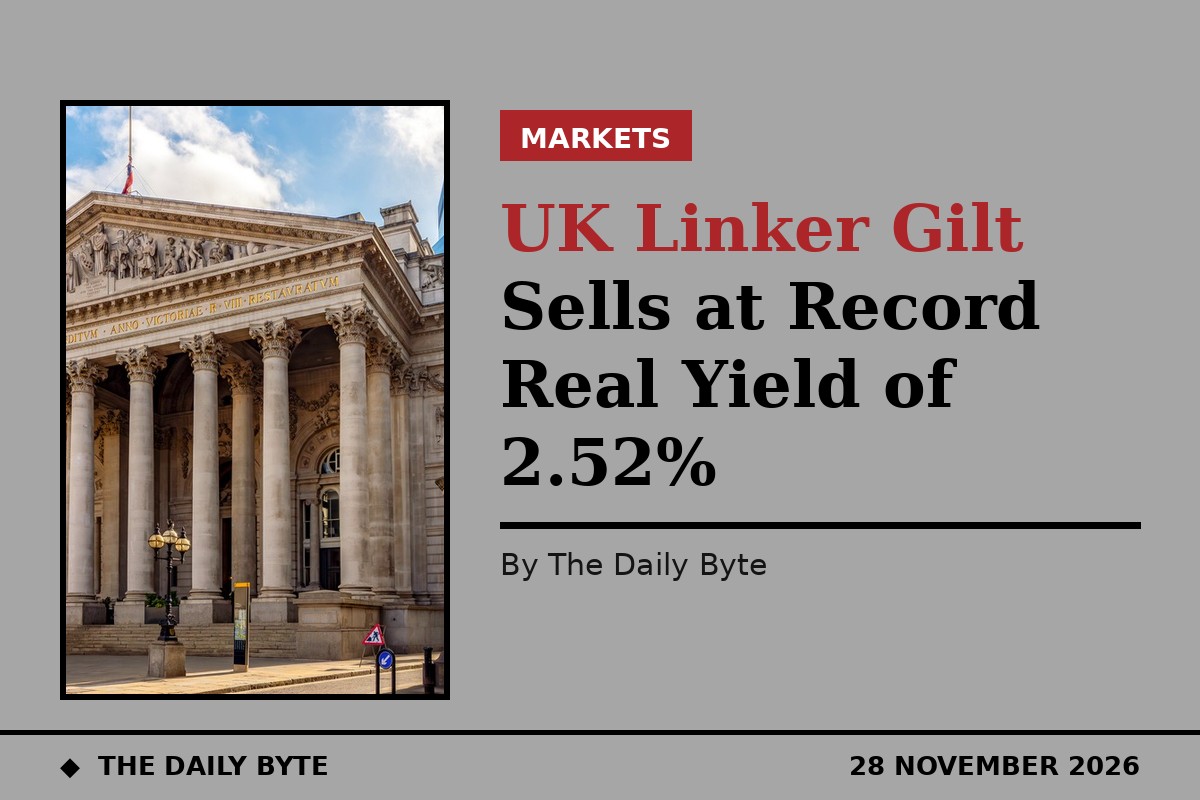
Britain sold £3.75 billion of inflation-linked government bonds on Tuesday at the highest real yield ever recorded for a syndicated gilt sale, a reminder of how expensive public borrowing has become. The Debt Management Office (DMO) said the 1.875% index-linked gilt due 2049 was sold at a real yield of 2.5235%, the highest for a syndicated sale of an inflation-linked gilt — known as a linker — since records began in 2005.
Only one index-linked gilt sale, in 2001, has generated a higher yield once auctions are included. The real yield is the annual return an investor receives after inflation, so the record shows buyers now demand the richest inflation-adjusted return on a syndicated linker in two decades.
Strong demand, domestic buyers
Demand was strong. The order book totalled £46.1 billion, more than 12 times the £3.75 billion sold, and domestic investors accounted for around 79% of the allocation, according to the DMO. The bonds were sold at an issue price of £88.80. Citi, Deutsche Bank, Morgan Stanley and Nomura acted as lead managers for the transaction, which was worth about $4.89 billion.
The DMO had announced on 6 November that the gilt would be sold by syndication in the week commencing 23 November, and appointed the syndicate on 13 November. The sale was a re-opening of an existing gilt rather than a new bond, adding £3.75 billion to the amount already in issue.
Why borrowing costs matter
The record yield lands in a week when the cost of UK government borrowing has stayed high. The Bank of England raised Bank Rate to 4.00% on 5 November, from 3.75%, in an 8-1 vote, with Catherine Mann dissenting in favour of a larger half-point rise. The yield on the 10-year gilt, the benchmark for UK borrowing costs, ended the week above 5.1%.
For the government, the arithmetic is direct: every new gilt sold at a higher yield locks in higher interest payments for decades. The 2049 gilt does not mature for 23 years, so the 2.5235% real yield will shape the cost of that borrowing until 2049, on top of the inflation uplift paid to holders. Index-linked gilts protect investors against rising prices, which makes them attractive when inflation is high — but that protection comes at a price for the issuer when real yields are elevated.
The DMO's financing remit plans about £54.1 billion of gilt sales via syndication in the 2026-27 financial year, alongside regular auctions. The 2049 sale is one of the larger single transactions in that programme, and its reception — a heavily oversubscribed book dominated by domestic buyers — suggests demand for UK government debt remains deep, even at yields that would have looked remarkable only a few years ago. The question for the Treasury is not whether investors will buy, but what they now charge for the privilege.


