UK Manufacturing Output Rises for First Time Since 2024
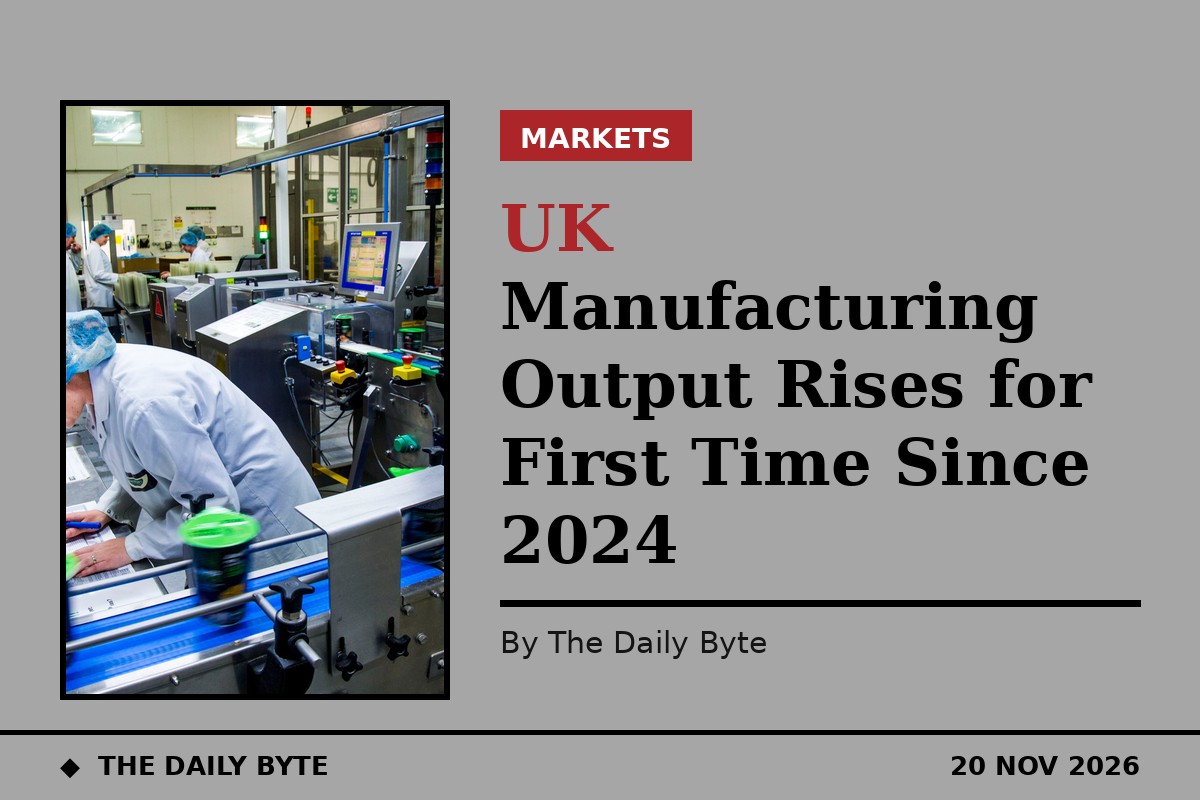
British manufacturing output rose in the three months to November, the first increase since May 2024, according to the Confederation of British Industry, in a welcome sign of recovery for the country's factories.
The CBI's latest Industrial Trends Survey recorded a weighted output balance of plus 9, up from minus 10 in the three months to October. The survey, based on responses from 251 manufacturing firms collected between 26 October and 12 November, also showed order books recovering sharply from a steep deterioration the previous month.
The improvement was helped by stronger demand from the aerospace and defence sectors, the CBI said, while the rise in output itself was driven mainly by motor vehicles and transport equipment and by food, drink and tobacco.
Order books recover from October slump
Total order books recovered to a balance of minus 12 in November, from minus 32 in October, moving close to the long-run average of minus 14. Export order books also improved, rising to minus 19 from minus 25, broadly matching their historical average.
The rebound was striking because October's reading had been so weak. The orders balance had fallen to a three-month low in October, and the November recovery puts both total and export order books broadly in line with their long-run averages for the first time in months.
Output increased in nine of the 17 manufacturing sub-sectors covered by the survey, suggesting the improvement was fairly broad rather than confined to a single industry.
Outlook stays cautious
Despite the better figures, manufacturers remain cautious about what comes next. Output expectations for the next three months were little changed, at plus 1 in November compared with minus 1 in October, meaning firms expect production to remain broadly flat through February.
Order books, while improved, are still reported as below normal, and the CBI said persistently high energy costs continued to weigh on manufacturers' competitiveness. The survey also showed expectations for average selling price inflation easing, with the balance falling to plus 20 from October's five-month high of plus 24, although that remains well above the long-run average of plus 8.
CBI senior economist Cameron Martin said manufacturers were finally seeing some welcome signs of recovery, but the survey's message is measured: conditions on the factory floor have improved, yet firms are not confident the improvement will last.
Why it matters for markets
The survey is one of the most closely watched gauges of British industry, and its timing matters. It landed in a week when UK retail sales beat expectations and government borrowing came in below forecast, giving investors a slightly brighter picture of the economy even as equity markets fell.
For the Bank of England, the combination of recovering output and easing price expectations is relevant to the interest-rate debate, with money markets pricing a high chance of another rate rise in December. Factory gate price pressures cooling, even modestly, gives policymakers a little more room, although the CBI's warning on energy costs shows the pressure on manufacturers has not gone away.
The next test comes with the official manufacturing data, which will show whether the survey's recovery is confirmed in hard output figures. For now, British factories have recorded their first rise in output in two and a half years, and the order books suggest the worst of the autumn slump may be behind them.