UK Opens Vietnam and Philippines Food Export Markets
The United Kingdom has opened up two new export markets for its food and drink producers in South-East Asia, after a government trade mission secured the reopening of Vietnam to British processed animal protein and a deal to protect pork sales to the Philippines.
The Department for Environment, Food and Rural Affairs (Defra) announced the agreements on 23 November, following a trade visit led by Biosecurity and Trade Minister Baroness Hayman. The minister took a delegation of 14 British business representatives from the seafood, meat, animal protein and whisky sectors to the Philippines and Vietnam between 9 and 14 November, visiting cities from Manila to Hanoi to unlock new export opportunities.
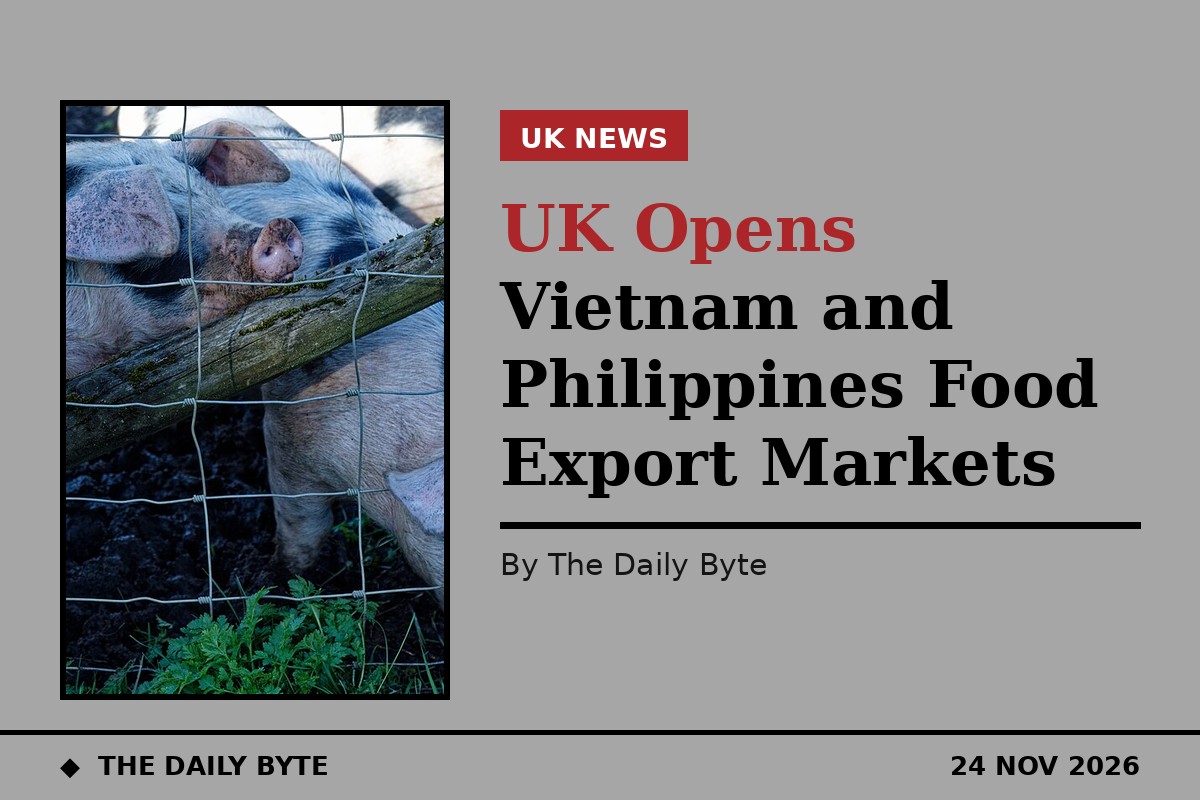
Pork producers stand to gain the most from the Vietnam deal. The country has reopened its market to exports of UK processed animal protein, a by-product of the meat sector that is used in animal and fish feed. Defra said the market had been an industry priority for years and is worth an estimated £70 million over five years to exporters.
The reopening matters because the trade had been shut for a long time. Andrew Brown, a member of the animal protein trade body FABRA and managing director of Advanced Proteins, said the market had been effectively closed overnight more than three years ago, and that its reopening restores an important trading route for the UK rendering and protein industries.
The second agreement covers the Philippines, which Defra describes as the UK's second largest pork market outside the European Union. The two countries have signed a regionalisation agreement, which means that if African swine fever is ever detected in the UK, only exports from the affected region would stop. Pork from disease-free parts of the country could continue to be shipped, because the Philippines has formally recognised the UK's disease-control, surveillance and zoning systems.
Defra estimates the agreement will protect future British pork exports to the Philippines worth £172 million over five years. The UK has never had an outbreak of African swine fever, and the department said the deal was an important step in strengthening the resilience of the trading relationship. Top UK exports to the Philippines already include pork, animal feed, whisky and processed foods.
Baroness Hayman said the mission was a big win for the UK's farms and businesses, adding: "Securing the reopening of this priority market in Vietnam and protecting British pork exports to the Philippines will drive growth, while improving stability and export opportunities for UK food and drink producers."
Industry groups welcomed the outcome. John Powell, chief executive of the British Meat Processors Association, said the opening of new export markets gives processors the chance to sell British meat around the world and shows confidence in the industry. Jonathan Eckley, director of international trade development at the Agriculture and Horticulture Development Board, said the markets were so important to UK exporters that trade missions of this kind were critical to building long-term benefits for the red meat and dairy sectors.
The visit also covered wider trade with Vietnam. The country is the UK's sixth-largest destination for seafood exports, and wider agricultural trade between the UK and Vietnam is valued at £779.2 million a year. British and Vietnamese businesses and officials used the visit to discuss how to make the most of the free trade agreement the two countries signed in 2025, which Defra said would help keep supply chains resilient and give consumers more choice at home.
There is, however, a complication on the Philippine side. On the first day of the trade visit, the Philippines announced a 60-day suspension of imports of selected pork products, due to take effect on 24 November, after an investigation found that a surge in imports had hurt local hog farmers. The British delegation immediately sought clarity on how the suspension would affect shipments already under way and orders already agreed, and the issue remained unresolved when the mission ended. The regionalisation agreement protects future trade if disease ever appears, but it does not settle the immediate question of the temporary import suspension.
Taken together, the two deals are worth an estimated £242 million over five years on the government's figures. For British farmers and processors, the test now will be turning the reopened market in Vietnam and the protected route into the Philippines into signed orders, at a time when global meat trade remains sensitive to disease outbreaks and sudden policy changes.