UK to pay EU 'participation fee' under new trade deals
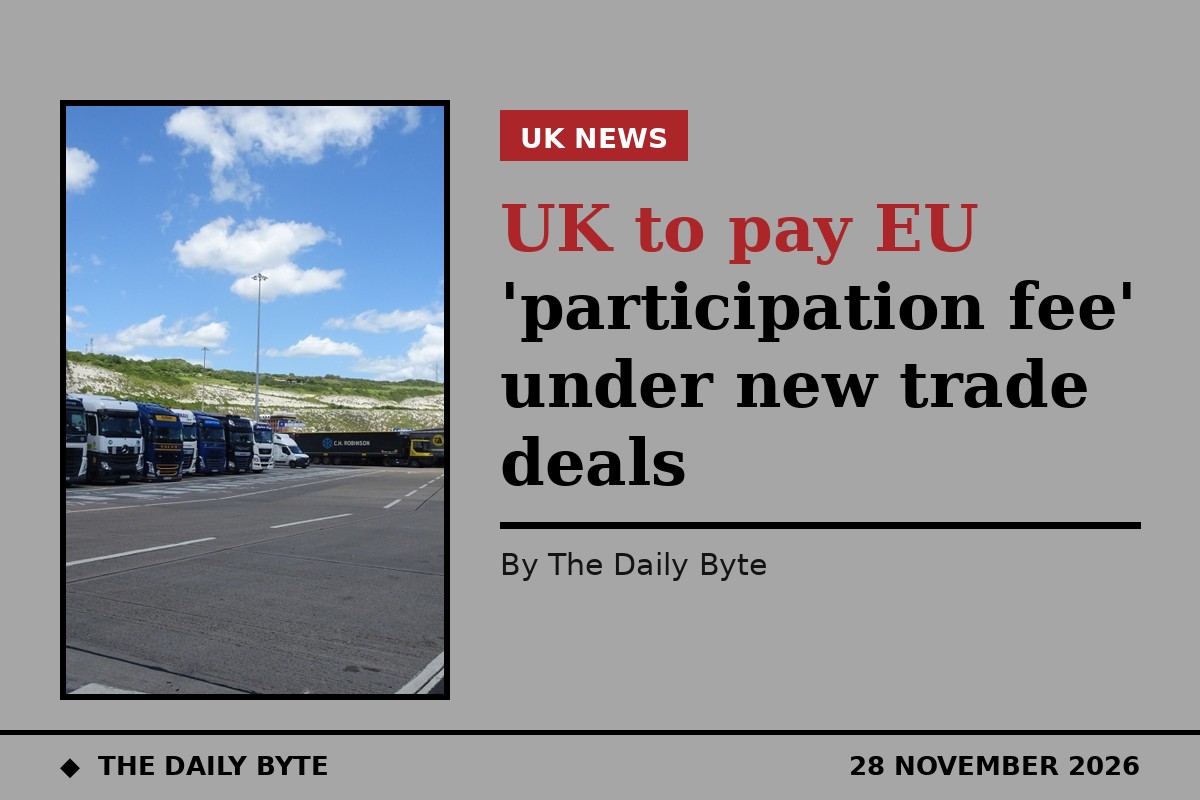
The United Kingdom will pay a participation fee to the European Union as the price of its new trade deals, according to legal documents published this week.
The fee is part of the agreements struck in Brussels on 20 November by Prime Minister Andy Burnham, which aim to cut red tape for British companies by removing most border checks on food and drink exports and linking the UK and EU carbon markets. The treaty texts setting out how the payments will work were published on Thursday 26 November.
The surcharge will go towards the running costs of EU agencies and systems needed to deliver two of the agreements, one on food standards and one on emissions trading. It will be paid on top of a larger contribution towards costs that broadly mirrors how EU member states contribute to the bloc's shared budget.
What the fee will pay for
According to the treaties, the payments will be made as a share of the running costs of three EU agencies, as well as various systems used to implement the food standards and emissions deals. The bulk of the payments, which will be made in euros, will come in the form of an operational contribution calculated in proportion to the size of the British economy compared with that of the EU.
On top of that, the UK will pay a participation fee set at 4 percent of its main contribution figure. The government has pointed to the 2021 Brexit trade agreement negotiated by the Conservatives, which also applied an additional surcharge to UK contributions towards the cost of relevant EU programmes.
Ministers had declined to give specifics about the fees while the treaties were being negotiated. On Sunday, Foreign Secretary Ed Miliband said the latest deals agreed by Burnham were not about cost to the taxpayer.
How much it could cost
The government has not published an overall estimate of the additional costs, but officials said they expected them to be in the low tens of millions of pounds per year and massively outweighed by the predicted economic gains. The government estimates the deals will eventually boost the economy by billions a year through increased trade, and says the food and drink agreement alone could add £5.1 billion to the economy by cutting red tape for exporters.
There has been confusion over the figure, however. Environment minister Emma Hardy put the cost at the low hundreds of millions in a radio interview, while officials later said the low tens of millions was the correct estimate. The treaty sets out a formula based on the size of the UK economy rather than a fixed sterling sum, so neither figure can be checked against the text itself.
The two agreements are meant to take effect during 2028. Legal text for a third agreement reached last week, on youth visas for 18 to 31 year olds, is expected to be published in the coming days.
Opposition criticism and the bill
The fee is likely to be seized on by opponents of the deals. Conservative leader Kemi Badenoch said Burnham was showing disdain for the democratic process by asking MPs to hand him extraordinary powers while having no idea what the EU will actually agree to. Reform UK leader Nigel Farage has argued the deals would take Britain back into much of the European Union's single market and has said he would repeal them.
Their criticism has focused in particular on separate legislation published alongside the treaties, which grants ministers broad powers to incorporate new EU laws needed to implement the agreements without holding a full parliamentary vote each time. The food standards deal in particular will mean Britain aligning with scores of current EU food-related laws updated since Brexit, along with future rules in those areas.
The government argues the powers are needed because it would be impractical to run a full parliamentary process every time UK legislation needs updating to make the agreements work. It says British experts will be consulted when new EU laws are being drawn up, with the UK granted observer status in certain meetings, although Britain no longer has voting rights at the EU.
MPs will get their first chance to debate the legislation on 7 December, with a vote expected to follow. Labour holds a large majority in the Commons, so the bill is almost certain to pass.


