UK permanent hiring falls as costs hit jobs market
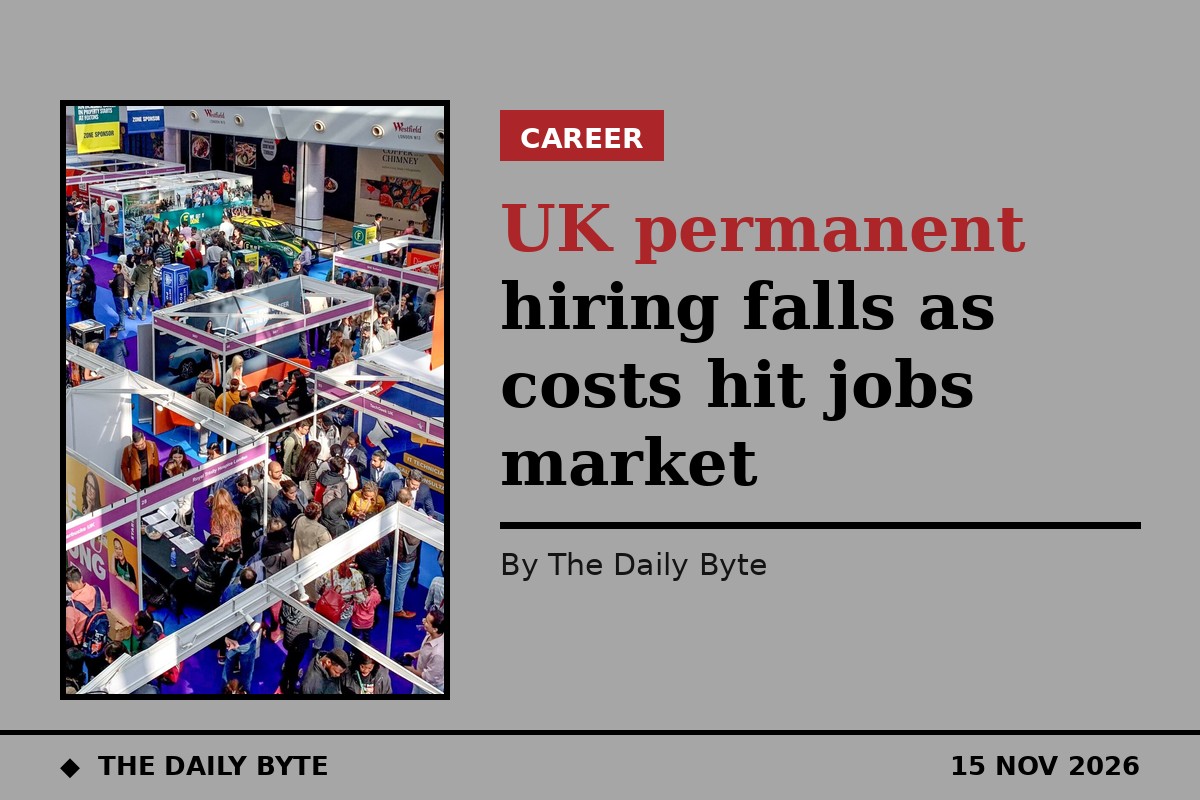
UK employers pulled back on hiring in October, with permanent placements falling for the first time in four months and temporary billings dropping for the first time since March, according to the latest KPMG and REC UK Report on Jobs, published on 9 November.
The survey of around 400 recruitment and employment consultancies, compiled by S&P Global, found that businesses delayed or scaled back hiring decisions as they weighed economic uncertainty and rising costs. The permanent placements index fell to 46.6 from 50.9 in September, its lowest reading since May and the second-quickest fall of 2026. Temporary billings fell to 48.9 from 50.9. On both measures, a reading below 50 signals a fall.
Hiring slows after two months of growth
The October fall ends a short run of improvement. Permanent placements had risen modestly in August and September before turning down again in the weeks leading up to the Budget on 28 October. Recruiters said employers had put hiring on hold while they assessed the outlook, with energy prices, higher borrowing costs and rising interest rates weighing on confidence.
Jon Holt, group chief executive and UK senior partner at KPMG, said: “October saw employers pull back on hiring in the month leading up to the Budget, ending a run of more positive news over recent months.” He warned there was a risk that “the green shoots we had been seeing in the jobs market could stall” if inflation kept rising and borrowing costs stayed high.
The survey was collected between 12 and 26 October, before the Budget and before the Bank of England raised Bank Rate to 4%. Businesses will now be judging whether the Budget measures give them enough stability to restart hiring, Holt said.
Vacancies fall at slowest pace in two years
There was a brighter signal on the demand side. The total vacancies index rose to 48.7 from 48.5 in September, meaning overall demand for staff fell at its slowest rate in 26 months. Permanent vacancies fell at the weakest rate since August 2024, while demand for temporary workers rose fractionally after two months of decline.
Official figures point in the same direction. The Office for National Statistics put total UK vacancies at 691,000 in the three months to September, down 21,000 on the quarter and 5.1% lower than a year earlier — the lowest level outside the pandemic since September 2014. The next official labour market figures are due from the ONS at 7am on Tuesday 17 November.
More candidates chasing fewer roles
Candidate availability rose sharply in October, rebounding from a three-year low in September. Recruiters linked the rise to redundancies and fewer openings, with permanent staff availability growing faster than temporary availability. The supply of workers has now risen for 44 consecutive months.
That leaves job seekers facing more competition for each vacancy, even though the market has not collapsed. The REC said there were still signs of resilience in London and the north of England, where permanent placements grew, while the south of England recorded the sharpest drop and the Midlands a solid fall.
Where demand is still growing
Demand for permanent staff rose in six of the ten job categories tracked by the survey, led by IT and computing and by engineering. Construction and accounting and finance also recorded growth. Retail and hotel and catering saw the steepest falls in permanent demand, and retail also recorded by far the sharpest drop in short-term opportunities.
Temporary work told a similar story. Blue collar roles saw the steepest rise in demand for temporary staff, while retail again fell the most. Maxine Bligh, interim chief executive of the REC, said: “There are still signs of the recent resilience in London and the North of England. Both recorded growth in permanent placements.”
Pay still rising for scarce skills
Pay moved in the opposite direction to hiring volumes. Starting salaries for permanent staff rose at a faster pace in October, and average pay for temporary workers also increased more quickly, as employers competed for high-calibre candidates who remained in short supply. Even so, pay growth on both measures stayed below the survey’s long-run averages.
Bligh described the Budget as “a missed opportunity for both jobs and growth”, arguing that the government should have excluded recruitment agencies from its guaranteed-hours proposals under the Employment Rights Act. The Office for Budget Responsibility has concluded the Act is likely to have a negative impact on economic activity.
For now, the picture is of a jobs market that is slowing rather than collapsing: hiring has stalled, vacancies are close to stabilising, and employers are still paying more for the skills they cannot find. Tuesday’s official figures will show whether that tentative balance held into November.