UK petrol falls to 165.2p as diesel drops below £2
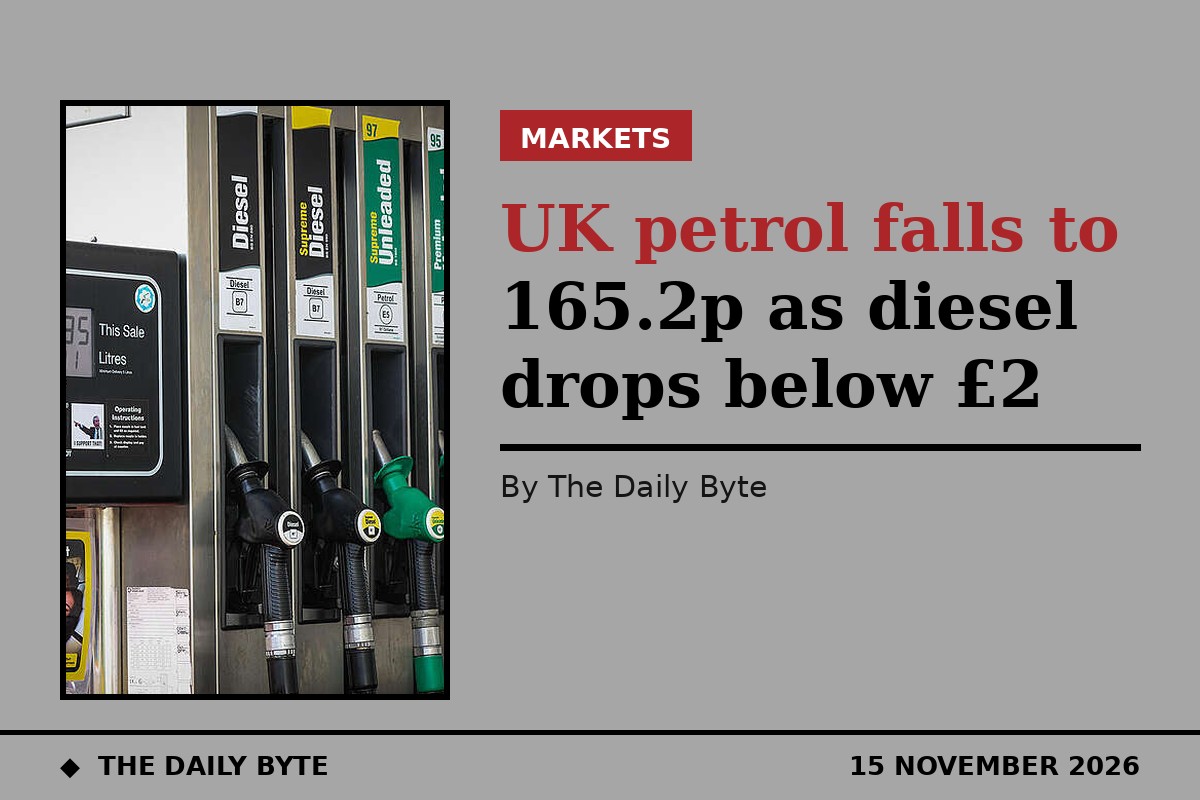
UK petrol prices fell to an average of 165.2p a litre on the evening of Friday 14 November, while diesel averaged 195.1p, according to figures drawn from the government's Fuel Finder feed. Both are the lowest readings in the series tracking the statutory feed since late September.
Diesel has now fallen clearly below the £2-a-litre mark at almost every forecourt. On the evening of 14 November, 262 of the 6,581 UK forecourts reporting a diesel price charged 200p a litre or more: 4.0 per cent, down from 35.7 per cent on 4 October and 10.1 per cent when the same series was published on 9 November. A day earlier, on 13 November, the share was 5.6 per cent, with petrol averaging 166.4p and diesel 195.9p.
Supermarkets undercut the oil majors on diesel
The gap between brands remains wide. Off the motorway, 8.6 per cent of Shell-branded forecourts still charged £2 or more for diesel on 14 November, compared with 64.5 per cent on 20 October. No Tesco, Asda, Sainsbury's or Morrisons forecourt charged £2 or more for diesel. Asda cut prices on 12 November, and the supermarket chains have consistently been the cheapest place to fill up through the autumn.
The weekly averages tell the same story more slowly. For the week beginning 9 November, the UK average petrol price was 169.5p a litre, down 2.3p on the week, and diesel averaged 197.6p, down 0.6p, across 8,042 reporting petrol stations, according to the UK Fuel Price Index, which uses the same official price scheme. Brent crude averaged $93 a barrel over that week, down $7.41 on the week.
Brent has fallen more than a tenth in ten trading days
Brent crude fell 10.8 per cent in the ten trading days to 13 November, from $107.39 to $95.84 a barrel. The benchmark settled on Friday 13 November at $95.84, up two cents on the day, and US West Texas Intermediate settled at $88.56. Both benchmarks recorded a second straight weekly fall of about 2.5 per cent, after the International Energy Agency said the global oil market would return to a surplus in the fourth quarter of 2026 as Gulf exports recover.
Based on how petrol prices have usually responded to crude moves, the Fuel Price Index estimates the recent fall in Brent could mean a further drop of around 3.4p a litre over the coming weeks. That is an estimate based on past patterns, not a forecast, and pump prices move with refining costs, the pound-dollar rate and retailer margins as well as crude.
Why diesel is falling more slowly than petrol
Diesel has been the stubborn part of the forecourt story all autumn. The RAC reported on 10 November that average petrol stood at 168.45p a litre and diesel at 197.27p, and the AA said the track of wholesale costs indicated another 10p reduction should be on the way. Wholesale unleaded had fallen from 77p a litre on 13 October to below 62p, while diesel wholesale costs fell far less.
The International Energy Agency's November report helps explain why. European diesel remained close to $180 a barrel, the agency said, despite falling about 11 per cent from its recent highs, and was still 77 per cent above its pre-war price. US distillate stocks were 13.2 per cent below their seasonal average. A headline crude surplus does not automatically mean cheaper diesel, because refining capacity and diesel stocks are tight even while crude supply recovers.
For drivers, the practical picture is better than it was a month ago: petrol has fallen about 5p a litre since early October, according to the AA, and the number of forecourts charging £2 for diesel has collapsed from more than one in three to one in 25. But diesel drivers are still paying roughly 30p a litre more than petrol drivers, and the gap will only close if wholesale diesel costs keep falling through the winter.


