Respect Orders come into force to tackle repeat anti-social behaviour
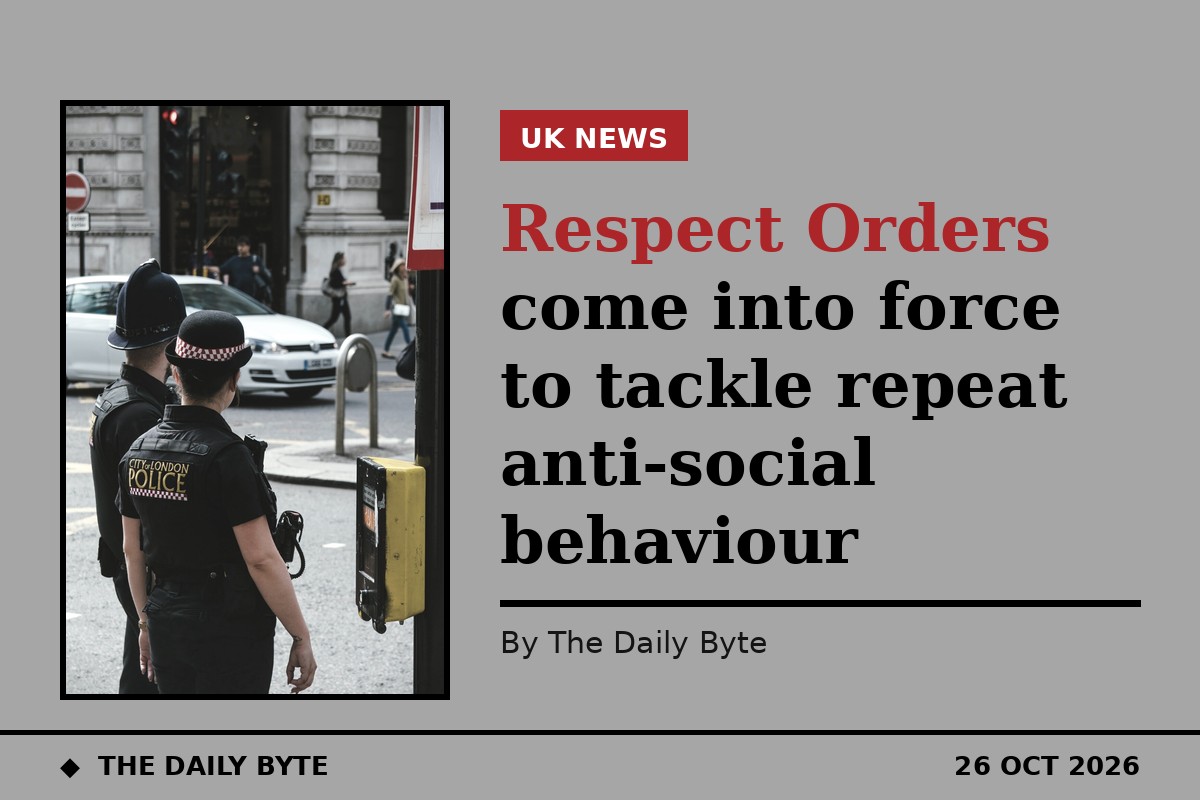
New Respect Orders come into force in England and Wales on Monday, 26 October 2026, giving police, councils and housing providers a new civil order against adults who persistently engage in anti-social behaviour. The orders arrive under the Crime and Policing Act 2026, which replaces the old anti-social behaviour injunction regime for adults, and new statutory guidance takes effect on the same day.
How they differ from the old injunctions
Like the injunctions they replace, Respect Orders can ban specific behaviour and require positive steps, such as attending a support programme. The key change is enforcement: breaching a Respect Order is a criminal offence, dealt with by the police, rather than a contempt of court matter. The Home Secretary, Shabana Mahmood, has said the orders will let authorities take tough action against repeat offenders, with breach punishable by up to two years in prison.
What else changes on 26 October
Children aged 10 to 17 will instead face youth injunctions, while housing-related cases for adults move to housing injunctions. Social landlords will also be able to apply for closure orders, previously limited to police and local authorities. Maximum penalties for breaching community protection notices and public space protection orders rise, and dispersal orders and closure notices get longer. One part of the package is not yet live: the local policing body review chapter will not take effect on 26 October, according to GOV.UK.
Who can apply
Police, local authorities, housing associations and transport networks will be able to seek the orders, which apply only to adults. Applicants must first complete a risk assessment covering the nuisance caused, the respondent’s vulnerabilities and alternative ways of stopping the behaviour.