UK Sanctions All 10 Russian Oil Producers Explained
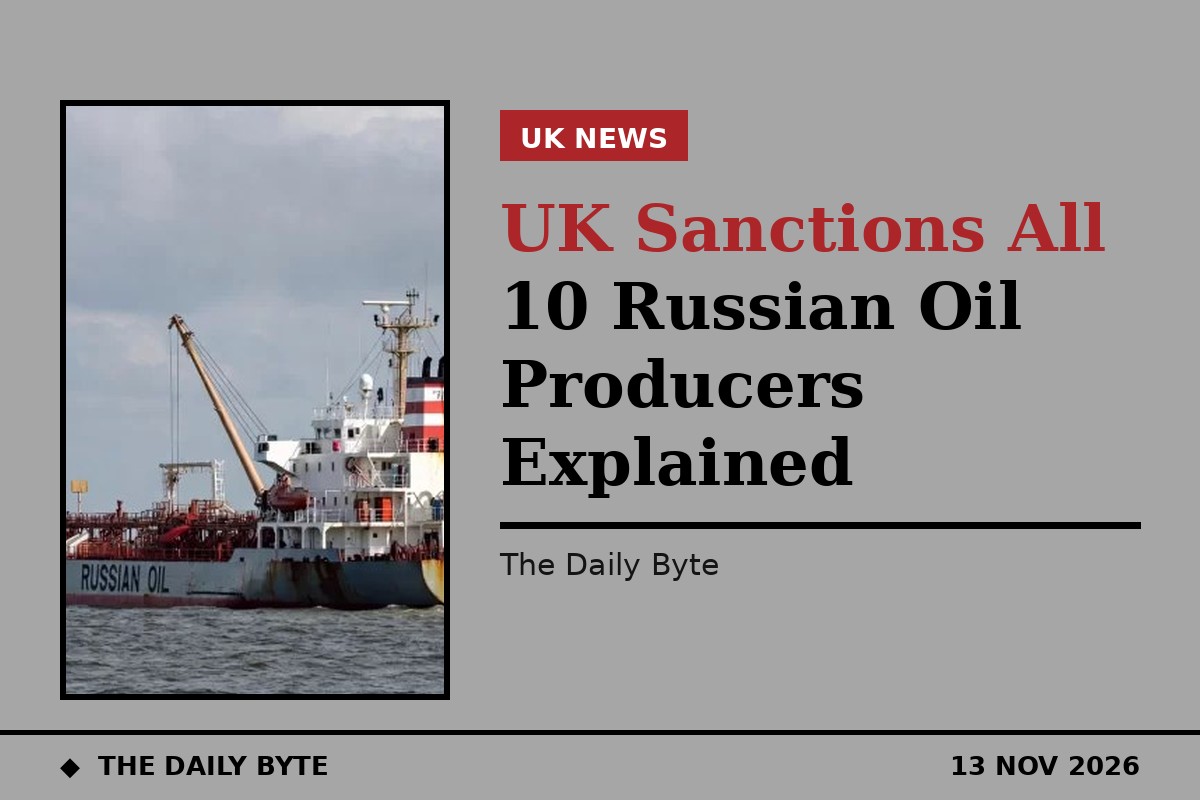
The United Kingdom has become the first country to sanction all ten of Russia's largest oil producers, after adding Slavneft to its sanctions list on 12 November. The package also targets shadow fleet vessels, major coal companies and Rosneft's Arctic Vostok Oil project, as London tries to cut the oil and gas revenue funding Russia's war in Ukraine.
Prime Minister Andy Burnham announced the measures as he headed to the European Political Community summit in Dublin, saying the sanctions would "turn the screws on Russia's oil revenues and drive forward an end to the Kremlin's needless war".
What is in the new sanctions package?
The Foreign Office's sanctions notice lists 20 additions and one amendment: nine companies and 11 ships. Slavneft, jointly owned by Rosneft and Gazprom Neft, faces an asset freeze and trust services sanctions. The Vostok Oil project, Rosneft's flagship Arctic venture, is also frozen, along with the chemical group Sibur, gas processor Nipigazpererabotka and two coal producers, Kuzbassrazrezugol and the Siberian Coal Energy Company. The 11 vessels include the oil tankers Apeks, Sara Sky and Balu 6 and the LNG carriers Melicertes, Perle and Oneiroi.
Which are the ten oil producers?
Earlier British packages had already sanctioned Rosneft, Lukoil, Gazprom Neft, Surgutneftegas, Tatneft, Russneft, Zarubezhneft and INK Capital, alongside the Rosneft subsidiary Bashneft. The government has not published a ranked list of the ten, but says the addition of Slavneft completes the set. Rosneft and Lukoil were added in October 2025, while Gazprom Neft and Surgutneftegas were first sanctioned in January 2025.
What do the sanctions actually do?
An asset freeze bars any dealings in a company's funds under UK jurisdiction, and trust services sanctions bar UK firms from managing trusts on its behalf. Ships specified under the UK's Russia sanctions regulations cannot enter a UK port, can be detained and are refused UK registration. The government says the package targets nearly every part of the energy revenue chain, from producers and trading networks to supply chains and vessels.
Why has the UK acted now?
The announcement came as European leaders gathered in Dublin for the European Political Community summit, days after peace talks on Ukraine in Abu Dhabi. Burnham was due to co-chair a meeting on Ukraine with President Volodymyr Zelenskyy, and the government says the sanctions are designed to pile pressure on President Vladimir Putin to approach negotiations seriously and agree a full and immediate ceasefire.