UK Suspends Tariffs on 100 Food Products Today
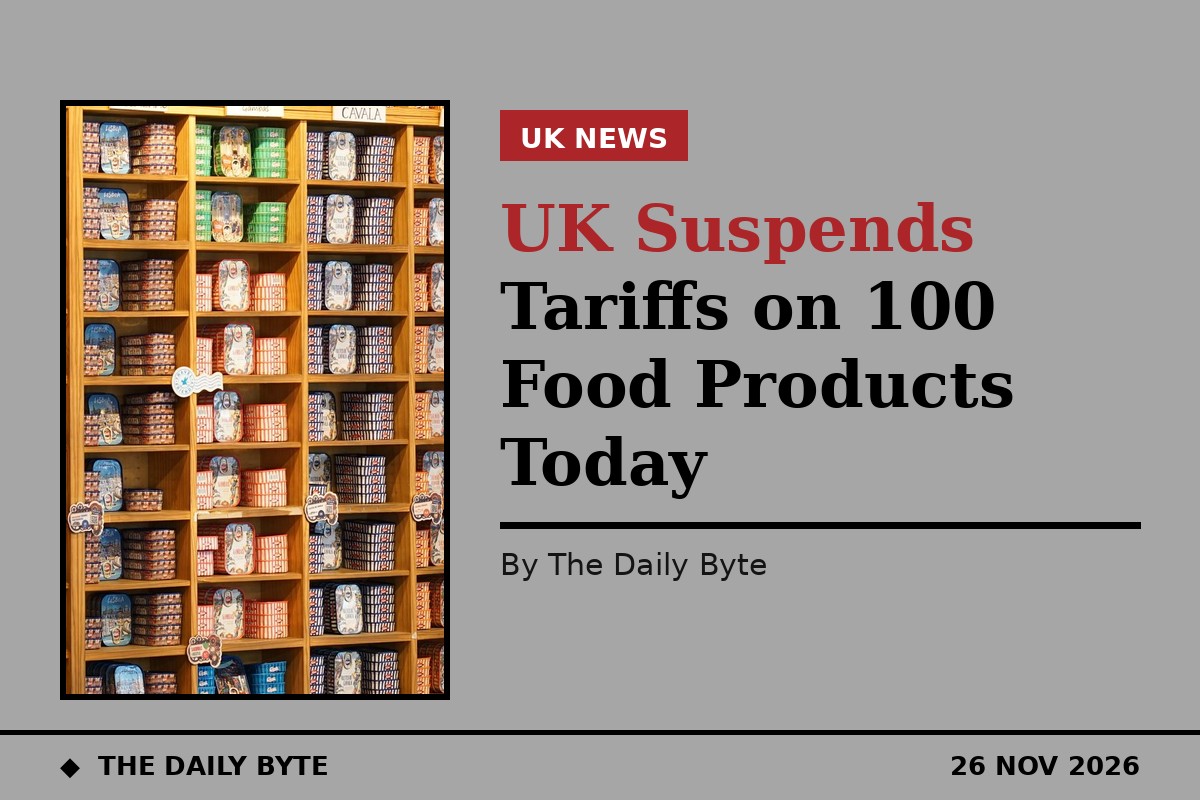
The UK government has suspended import tariffs on more than 100 everyday products from today, Thursday 26 November 2026, in a move it says should cut the cost of the weekly shop by up to £185 million a year.
The package covers 101 food products, along with fertilisers for farmers and kerosene heating oil. It was announced by Chancellor John Healey at last month's Budget and comes into force today.
Baked beans, one of the best-known items on the list, had carried a tariff of 16 per cent. That rate now falls to zero, as do the tariffs on chocolate, previously 8 per cent, and aubergines, previously 12 per cent. Garlic, citrus jams and marmalades, cough sweets, boiled sweets, toffees, plant-based drinks and chocolate-coated waffles are also covered.
The Treasury expects the food suspensions to benefit consumers by between £120 million and £185 million a year, with the headline figure at the top of that range. The estimate is a national figure for consumers as a whole, rather than a saving for any single household.
Healey said families were still feeling the impact of global conflicts on the weekly shop. "We can't control what happens around the world, but we will help where we can," he said. "That's why from today we're removing tariffs on more than 100 products, helping bring down food costs and putting up to £185 million a year back into families' pockets."
The government says lower-income households should benefit most from the change, because food makes up a larger share of their spending.
What else is covered
The suspensions go beyond the supermarket shelf. Tariffs on fertilisers, which ranged from 2 per cent to 6.5 per cent, are suspended until 31 December 2027, with the government saying it will review them before they expire. Farmers should gain from greater security of supply and potential cost reductions, the Treasury said.
Kerosene, which carried a 4 per cent tariff, is suspended until 31 December 2028. The fuel is used as heating oil by some households and businesses, including a majority of households in Northern Ireland.
The food suspensions also run until 31 December 2028. They do not apply to VAT or to trade remedy duties such as anti-dumping duty, and imports from Russia and Belarus are not eligible.
Second package this year
This is the second cost-of-living tariff package of the year. A first set of suspensions came into force on 21 June, covering some fruits, fruit juices, pasta, couscous and tuna. Together, the two packages are expected to reduce consumer costs by up to £595 million a year.
Both packages respond to price pressures linked to the conflict in the Middle East, the government said. The latest list followed a public call for input, which drew 103 responses. Some respondents doubted how much of the saving would reach shoppers, and the government replied that a highly competitive grocery sector would give supermarkets reason to pass the cost reductions on to customers.
Not every product suggested made the cut. Rusks, toasted bread products and biscuits were excluded because of concern for domestic producers, bananas were left out because of preferences enjoyed by developing countries, and dried apples were omitted because a separate business suspension already cuts their tariff to zero.
The government said no further products would be added to this package. Businesses can instead ask for further suspensions through the regular window that opened on 11 November, with applications closing at 11:59pm on 3 February 2027.
Part of a wider Budget package
The tariff cuts sit alongside other Budget measures aimed at household costs, including keeping fuel duty down, £100 towards energy bills for 20 million households, scrapping electricity standing charges and the £2 cap on bus fares.
Whether shoppers notice the difference will depend on how much of the saving supermarkets pass on. The Treasury's case is that competition between grocers will do the work. For farmers and households that heat with oil, the benefit is more direct: lower import costs on fertiliser and kerosene from today.
The suspensions are temporary, and the clock is already running. Food tariffs return at the end of 2028 unless the government acts again, and fertiliser tariffs a year earlier.


