UK 10-year ILR rule is still not law, October checks confirm
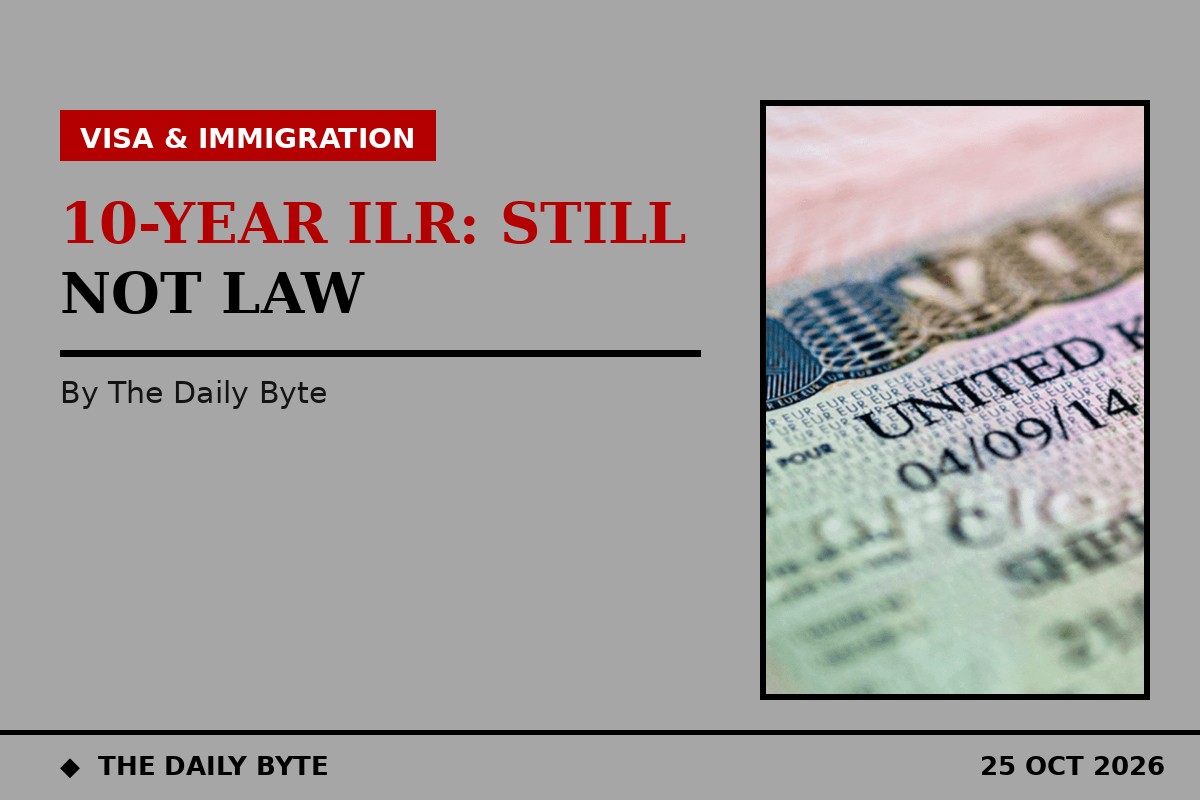
Many students planning a UK degree have heard that permanent residency, called Indefinite Leave to Remain or ILR, may move from five years to ten. As of 16 October 2026, that change was not law in the sources checked, and no government response to a House of Lords committee report on the proposal had been found. Existing five-year routes still apply, but the position can change quickly, so anyone planning around it should check the official GOV.UK pages for their route before acting.
What is confirmed, and what is not
The Home Office consultation on earned settlement ran from 20 November 2025 to 12 February 2026. A parliamentary committee has argued against parts of the plan, but committee reports are advice, not decisions, and the government has not confirmed it will drop the proposal. That leaves the 10-year idea in an in-between state: it is a live proposal, not a rule, and it is not safe to plan as if it were either certain or dead.
One related change is confirmed in the same guide: the UK Graduate visa lasts 18 months if you apply on or after 1 January 2027, and it cannot be extended. That is a separate rule from the ILR proposal, and it should not be confused with it.
What this means for planning
Claims online that the 10-year rule will not happen go further than the evidence, just as claims that it is already decided go too far in the other direction. The honest position is that the proposal is unresolved. Students and workers should keep their current route's requirements in view, watch for a formal government response or draft Immigration Rules, and take regulated immigration advice for a personal decision. This article is general information, not personal immigration advice, and rules change: check the official GOV.UK page for your route before applying.