Wind Projects Face Veto If They Push Up Bills
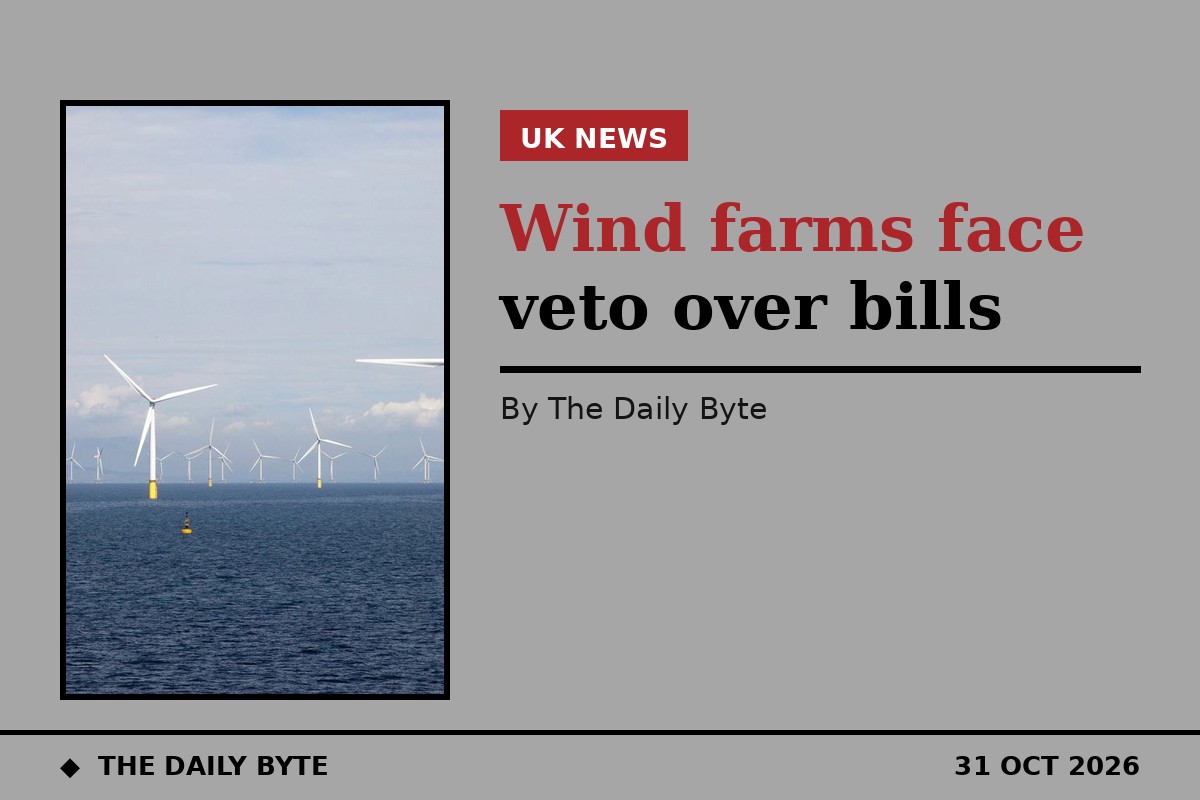
Ministers will veto new clean energy projects if they add to Britain's multibillion-pound wasted wind bill and push up electricity costs for households, Chancellor John Healey has announced. Writing in The Times, he said new offshore wind projects bidding for subsidy contracts would only be approved if ministers were confident all the power generated could be carried by the grid without raising costs for consumers.
"Clean power has to come at the right pace, in the right places, with the grid to carry it," Healey wrote. "There's no sense building power that can't connect and then paying to switch it off." He said the approach would be taken into the next renewables auction, buying only projects that can lower bills while strengthening energy security.
Why wasted wind has become a bill problem
The move follows growing concern about constraint payments — money paid to wind turbines to switch off when there is not enough cabling capacity to carry their power to consumers. Those costs, funded through energy bills, are predicted to add up to £100 to bills by the end of the decade.
A new record of more than £47 million was spent last Tuesday dealing with grid oversupply, according to Wasted Wind, a tracker run by Octopus Energy. In September, the National Audit Office warned that homes and businesses could face an annual bill of £7.8 billion by 2030 to deal with the problem, after wind farms were allowed to connect before grid upgrades were completed and many of those upgrades were delayed.
Scottish projects most exposed
The policy could hit Scottish offshore wind hardest, where grid connections are less advanced. Adam Bell, a former government energy official now at consultancy PF Global, said ministers could choose not to approve any Scottish offshore wind farms in the next allocation round, limiting approvals to the grid upgrade schedule.
Healey insisted the change was not a retreat from clean energy but a "credible route to it", and said a new cost-control framework for energy would be introduced at the next spending review, under which new levies would only be allowed on bills where they bring down costs overall or are essential to keeping the lights on.