UK Workers Sacked for AI Asked Back, Survey Finds
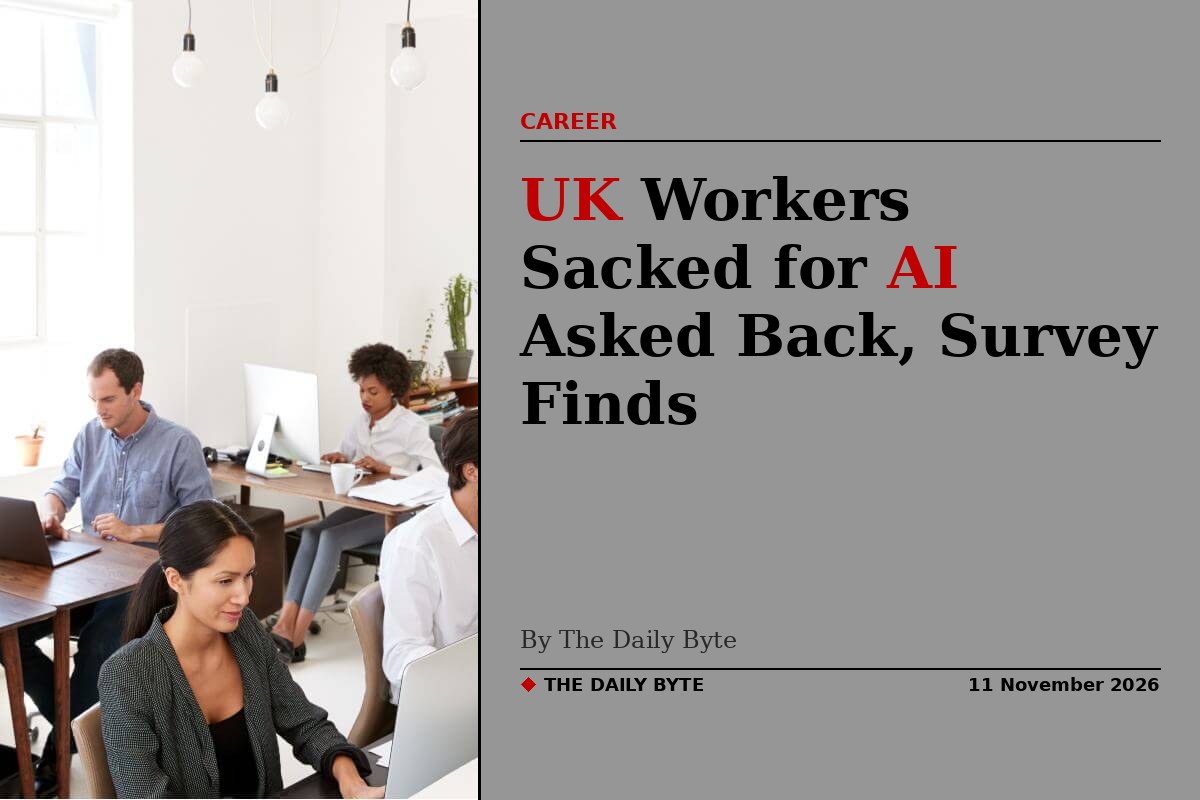
More than one in eight UK workers say they have been replaced by artificial intelligence, only to be asked back by the same employer, according to new research that suggests some companies are reversing AI-driven job cuts. The study, published by talent insight firm SHL, found that 13 per cent of UK respondents had personally experienced what it calls “AI rebounding”: losing a role to automation and then being invited to return.
The findings come from SHL’s Talent Mobility at Work in 2026: The Hidden Workforce report, based on an online survey of 2,036 employed adults in the United States and the United Kingdom, carried out by Propeller Insights in June and July 2026. The UK sample covered 1,007 workers, alongside 1,029 in the US. Across both countries, 16 per cent of respondents said they had personally been replaced by AI and later asked back, rising to 19 per cent in the US. Just over half of all respondents, 52 per cent, said they had encountered the trend directly, through someone they know, or by hearing about it.
Young workers hit hardest
The experience is most common among the youngest workers. Nearly one in four respondents aged 18 to 24, 24 per cent, said they had personally been AI-rebounded, and more than a third of that age group, 36 per cent, said they were close to someone it had happened to. SHL said the pattern was making the first step into work harder for the newest generation entering the workforce, at a time when employers are already hiring more cautiously.
Lucy Beaumont, SHL’s global senior vice-president of product and design, said companies were making fast decisions about staff without a full picture of what their people could do. “AI rebounding is what happens when a company automates a role before it has genuinely assessed the human capability inside it,” she said. “The AI doesn’t deliver, the gap becomes obvious, and the business ends up rehiring the same experts they just let go of, at a far greater cost.”
Returners want more pay and guarantees
Workers who are asked back are not returning on the old terms, the research found. Just over half, 51 per cent, said they would want a substantial pay increase before returning, while 42 per cent would want specific guarantees about their future job security and 40 per cent would want full transparency about how AI would be used in their role in future. One in 13 workers, 8 per cent, said they would refuse to return under any circumstances after being replaced by AI.
The report links the trend to a wider visibility problem inside employers. Fewer than half of workers, 42 per cent, believed their manager fully understood their skills beyond their job title, falling to just over a third, 36 per cent, in the UK. More than half, 54 per cent, said their employer favoured external hiring over reskilling or promoting existing staff, while 47 per cent said they would rather be retrained for a different role than lose their job outright if AI significantly changed their current position.
What the figures do, and do not, prove
The figures describe what survey respondents reported about their own experience, rather than a verified count of redundancies reversed across the UK. The survey does not establish how many employers reversed AI-related cuts, whether AI alone prompted the original decisions, or how many workers accepted an offer to return and on what terms. Even so, the pattern it describes is consistent with wider reports of employers reinstating roles after automation fell short, and it underlines why workers are now negotiating harder when they are asked to come back.
For employers, SHL said the lesson was to understand their workforce’s skills and AI readiness before deciding what to automate and what to protect. For workers, the message is that being replaced by AI may not be the end of the story, but returning is likely to come with new demands on pay, security and openness about how the technology will be used.