Ukraine inquiry links Russian forces to tear gas attack as EU demands action
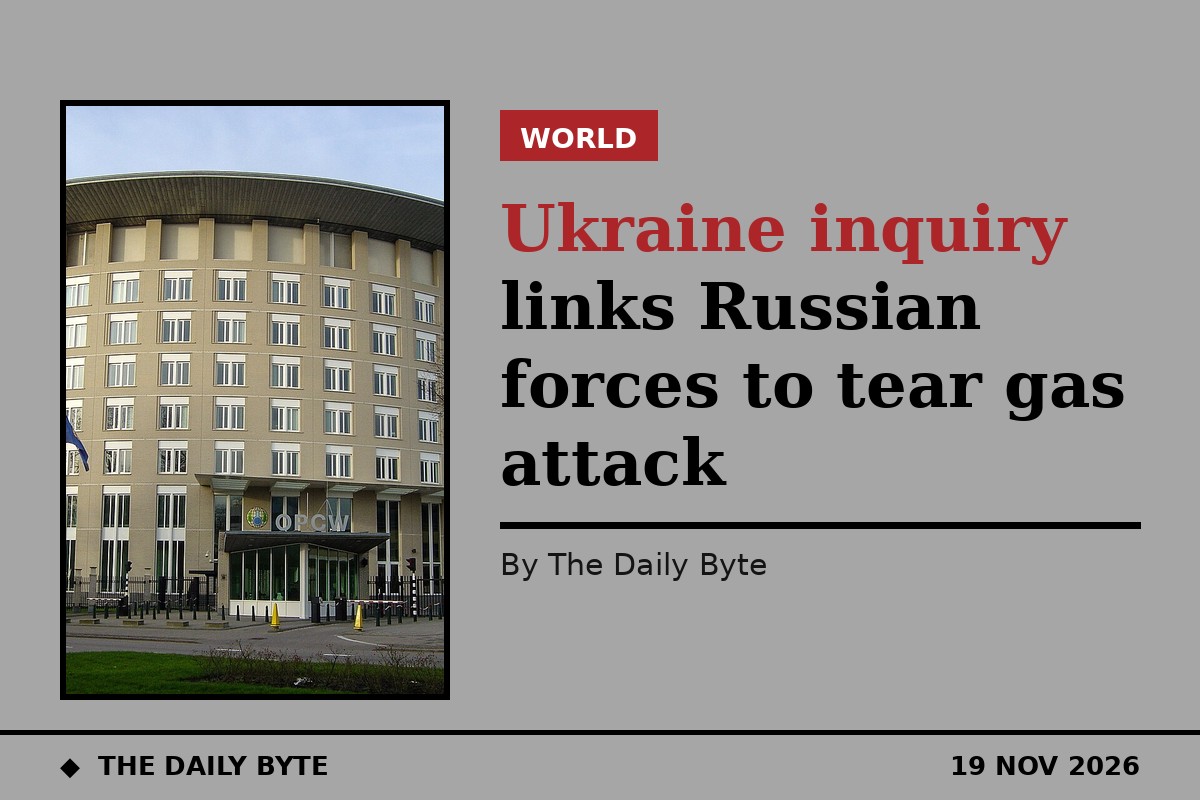
An investigation carried out by Ukraine with the assistance of the global chemical weapons watchdog has concluded that Russian forces used a drone to drop a canister of tear gas on Ukrainian troops, according to a report released on 17 November. The European Union and Germany condemned the findings on 18 November and called for Russia to be held to account.
The report was circulated by the Organisation for the Prohibition of Chemical Weapons (OPCW) to its 193 member states ahead of the organisation's annual meeting next week. It is the first time an investigation has connected such an attack to the Russian military; the OPCW confirmed the agent's presence in samples, while the link to Russian forces is the Ukrainian investigation's conclusion.
What the investigation found
The investigation focused on a single incident on 20 September 2024, when Russian forces attacked a Ukrainian military post near the village of Illinka in the Dnipropetrovsk region of central Ukraine. Investigators found a video posted to a pro-Russian Telegram channel which they say shows a grenade filled with tear gas being dropped from a drone onto Ukrainian troops at the "Zemlya" observation post.
The OPCW had already confirmed in 2024 that the riot control agent known as CS gas had been found at several locations in Ukraine. In a technical assistance report published in November 2024, two laboratories designated by the OPCW independently confirmed the presence of CS in a grenade and in soil samples collected from a trench near Illinka, although that examination did not determine who was responsible. The new Ukrainian report goes further: it traces the grenade's markings to a Russian research institute and its production to the second quarter of 2024, and it sets out supply documents it says link the weapon to a Russian military unit.
Ukraine says the incident is far from isolated. According to Kyiv, there have been about 14,000 similar incidents during the conflict, with troops needing medical attention in 3,000 of them. In a statement to the OPCW Executive Council, Ukraine put the figure at 14,009 incidents recorded as at 23 September 2026. The Associated Press reported that Ukraine alleges the Kremlin regularly uses tear gas to force troops out of buildings and trenches, where they can then be attacked.
Why tear gas is banned on the battlefield
CS gas is a riot control agent that causes tearing, burning, coughing and difficulty breathing. Its use by police is allowed under the Chemical Weapons Convention, but the treaty forbids militaries from using it as a method of warfare. Russia is a party to the convention, which bans the military use of tear gas.
The OPCW's Technical Secretariat provided technical expertise to support the Ukrainian investigation and circulated its report to all member states on 17 November at Ukraine's request.
Europe's response
The European Union condemned Russia on 18 November. The spokesperson for the European External Action Service urged Moscow to immediately cease any chemical weapons use and return to full compliance with the Chemical Weapons Convention, and called on the OPCW, "considering the compelling evidence", to exercise its mandate "without delay" to attribute responsibility. Agence Europe reported that the EU also warned of further sanctions.
Germany issued its own statement the same day. "Russia continues its relentless war against Ukraine and commits grave breaches of the Chemical Weapons Convention," the German Foreign Ministry said. "A Ukrainian investigation has found clear evidence of the use of prohibited chemicals. Russia needs to be held accountable at the OPCW."
Russian authorities did not immediately comment, but Moscow has denied using chemical weapons in the past and has instead alleged that Ukraine used the banned substances. Dutch and German intelligence agencies reported in July 2025 that they had extensive evidence of Russian forces using banned agents, including chloropicrin — claims Russia denied.
What happens next
The report will be before the OPCW's Conference of the States Parties, which meets in The Hague from 23 to 27 November. Ukraine's foreign minister has urged the organisation to deny Moscow a seat on its Executive Council, and the EU is pressing the watchdog to attribute responsibility for the breaches.
Frequently asked questions
What is CS gas? CS is a riot control agent, commonly known as tear gas. It can legally be used by law enforcement, but the Chemical Weapons Convention prohibits its use as a method of warfare.
Has the OPCW blamed Russia? No. The OPCW confirmed the presence of CS in samples from the Illinka incident. The conclusion that Russian forces were responsible comes from Ukraine's national investigation, which the OPCW supported with technical expertise.
How many incidents has Ukraine recorded? Ukraine says its authorities had recorded 14,009 incidents involving munitions containing toxic chemicals as at 23 September 2026, with medical attention needed in about 3,000 cases.


