Ukraine and Russia Agree Local Oleshky Ceasefire for Aid and Evacuations
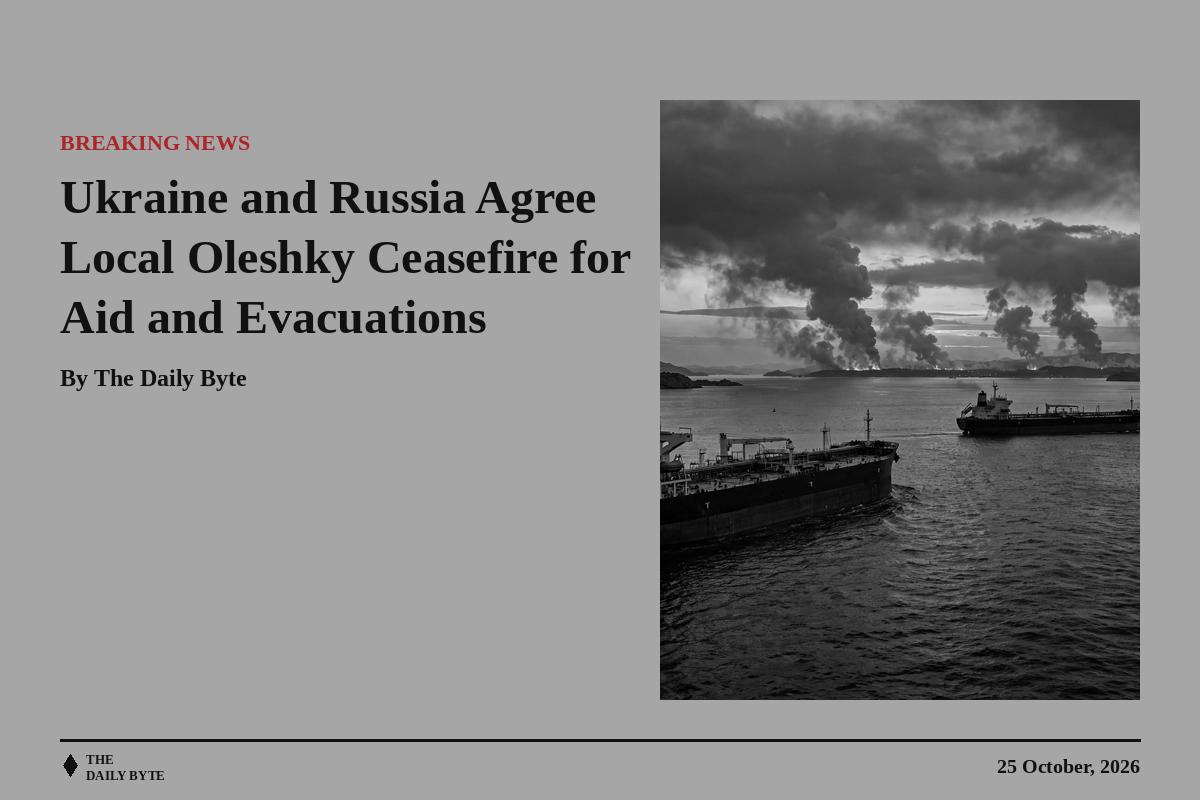
Russia and Ukraine have agreed a localised, temporary ceasefire around the Russian-occupied town of Oleshky to enable humanitarian deliveries and civilian evacuations. The arrangement is not a general ceasefire across the war, and public reports differ on its start date.
Conflicting dates, same purpose
Reuters and The Guardian reported the ceasefire would begin on 27 October, while a Kremlin statement cited 29 October and said military officials were coordinating implementation. The White House, announcing the deal on 23 October, said the ceasefire would begin on Thursday, 29 October. First Lady Melania Trump said she and her representative worked directly with Russian and Ukrainian leadership to define its terms, and that without her intervention, bringing aid in and evacuating the elderly would have been impossible.
A town on the brink
Oleshky, directly across the Dnipro River in the Kherson region, has a remaining population estimated at between 1,700 and 2,000 people, down from about 24,000 before the war, according to the White House. Most of those remaining are elderly residents and about 50 children. The White House said about 90 percent of the city was flooded after the destruction of the Kakhovka Dam, and residents have faced serious shortages of food, medicine and clean water.
Diplomacy continues, fighting does not stop
The local ceasefire comes as Ukrainian, Russian and US representatives are expected to pursue technical-level peace discussions in the first half of November, with Abu Dhabi identified as a possible venue, according to Reuters and the Associated Press. Those talks have not produced agreement on territory, security guarantees or the conditions for stopping the fighting. The Oleshky arrangement is therefore best understood as a limited humanitarian measure, not a step that by itself ends the war.