UN: 25 seafarers killed in Strait of Hormuz since February
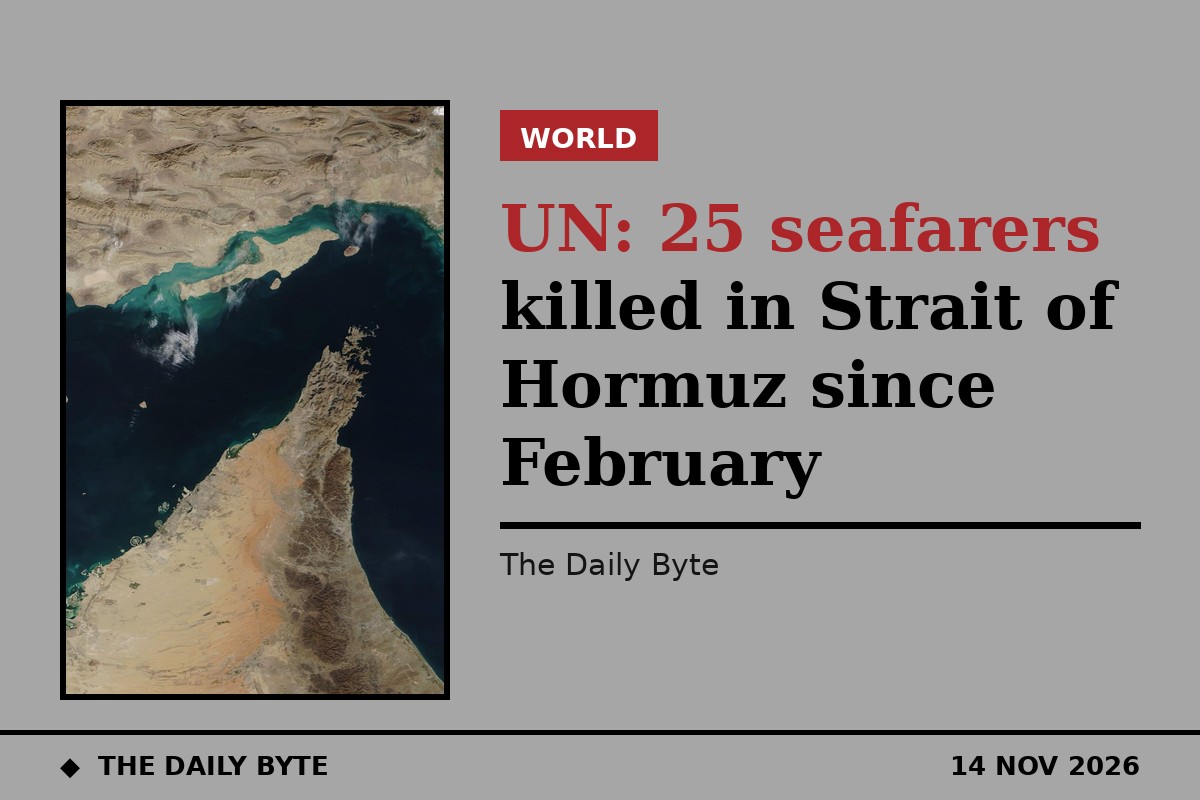
At least 25 seafarers have been killed in and around the Strait of Hormuz since the war between the United States, Israel and Iran began in February, the United Nations has told the Security Council. The International Maritime Organization (IMO) had recorded 134 confirmed maritime incidents in the strait and the wider Middle East maritime area as of 11 November, according to figures presented to the Council on Friday.
Khaled Khiari, the UN Assistant Secretary-General for the Middle East, Asia and the Pacific, gave the figures during a briefing requested by Bahrain. He said October recorded the highest monthly number of incidents involving commercial shipping since February, and warned that shipping through the strait remained about 65 percent below pre-war levels, according to the United Kingdom Maritime Trade Operations centre. “Civilian vessels and commercial shipping must not become targets,” Khiari told the Council.
Thousands of seafarers stranded
Others were injured or remained missing, Khiari said, without giving further details. Bahrain’s representative told the meeting that about 1,600 vessels had been affected by disruptions in the waterway, leaving more than 23,000 seafarers stranded aboard their ships. Many commercial ships and their crews have been stuck in the Gulf for months, the UN said.
The disruption has pushed up energy, transport and insurance costs, contributing to inflation and threatening food security, Khiari said. He added that shipments of fertiliser remained severely constrained by the maritime restrictions. “The longer these restrictions persist, the greater the economic costs and the more difficult it will become to restore commercial confidence and trade flows,” he said, describing current shipping arrangements in the region as “costly, unpredictable and unsafe”.
“Cannot become the new normal”
Khiari said the situation must not be allowed to become “the new normal”, and called for an immediate end to attacks on civilian vessels and the full restoration of safe maritime navigation. He said strategic maritime chokepoints must not be used as instruments of coercion or to obstruct shipments of food, energy, fertiliser and other essential goods, and that passage should be safe and unrestricted in accordance with international law.
He repeated a warning from UN Secretary-General Antonio Guterres that continued tensions in the region could have serious consequences for international peace and security. Khiari also warned that another round of hostilities could have devastating consequences for Iran, neighbouring countries and the international community, adding: “The people of the region, and indeed the wider international community, cannot afford a prolonged conflict in one of the world’s most strategically important waterways.”
UN urges diplomacy
Khiari welcomed the absence of major military exchanges between the United States and Iran since early September, but said he was concerned by statements suggesting the possibility of renewed military confrontation. He welcomed renewed diplomatic engagement in Doha and elsewhere in the Middle East, despite setbacks in negotiations involving Iran’s nuclear programme and international sanctions.
“We urge the parties to seize the current opportunities and negotiate in good faith. We hope that the mediators’ efforts will help Iran and the United States reach a peaceful and durable settlement,” he said. He also recognised efforts by regional governments to develop maritime security arrangements, saying they could complement broader diplomatic initiatives.
Gulf Cooperation Council Secretary-General Jasem Mohamed Albudaiwi told the Council that the Gulf states wanted stronger action against attacks threatening Gulf countries and international shipping. He said the GCC states rejected any infringement of their security, sovereignty and territorial integrity, and urged the Council to take measures to stop attacks attributed to Iran and the Houthis while protecting commercial vessels, maritime crews and energy infrastructure.


