UN Warns Over Escalating Hostilities in Yemen
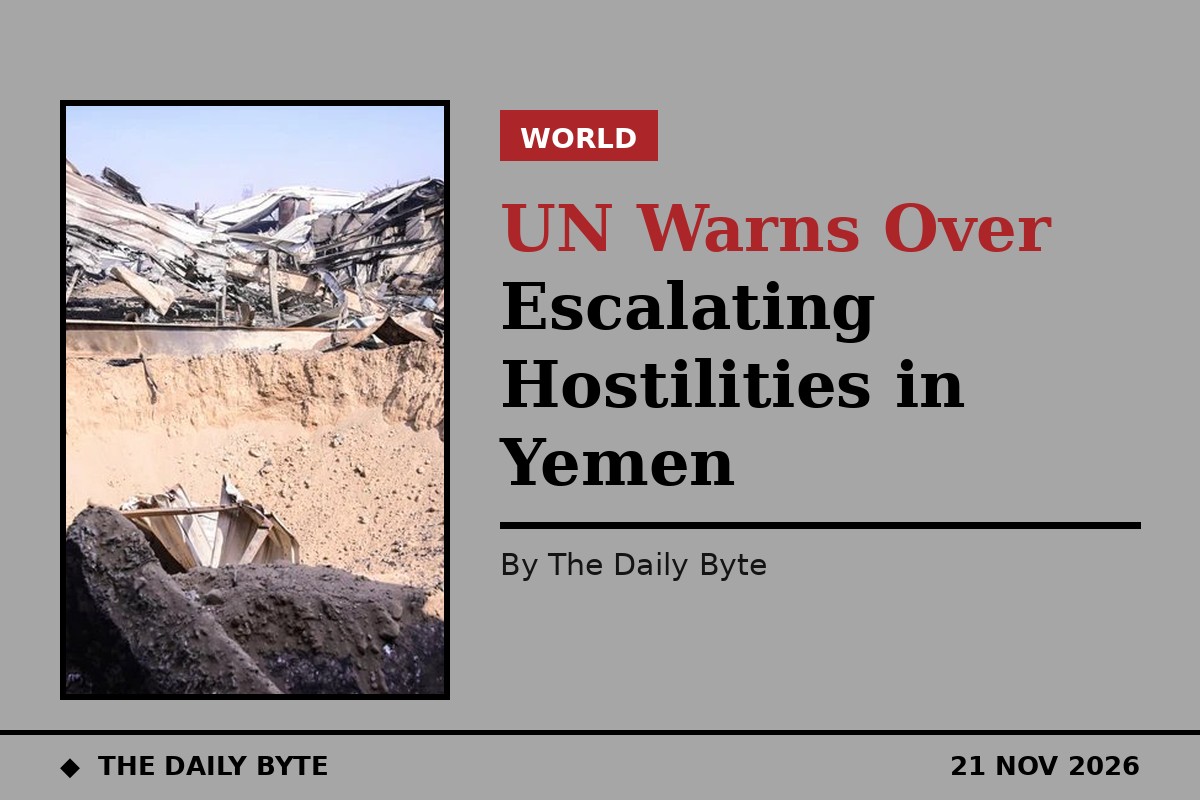
The United Nations has said it is deeply concerned about escalating fighting in Yemen and the surrounding region, warning that the Red Sea ports on which millions of people depend must be kept running.
Farhan Haq, the deputy spokesperson for Secretary-General António Guterres, told reporters at the United Nations noon briefing on Friday, 20 November, that the organisation was following reports of airstrikes by the Saudi-led coalition on the port of Hodeidah that day, military operations in the provinces of Sanaa, Saada and Taiz, and continued Houthi attacks on Saudi Arabia.
“We remain deeply concerned by the ongoing military escalation in Yemen and around it,” Haq said.
“We stress the need to ensure the continued operation of Yemen’s Red Sea ports, which are a lifeline for millions of people in Yemen,” he added.
Haq called on all sides to comply with their obligations under international humanitarian law, including the prohibition on attacks against civilians and civilian infrastructure. He said the conflict could not be settled by military means and that the parties needed to find a way back to political negotiations.
Taiz running short of food and medicine
The warning came with a bleak update on conditions in Taiz, where fighting has tightened around the city. The United Nations Office for the Coordination of Humanitarian Affairs said on 20 November, citing local authorities, that food stocks in the city were enough to meet only one-tenth of the population’s needs.
With roads still blocked, supplies of food, medicine and water have fallen by 90 per cent, while supplies of cooking gas, petrol and diesel have dropped by as much as 97 per cent, the agency said. Food prices have risen by 60 per cent, fuel and gas prices have increased by 300 per cent, and transport costs have quadrupled.
Shortages of medicines, vaccines and medical supplies are disrupting healthcare, particularly for children, pregnant women and people with chronic illnesses, OCHA said. Humanitarian partners are still reaching displaced families across Taiz province despite the fighting and access constraints, and the agency repeated its call for civilians and refugees to be protected and for safe, sustained and unhindered humanitarian access, including the reopening of key supply routes into Taiz city.
Fighting spreads as regional war widens
The escalation in Yemen has intensified alongside the wider war between the United States and Israel and Iran, which has spread fighting across the region and reignited Yemen’s war, now in its twelfth year. Houthi forces have controlled the capital, Sanaa, and most of Yemen’s main population centres since the war began in 2014, and the Saudi-led coalition intervened in 2015 to support the Yemeni government.
The United Nations had already warned a week earlier that civilians were being killed and injured in places that had been considered safe only months before, including hospitals, markets and their own homes. Haq said on 13 November that drones, missiles, airstrikes and shelling were striking civilians and civilian infrastructure more and more often across Yemen, and that the trend “must not become the accepted reality of this war”.
That briefing also carried a demand from the United Nations High Commissioner for Human Rights, Volker Türk, for the body of United Nations staff member Mohammed Ibrahim Al-Shami to be returned to his family promptly, after the United Nations learned he had died in Houthi custody, and for all detained United Nations and humanitarian personnel to be released immediately and unconditionally.
The United Nations said the people of Yemen continue to bear the consequences of the escalating violence, in a war that has already caused one of the world’s most severe humanitarian crises.


