Gaza Hypothermia Deaths Warning as Winter Shelters Run Out
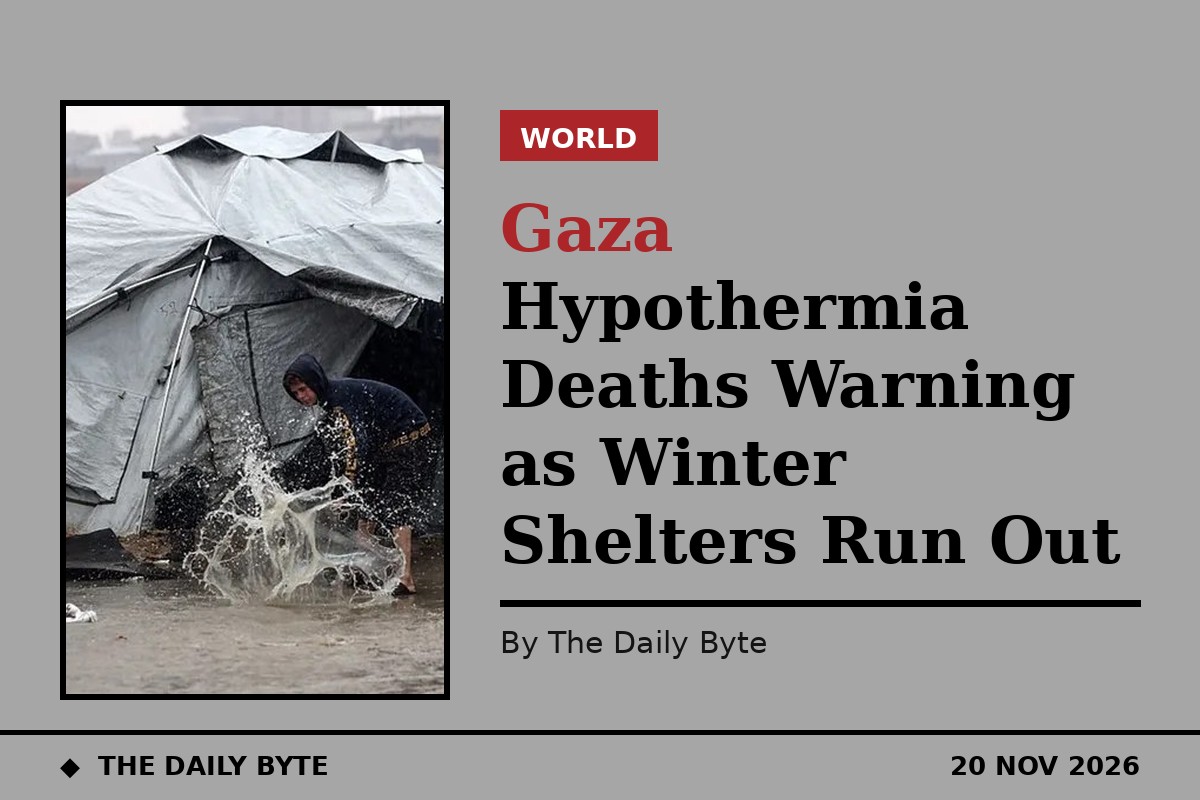
More people in Gaza will die of hypothermia this winter unless far more shelter and relief supplies are allowed in, the UN migration agency has warned, after a nine-month-old baby froze to death in his family's tent. The warning underlines how exposed Gaza's displaced population has become as winter sets in, with tens of thousands of tents already flooded by the season's first storms.
Karl Baker, head of the International Organization for Migration's Gaza programme, told a UN briefing in Geneva on Tuesday: 'Without proper shelter, without critical relief items, then hypothermia deaths will occur.' He added that children were particularly vulnerable, since they lose body heat more quickly, and said: 'It's unacceptable to have hypothermia in the modern world.'
The agency faces a 173 million dollar funding shortfall for its winter shelter programmes, Mr Baker said, and about 100,000 tents are currently waiting to enter Gaza, more than in previous years, with flows hindered by crossing closures and lengthy Israeli security checks.
A baby's death in Khan Younis
The warning followed the death of nine-month-old Kinan Ahmed Raqiq, who died of hypothermia overnight on Thursday inside his family's displacement tent in Khan Younis, in southern Gaza. A doctor who examined the child told the AFP news agency that the baby died from hypothermia, his father said he woke to find his son's skin had turned blue and rushed him to Nasser Hospital, and Gaza's Civil Defence confirmed the death.
According to the checked account of the case, the death was confirmed by three named or identified witnesses: the treating doctor, the father, and the Civil Defence spokesman. The baby's death came days after storms flooded tens of thousands of tents across Gaza, where UN agencies say hundreds of thousands of displaced people are living in flood-prone areas.
A six-month-old baby was also reported to have frozen to death in a flooded tent on 8 November, in the first weekend of the winter storms, although that case has not been confirmed to the same standard.
Tents that cannot withstand the winter
Heavy rain swept Gaza in the first week of November, flooding tents where tens of thousands of people live. The UN Office for the Coordination of Humanitarian Affairs said 26,000 households were affected by the storms as of 8 November, and UNICEF reported that flooding had affected more than 106,000 people as of 9 November. About 950,000 displaced Palestinians are living in flood-prone areas, and the UN says 650,000 children in Gaza need winter aid, including warm clothing and blankets.
Save the Children said about 70,000 tents, sheltering an estimated 350,000 people, were flooded within 12 hours of the first winter storm of the season, and that four children were killed when a sandbank collapsed onto tents west of Deir al-Balah.
Mr Baker described meeting a drenched family sheltering beneath sagging, worn-out tarpaulins. 'Gaza is turning into one large IDP camp. It ranks as one of the worst I have walked through,' he said, according to Reuters reporting of the briefing. Most of Gaza's population of 2.1 million people is displaced, and respiratory illnesses are rising, the agency said.
Aid held up at the border
The IOM called for robust structures such as caravans and prefabricated housing to be funded and allowed in, alongside tents and blankets. Israel's military aid agency, COGAT, says it has a proactive 'winterization plan' and that supplies and medicines continue to enter Gaza. The UN children's agency has complained that Israel has blocked equipment ahead of winter.
The warning came days after 53 countries and organisations issued a joint call for unrestricted humanitarian access to Gaza ahead of winter, and as the foreign ministers of Australia, Canada, Italy and the United Kingdom jointly urged Israel to let 150,000 tents and other vital supplies into Gaza without delay. For families like Kinan's, sheltering under tarpaulin in a flooded camp, the question is whether those supplies arrive before the next storm.


