UN warns South Sudan elections risk new crisis
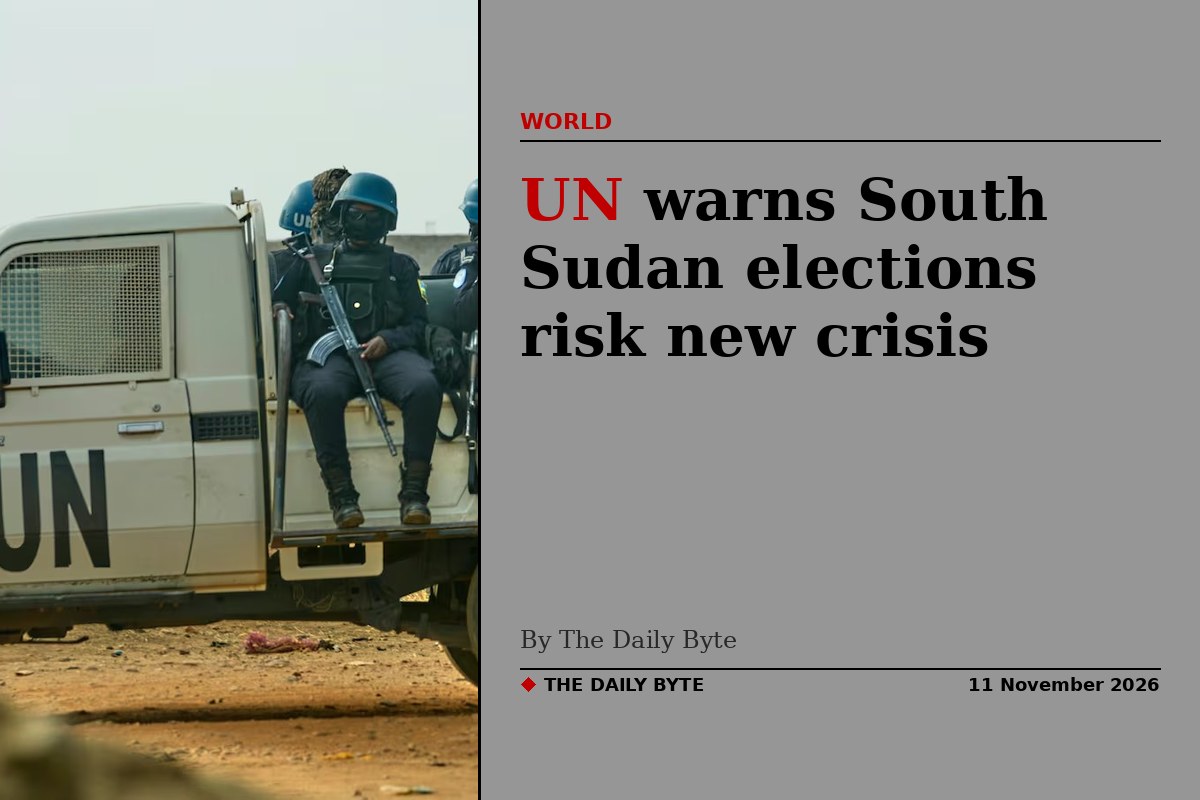
The United Nations has warned that South Sudan's planned December elections could deepen instability unless political leaders urgently address security concerns, outstanding peace commitments and divisions among political groups.
Anita Kiki Gbeho, the Secretary-General's Special Representative and head of the UN Mission in South Sudan (UNMISS), gave the warning while briefing the UN Security Council on 10 November, with 42 days remaining before the planned vote on 22 December. The election is expected to be the country's first national election since independence in 2011, according to The Opportunity News, reporting the UNMISS briefing.
The UN says significant questions remain over security arrangements, logistics and the ability of the National Elections Commission to organise the vote within a compressed timetable. Holding an election alone, the mission has stressed, will not resolve South Sudan's security, governance and reconciliation challenges.
Political consensus under strain
Political consensus has weakened in the run-up to the vote. Some opposition groups remain outside the dialogue process, while the dispute surrounding detained opposition leader Riek Machar continues to complicate efforts to build agreement. Machar, the former first vice-president, remains detained and on trial, and his party and other opposition actors remain excluded from the electoral process.
The strain has grown since President Salva Kiir dissolved the transitional unity government, the national parliament and state legislatures on 22 September and installed a caretaker administration. The United Kingdom, speaking at the same Security Council meeting, said the new caretaker arrangements, introduced while key provisions of the 2018 Revitalised Peace Agreement remain unfulfilled, had further weakened political consensus at a critical moment.
Britain's Deputy Permanent Representative to the UN, Ambassador Kate Foster, told the Council that the South Sudanese people have the right to choose their leaders, but that elections must seek to contribute to peace and stability, not deepen division or become a substitute for the political process, according to GOV.UK. The UN has likewise stressed that elections should form part of a wider political transition rather than replace dialogue and implementation of the 2018 agreement.
Humanitarian pressure grows
Beyond the political uncertainty, South Sudan continues to face a severe humanitarian emergency. UNMISS estimates that about 10 million people require humanitarian assistance, while around 7.5 million are food insecure. The mission also reported a 38 per cent increase in humanitarian access restrictions over the past year, although its increased protection escorts have helped humanitarian partners reach more than 321,000 people.
The UK statement put the food crisis in similar terms, saying almost 8 million people already face acute food insecurity, and that renewed conflict is forcing families from their homes, deepening hunger and making it harder for aid organisations to reach those most in need. Public resources continue to be mismanaged, the statement added, with only 2 per cent of the national budget spent on health and education.
The risks facing the UN presence itself were underlined in the same session. Ambassador Foster began by offering condolences to the families of three UN peacekeepers killed in Jonglei in August, and said the UK condemns attacks against peacekeepers, noting that such attacks may amount to war crimes.
What the UN is asking for
The UN is urging South Sudan's political leaders to uphold the ceasefire, protect civilians, guarantee humanitarian access and begin broader inclusive dialogue. It is also pressing for the voices of political parties, civil society, faith-based actors, women, youth and other stakeholders to be heard, arguing that inclusive dialogue is a necessary condition if elections are to contribute to peace and stability.
For UNMISS itself, the immediate demand is freedom of movement. The UK told the Council that restrictions imposed by the caretaker government continue to obstruct the mission's work, and that the authorities must honour the Status of Forces Agreement and allow UNMISS to operate without obstruction. At what the UK called a particularly fragile moment, the mission must have the freedom of movement it needs to protect civilians.
Efforts by the African Union, the regional bloc IGAD, Special Representative Gbeho and the African Union High Representative, Jakaya Kikwete, to support dialogue were welcomed by Council members. For South Sudan, the central question is now not only whether the election can take place on schedule, but whether the process can strengthen public confidence and preserve peace.


