Three in Four UK Women Sexually Harassed in Public
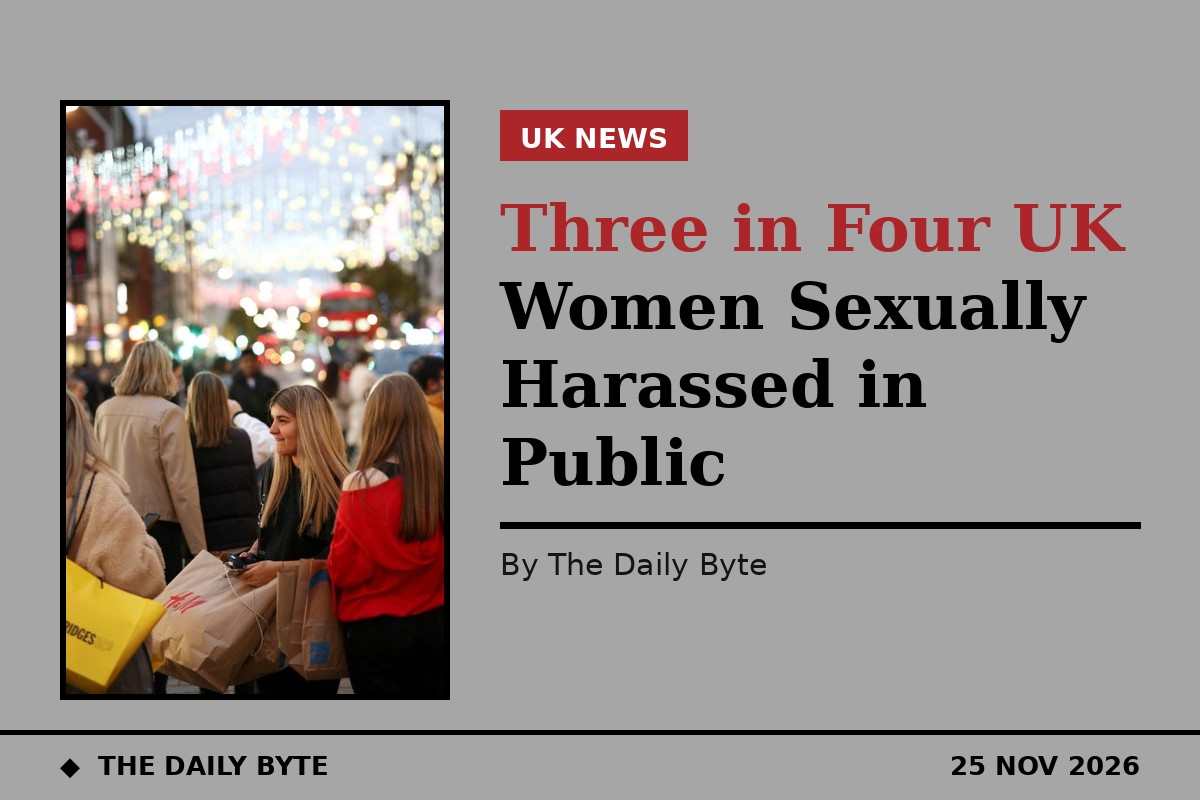
Three in four women in the UK have experienced sexual harassment in a public space, and the figure has risen since 2021, according to new research published on Tuesday 25 November.
UN Women UK and Stonewall launched a new campaign, "It's Me", alongside the findings, on the International Day for the Elimination of Violence against Women, the first day of the 16 Days of Activism Against Gender-Based Violence. Their report, "Still Not Safe", is published through UN Women UK's Safe Spaces Now programme, which works to make public spaces safer for women and girls.
The research found that 76% of women have experienced sexual harassment in a public space, up from 71% when the charity last asked the question in 2021. A YouGov survey of 1,062 women and non-binary people, carried out between 29 October and 2 November 2026, sits behind the figures.
Young women and LGB women hit hardest
The burden falls most heavily on younger women and on lesbian, gay and bisexual women. Among women aged 18 to 24, 93% said they had experienced sexual harassment in a public space, up from 86% five years ago. Among lesbian, gay and bisexual women, the figure was 95%.
Online harassment is also widespread: 39% of women said they had been harassed online, rising to 60% of women aged 18 to 24. The campaign film features voices including former Scottish Labour leader Kezia Dugdale, former first minister Nicola Sturgeon, writer Poorna Bell and campaigner Katie Piper, alongside community members from both organisations.
Most never report it
Only 19% of women who were harassed reported it to an official organisation, and nearly half of those who did not report said they did not think reporting would help. Half of women said they would be more likely to report harassment if they were confident action would be taken; at present, most are not.
Instead, women change their own behaviour. Some 85% said they had changed what they do because of concerns about harassment, and six in ten had avoided certain routes or places, or going out alone after dark. UN Women UK describes this as lives getting smaller: the long way home, a location shared with a friend, keys held between the fingers.
Bystanders rarely step in. Four in ten women said no one else was around when they were harassed, while one in four said other people were present but no one intervened. UN Women UK said its work with men and boys showed the barrier was rarely indifference but hesitation about whether and how to act.
"It was never our job as women to fix"
Tabitha Morton, chief executive of UN Women UK, said: "Women are tired of being the ones expected to change. They take the long way home, share their location and avoid going out after dark, and still the numbers go up. It isn't working, and it was never our job as women to fix." She said tackling harassment "takes all of us: the people who see it happening, the places where it happens, and the systems meant to respond when it's reported".
Simon Blake, chief executive of Stonewall, said the findings added to Stonewall's own recent research showing that one in five LGBTQ+ people avoid certain streets because they do not feel safe. "No one should have to be fearful and feel at risk as they walk home, get on a train or go out at night," he said.
What the campaign is calling for
The findings will be presented to parliamentarians at an event in Parliament hosted by Labour MP Kate Osborne on 10 December, Human Rights Day, where the organisations will call for a national reporting and support line. The campaign film will run across social media throughout the 16 Days, which end on 10 December.
UN Women UK is also promoting its Stop, Support, Report framework, which trains people of all genders to step in safely when they see harassment: interrupt if it is safe to do so, check in with the person targeted, and report it if they want it reported. Its Same Side programme works with young men and boys through sport. Anyone affected can contact Rape Crisis on 0808 802 9999, Galop on 0800 999 5428 or Victim Support on 0808 1689 111.