United Flight UA168 Diverts To Athens Over Cabin Odour
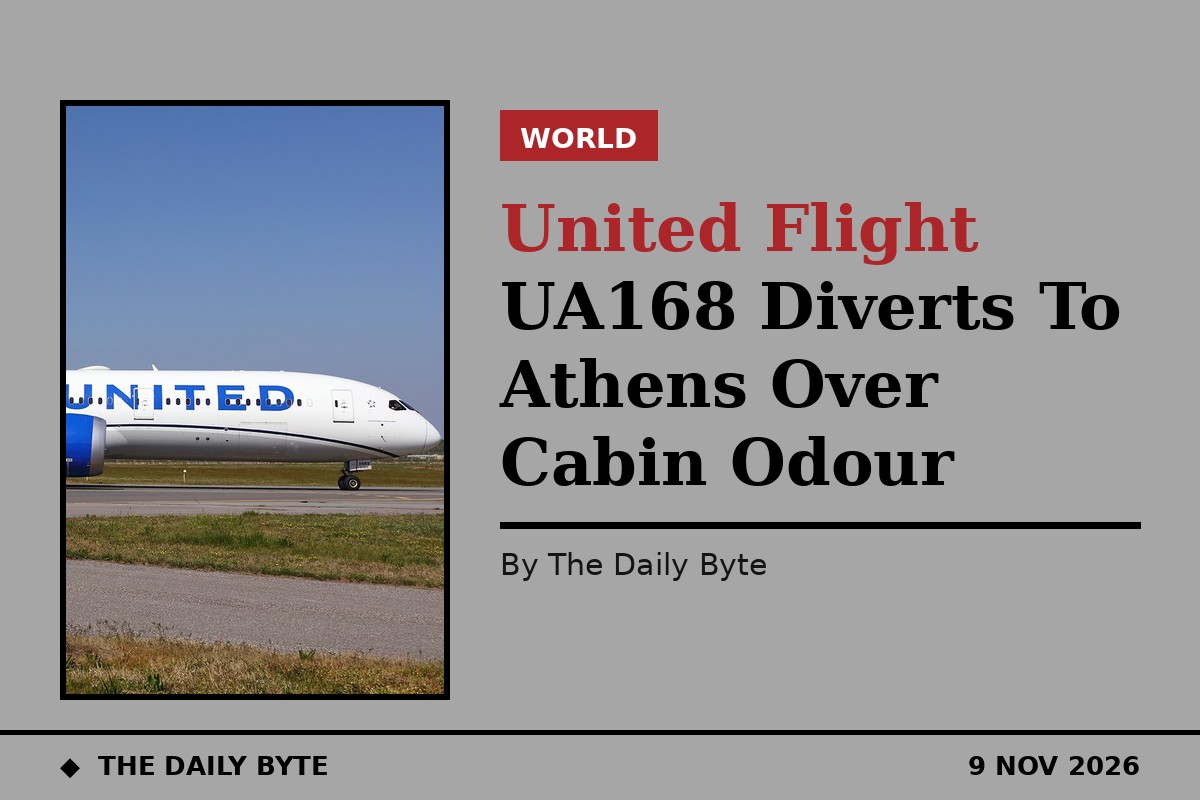
A United Airlines flight from Tel Aviv to Newark diverted to Athens early on Monday after the crew reported an odour in the cabin, the airline said.
Flight UA168, a Boeing 787-9, had departed Ben Gurion Airport at about 00:45 local time. Around two hours into the flight, the crew declared an emergency, squawking 7700, while the aircraft was at about 32,000 feet over the Aegean Sea near the island of Leros.
The aircraft, registration N24993, turned towards Athens and landed safely at about 03:02 local time. All 230 passengers and 13 crew members on board left the aircraft normally after it reached the gate.
United said the flight "diverted to Athens and landed safely to address an odour in the cabin". The airline arranged a replacement aircraft for passengers continuing to Newark, and the original flight was cancelled.
The aircraft involved, N24993, is a Boeing 787-9 Dreamliner, a long-haul twinjet that United uses on transatlantic and other long-distance routes. The 787 family is known for its composite airframe and large windows, and the -9 is the middle-sized version of the three Dreamliner models.
The flight had been heading west across the Mediterranean on the long route from Tel Aviv to the New York area when the crew reported the problem. The diversion meant passengers faced a lengthy delay while a replacement aircraft was prepared in Athens and the original flight was cancelled.
Aircraft grounded for inspection
The Dreamliner was taken out of service for a maintenance inspection after landing, and it remained on the ground in Athens while engineers examined it. They will check the cabin air system and the engines before the aircraft is cleared to fly again.
Crews treat an unexplained odour seriously because it can point to a fault in the aircraft's air or electrical systems, and pilots will usually divert to the nearest suitable airport rather than press on to the destination.
Squawk 7700 is the transponder code pilots use to signal a general emergency to air traffic control. It alerts controllers that the aircraft needs priority handling, and it is used for a wide range of situations, from medical emergencies to technical problems.
Athens International Airport is a regular diversion point for flights crossing the eastern Mediterranean, and its runways can handle large long-haul aircraft such as the 787.
United has not said what caused the smell, and the inspection will determine whether the aircraft can return to service. The passengers were expected to continue their journey on the replacement aircraft later on Monday.
Sources: Airlive; The Aviation Hub.