US 10-Year Yield Falls to 4.84% After Hot PCE
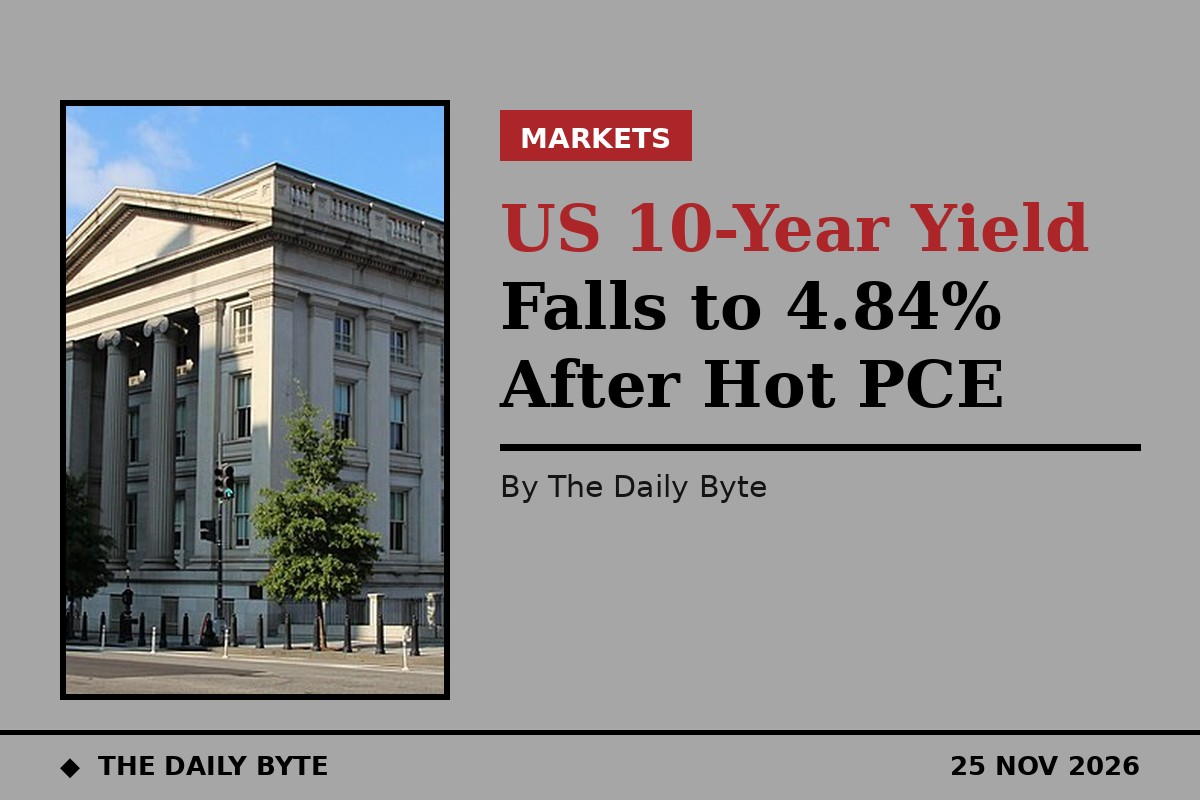
The yield on the benchmark 10-year US Treasury note fell to 4.84% on Wednesday after hotter-than-expected October inflation data, defying the usual pattern in which strong price figures push borrowing costs higher. Investors bought government bonds as a technology-led sell-off sent them looking for safety, and that bid overwhelmed the inflation signal.
It was a counterintuitive reaction. Core PCE inflation, the Federal Reserve's preferred gauge, rose to 3.3% over the year in October, above the 3.2% economists had expected, while headline PCE reached 3.8%. Third-quarter GDP was revised sharply up to 4.3%. On the face of it, that combination should have sent yields higher. Instead, the 10-year yield moved lower to 4.84%, according to Investor's Business Daily, after trading at 4.853% earlier in the session, its lowest since 5 November, according to Barron's.
A safety bid beat the inflation print
The explanation lies in equities. The Nasdaq has fallen more than 5.5% over the past 10 days and the S&P 500 has retreated 4.8%, Barron's reported, and Wednesday brought a fresh leg lower: Nasdaq-100 futures fell 3.2% and S&P 500 futures 2.1% after the data. When stocks fall that fast, money moves into Treasuries, and bond prices rise as yields fall.
The two-year note, which is more sensitive to Federal Reserve policy, was trading at about 4.62%. Markets have fully priced in a 25-basis-point rate rise at the Fed's 8-9 December meeting, with CME FedWatch putting the chance at 97.8%, and traders also expect a further increase in January, Reuters reported. A bond market that keeps rallying into a near-certain hike is a market pricing fear, not relief.
From above 5% to below 4.85% in a week
The move extends a sharp round trip. The 10-year yield crossed 5.00% on 17-19 November, according to Federal Reserve H.15 data, before falling to 4.92% on 20 and 23 November. Wednesday's fall to 4.84% takes it further from that peak, even though the inflation data since then has come in hotter than forecast.
That matters beyond bond traders. The 10-year yield is the benchmark for mortgage rates, corporate borrowing and much else, so a lower yield eases financial conditions even as the Fed prepares to tighten. The tension is the story: inflation says rates should rise, while the equity sell-off says investors want the safety of government debt.
What comes next
The Treasury auctions $44 billion of seven-year notes later on Wednesday, and the Fed's Beige Book is due at 19:00 GMT. US markets are closed on Thursday for Thanksgiving and have a shortened session on Friday, so Wednesday's moves will have to stand for longer than usual. If the bond rally holds through the holiday, it will suggest investors see the tech sell-off, rather than the inflation print, as the bigger risk.
Frequently asked questions
Why did Treasury yields fall when inflation came in hot? Hot inflation normally pushes yields up, but Wednesday's technology sell-off drove investors into the safety of government bonds. That buying pushed bond prices up and yields down, overwhelming the inflation signal.
What is the 10-year Treasury yield? It is the interest rate the US government pays to borrow for 10 years. It is the benchmark for mortgage rates and corporate borrowing around the world.
How far has the yield fallen? It crossed 5.00% on 17-19 November, fell to 4.92% on 20 and 23 November, and reached 4.84% after Wednesday's inflation data.
What does it mean for the Fed? Markets still price a near-certain 25-basis-point rate rise in December, with a further increase expected in January. The bond rally does not change that, but it shows investors are worried about growth and equities as well as inflation.