US blacklists Megaspeed in Nvidia chip scandal
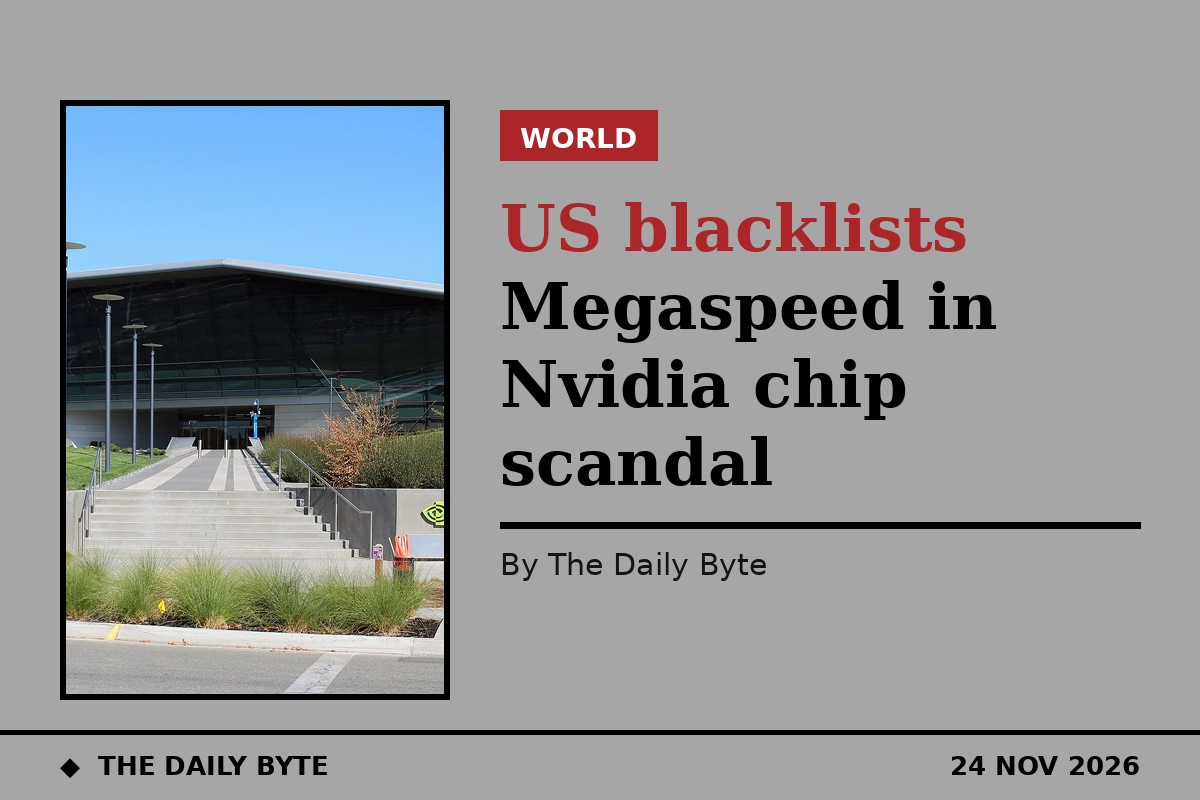
The United States moved on Monday to cut Megaspeed, the Singapore chip firm at the centre of the Nvidia scandal, off from American technology, adding the company to its trade blacklist after a long-running investigation into whether it helped advanced Nvidia chips reach China. The decision, reported by Reuters on Monday, was the sharpest official action yet in a case that has already cost Nvidia its chief executive his job for eleven days.
Megaspeed is to be added to the Commerce Department's Entity List, the register of foreign companies barred from receiving American goods, software and technology without a special licence. Such licences are usually refused. The listing is designed to stop the company obtaining semiconductors made in the United States, according to the reporting, which first appeared in Semafor and was picked up by TechCrunch. The restriction would also cover Megaspeed's foreign affiliates, according to that reporting.
What the listing does
Being placed on the Entity List does not make it a crime for Megaspeed to exist or to trade in other goods. What it does is put a government gate in front of almost every American technology sale to the company. Suppliers must apply for permission, and the Commerce Department can refuse. For a cloud and artificial intelligence infrastructure provider whose business depends on large numbers of advanced processors, that gate matters more than any fine.
The move is the first addition to the list since October 2025, Reuters reported. It also marks a change of approach. As Reuters reported in June, the administration had held off adding China's AI startup DeepSeek, the memory chipmaker CXMT and more than a hundred other companies flagged as national security risks, in an effort to avoid escalating tensions with Beijing. Adding Megaspeed, a company tied directly to the most politically charged chip case of the year, suggests that restraint is wearing thin.
How the case built up
Megaspeed is a Singapore-based provider of cloud computing and AI infrastructure, and it was one of Nvidia's biggest chip customers while Alice Huang led it for more than two years. Nvidia still lists Megaspeed as an official cloud partner in its directory. The company came to public attention in October 2025, when the New York Times reported that American authorities were investigating whether it was helping Chinese customers obtain advanced Nvidia chips covered by Washington's export controls.
The investigation itself is older than the scandal. The Commerce and Justice departments said in a joint statement on 16 November that their probe into Megaspeed began in 2024 over possible export control violations, and that investigators asked Nvidia for records in May 2025. Authorities in the United States and Singapore are now examining whether the company defied those controls and smuggled Nvidia chips into China. Megaspeed has denied wrongdoing, and has said that Alice Huang left the company in August 2025 and that it conducted lawful business.
The personal element is what turned an export control case into a boardroom crisis. Alice Huang, a Chinese businesswoman and Megaspeed's controlling shareholder, is reported to be alleged by American officials to be a Chinese intelligence asset who passed information to Beijing while developing a close relationship with Nvidia chief executive Jensen Huang. Reuters said it could not independently verify the intelligence allegation, and China has called the spy accusations groundless. Jensen Huang admitted in a statement on 8 November that he had an affair, without naming the other person.
A split-screen day for Nvidia
The blacklist decision landed on the same day that Nvidia reinstated Jensen Huang as chief executive, eleven days after he resigned. The board said it had voted unanimously to bring him back after discussions with senior levels of the American government, and that it was confident his return posed no national security risk. Shares in Nvidia rose by about a third on Monday as investors welcomed his return, lifting technology stocks around the world.
That pairing, a chief executive restored and his former business partner blacklisted on the same day, captures how the administration is trying to separate the two halves of the case. One half is about a man the White House regards as central to America's AI industry. The other is about a company investigators believe may have moved the industry's most prized hardware to China. The government appears willing to clear the first while punishing the second.
What happens next will depend on the formal listing and on whether other companies are added alongside Megaspeed. The Justice Department is still investigating, and lawmakers have already begun asking for records from both Nvidia and the Commerce Department. For the chip industry, the message is plain: Washington is prepared to use its blacklist against companies in the supply chain of its own champions, not only against their rivals in China.


