US lawmakers agree aviation safety deal after deadly Reagan National crash
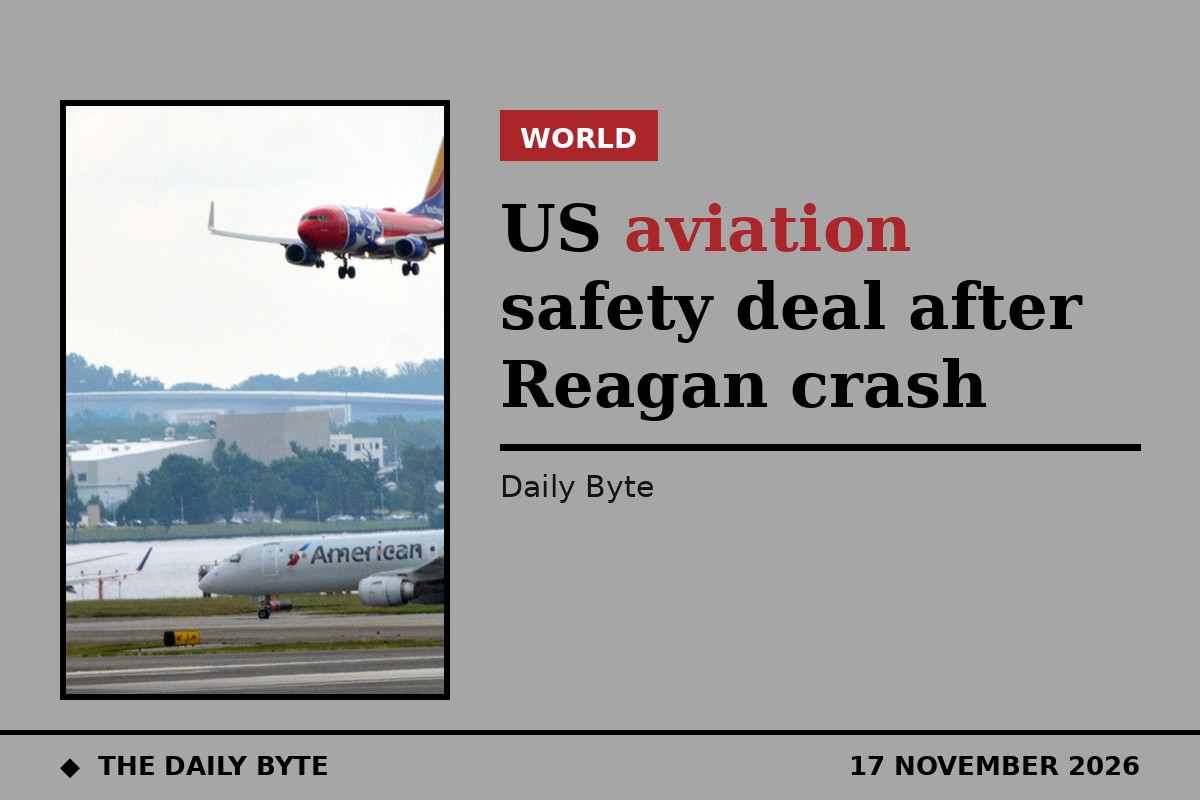
US House and Senate lawmakers have reached a deal in principle on key aviation safety provisions, nearly two years after a collision between an American Airlines regional jet and a US Army Black Hawk helicopter near Ronald Reagan Washington National Airport killed 67 people.
Senators Ted Cruz, a Texas Republican, and Maria Cantwell, a Washington Democrat — the leading Republican and Democrat on the Senate Commerce Committee — announced the agreement on Tuesday with their House counterparts, after talks that had been stalled for almost a year. Reuters reported that agreement had been reached on tracking requirements for civilian aeroplanes and on helicopter safety, but that requirements for military aircraft remain undecided.
What the deal would require
At the centre of the agreement is ADS-B, the Automatic Dependent Surveillance-Broadcast system. The Senate bill would require operators to equip their fleets with the technology by the end of 2031. Aircraft in crowded airspace are already required to carry ADS-B Out, which broadcasts their position, but they are not required to carry the complementary ADS-B In, which receives traffic information and shows pilots where nearby aircraft are flying.
The National Transportation Safety Board (NTSB) has said ADS-B could have alerted the passenger jet's pilots 59 seconds before the collision and the helicopter crew 48 seconds before. NTSB Chair Jennifer Homendy has said the system would have prevented the crash and has noted that the agency has called for it to be mandated for more than 20 years.
Under the agreement, the military would be required to use ADS-B on routine training flights, but not on sensitive military missions. On the night of the collision, the Army helicopter was flying without the key ADS-B Out system that broadcasts an aircraft's location, because of security concerns, even though it was only on a training flight.
The crash that drove the reform
The collision happened on 29 January 2025, when an American Airlines regional jet and a Black Hawk helicopter came together near Reagan National Airport, killing all 67 people on board both aircraft. It was the deadliest US aviation disaster in more than two decades.
In January this year, the NTSB found that a series of systemic failures by the Federal Aviation Administration had led to the collision. The Senate passed sweeping aviation safety reform legislation unanimously in December, addressing dozens of recommendations issued after the crash. The House fell one vote short of the two-thirds majority needed to pass it under fast-track rules earlier this year, and passed its own aviation safety bill in April, which critics say would not ensure the broad use of ADS-B to prevent crashes.
Military rules still unresolved
The outstanding question is what the rules will require of military aircraft. "We do not have an agreement on the military protections. We must have strong military accountability in the national airspace," Cantwell said. Cruz said he wants Congress to pass the legislation before the end of the year, but acknowledged that a couple of details still had to be negotiated with the House Armed Services Committee.
Families of the victims have pressed Congress and the FAA for almost two years to require the low-cost technology, backing the Senate's ROTOR Act. The deal in principle is a step towards that goal, but it is not yet law: the two chambers must still agree a final text and pass it.
Frequently asked questions
What is ADS-B?
Automatic Dependent Surveillance-Broadcast is a system that broadcasts an aircraft's position and receives traffic information, giving pilots visual and audible warnings about nearby aircraft.
When would the ADS-B requirement apply?
The Senate bill would require operators to equip their fleets by the end of 2031.
What is still undecided?
Requirements for military aircraft, which the House Armed Services Committee has resisted, remain under negotiation.
Source: Reuters; second source: Associated Press.


