US Consumer Sentiment Rises to 51.5 as Inflation Fears Cool
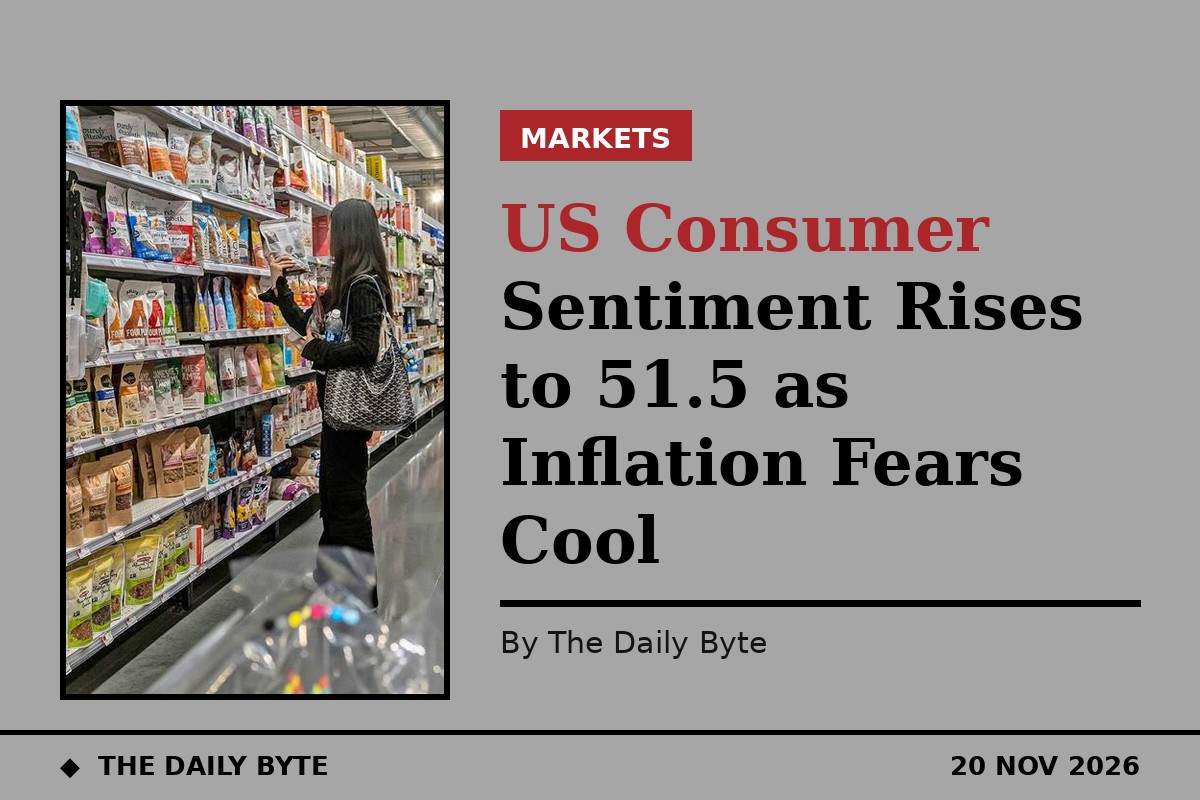
American consumers felt a little less downbeat in November, and their expectations for inflation cooled sharply, according to the University of Michigan's final survey for the month, released on Friday.
The consumer sentiment index was revised up to 51.5 in the final reading, from the preliminary estimate of 51.0, according to data released on Friday and reported by Seeking Alpha. That lifted the increase from October's reading of 48.0, although confidence remains at a historically low level.
Under the hood, expectations improved while current conditions slipped, a reminder that households are still feeling squeezed today even if they are a bit less worried about tomorrow. The expectations index rose to 52.9 from 48.8 in October, led by improved views of business conditions over both the short and long run.
Inflation expectations fall sharply
The more market-relevant detail was on prices. Consumers now expect inflation of 3.7% over the next year, down a full percentage point from 4.7% in October, and 3.3% a year over the next five years, down from 3.5%, according to Finimize. The one-year figure is the lowest in the recent run of surveys and marks a sharp break from the gloomier inflation outlook households held only a month ago.
If that downshift holds, it can make it easier for inflation to slow without consumers and workers assuming bigger price increases are inevitable. Inflation expectations matter because they feed into wage demands and pricing decisions: when households expect prices to keep rising fast, workers press for bigger pay rises and businesses feel freer to raise prices, which can keep inflation high. When expectations fall, that cycle can unwind.
For financial markets, the five-year inflation view can matter more than the headline sentiment number. Stocks and bonds usually react less to a small sentiment revision and more to shifts in inflation expectations. When households see inflation cooling, investors often demand a smaller extra cushion in Treasury yields to offset future inflation, which can take pressure off longer-term interest rates. Those rates feed directly into the discount rate used to value stocks, so a sustained drop in longer-run inflation expectations tends to matter most for rate-sensitive parts of the market.
Little cheer on a grim day for markets
The survey landed on a day of heavy selling on Wall Street, and it did little to lift the mood. The Nasdaq Composite was down 3.7% in Friday afternoon trading, the S&P 500 had fallen 2.3% and was heading for a seventh consecutive daily loss, and the benchmark 10-year Treasury yield stood at 4.94%, down from 5.05% at Thursday's close, according to Investopedia. Investors have been selling AI-linked shares all week and rotating into government bonds, and a modest improvement in consumer mood was not enough to change that.
The survey also showed that the improvement in sentiment was not shared evenly. Optimism rose among independents and Democrats, while the expectations index for Republicans fell, a split that underlines how much partisan politics now colours how Americans judge the economy. Overall, though, the direction of travel was the same: sentiment up from October's low, and inflation fears easing.
The Michigan survey is one of the most closely watched gauges of the American consumer, and it is published twice a month, with the preliminary reading followed by a final update. The preliminary reading for November, published on 6 November, had already shown sentiment rising to 51.0 from 48.0 in October, comfortably above market expectations. Friday's final print confirmed that improvement and added the encouraging inflation detail.
Whether the improvement lasts will depend on what happens next to prices, jobs and interest rates. For now, households are telling surveyors that they expect price rises to slow, and that is the first genuinely encouraging signal on inflation in the survey for some time.
Sources: Seeking Alpha | Finimize


