US Deportees in South Sudan Went Hungry, Families Say
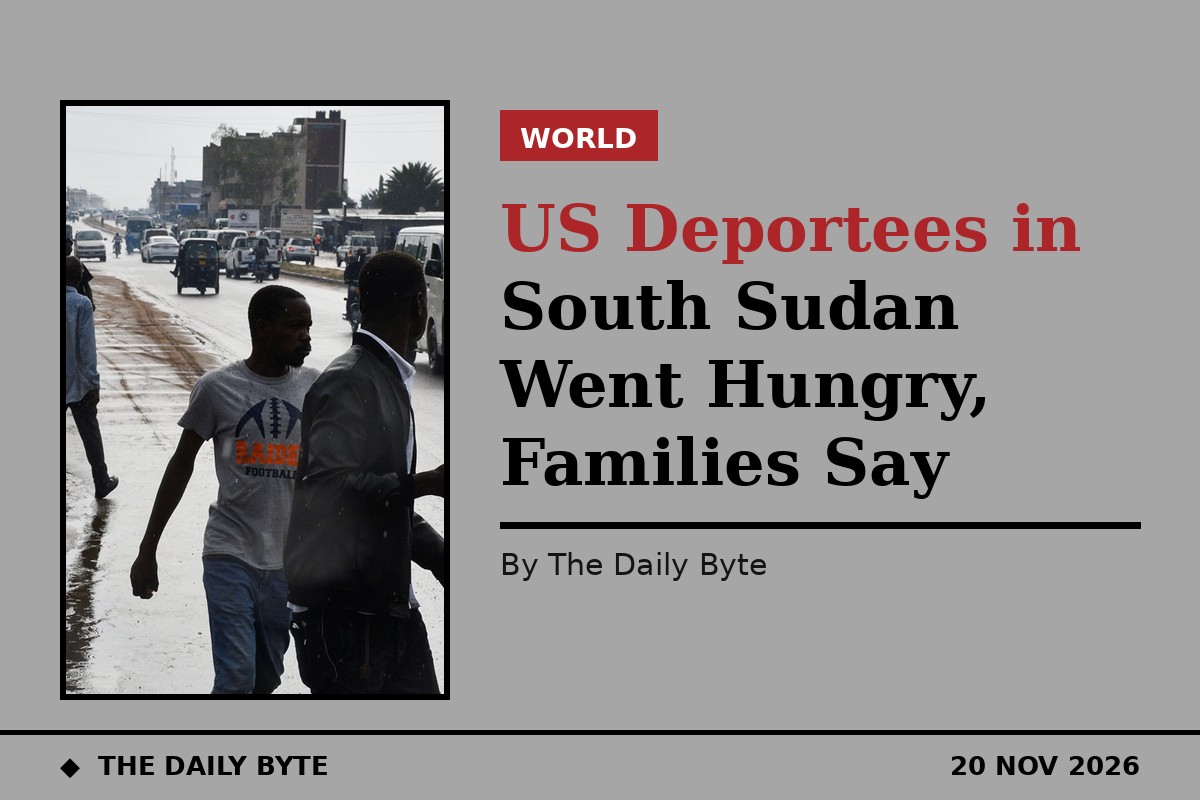
Families of men deported by the United States to South Sudan say guards took thousands of dollars sent for food and water while the detainees went for days without enough to eat or clean water to drink, the Associated Press reported on Friday.
Five deportees remain in custody in South Sudan, held in a gated three-storey building in the capital, Juba. Their families say they were asked for money again and again, on the promise that it would improve conditions for their loved ones. Instead, they say, the guards kept most of it.
Ngoc Phan, a United States citizen, said she sent roughly 4,000 dollars intended for food, water and a mobile phone for her husband, Tuan Phan, 44, who was detained in South Sudan for almost a year before he was repatriated to Vietnam in June. She said guards would give him only a few bananas and apples, and some peanuts, in return.
“I feared for my life every day”
Tuan Phan said he lost 20 pounds while in custody and that tensions grew between detainees and guards as living conditions worsened. One detainee was punched in the face after asking for a window to be opened for fresh air, he said, and another was locked in his room for days after complaining that there was no soap.
“I feared for my life every day I was there,” he said.
The Associated Press said it interviewed six other people familiar with the detainees' treatment, including relatives and lawyers, and reviewed money-transfer receipts and messages between guards and the relatives of four detainees. Payments made on their behalf to four people identified as guards ranged from 100 to 1,000 dollars at a time. In one case, a guard demanded 1,000 dollars for suits, shirts and shoes that he said a detainee needed before travelling back to his home country.
Food and other supplies ran out quickly, Tuan Phan said, because as many as a dozen guards lived and ate in the same building as the detainees. At times the men ate only bread or rice, or went days without a meal. When drinking water ran out, some collected rainwater. He said they were given a jug of water and told it had to last a week, but when it ran out it could be another 10 days before they received more. Fuel shortages caused power cuts lasting weeks, and when the plumbing stopped working the building filled with the smell of faeces.
South Sudan denies the claims
South Sudan's Foreign Ministry rejected the allegations. A spokesperson said detainees received adequate food, water and medical care, were allowed regular contact with relatives and lawyers, and had all related costs covered by the government. The ministry said the United States had “fully relinquished responsibility and no longer has any legal jurisdiction over, or ties to, these individuals”, and that it was working with governments and partners to arrange their repatriation.
The eight men were deported to South Sudan in July 2025, after a legal battle that ended with a ruling by the United States Supreme Court. They came originally from Mexico, Cuba, Vietnam, Laos, Myanmar and South Sudan, and all had completed their prison sentences in the United States before being taken into immigration custody. One more deportee has since been detained in South Sudan.
Tuan Phan was repatriated to Vietnam on 19 June 2026. In October, Thongxay Nilakout left South Sudan for Laos after more than a year in detention. Five men remain, with no clear date for their release or return home.
Alma David, a lawyer representing one of the detainees still in Juba, said her client had been arbitrarily held for more than a year despite not being charged with a crime. She said the men had lives, friends and families before they were “scooped up and flown to a faraway country and locked up”.
The Associated Press also reported that staff at the United States Embassy in Juba had been instructed by the Trump administration not to visit the detainees or follow up on their treatment, according to a congressional aide who discussed the matter with embassy staff during a visit in August. The International Organization for Migration said it was unable to step in without a request from South Sudan.


