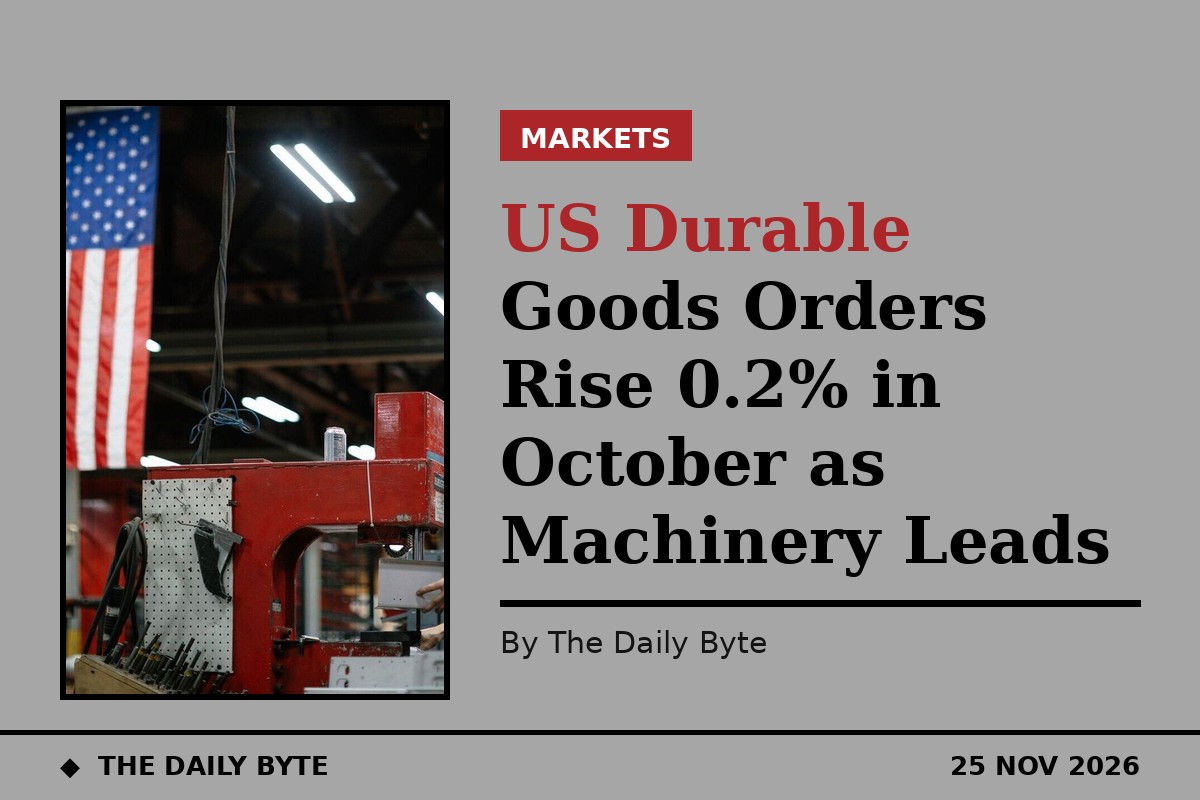
US Durable Goods Orders Rise 0.2% in October
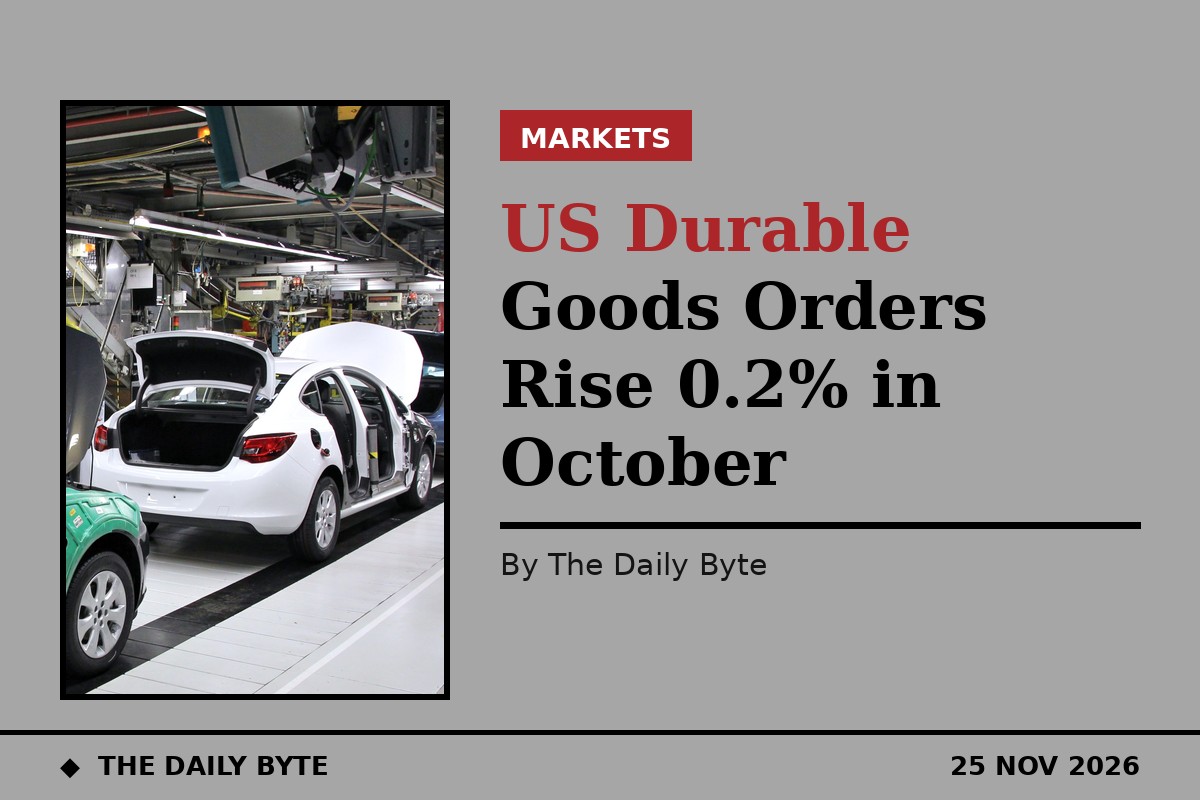
New orders for US-made durable goods rose 0.2% in October to $346.7 billion, falling well short of expectations, according to data published on Wednesday, 25 November, by the Commerce Department.
Economists polled by The Wall Street Journal had expected a rise of 1.1%. Investor's Business Daily also reported the print as below the estimate for a 0.5% increase. The figures were released at 8:30am Eastern time alongside a batch of other American data, including inflation, growth and jobless claims, on the last full trading day before Thanksgiving.
Durable goods are products meant to last three years or more, such as machinery, vehicles, appliances and aircraft. Orders for them are watched as an early signal of business investment and factory activity, because companies place orders months before the goods are built and delivered.
The October rise followed a 2.0% increase in September, The Wall Street Journal reported, so the slowdown was from a strong base rather than from a falling one. Stripping out the volatile transport sector, which is dominated by lumpy aircraft orders, new orders rose 0.5%. Excluding defence, orders increased 0.4%.
Machinery leads as transport drags
Machinery did most of the work in October. Orders for machinery rose 1.8% to $46.8 billion, and have now risen in 21 of the last 22 months, according to The Wall Street Journal. That steadiness matters because machinery orders feed directly into business spending on equipment, one of the more reliable parts of the economy this year.
The softer headline is consistent with the wider picture in the same data release. October also brought news that the Federal Reserve's preferred inflation measure, the PCE price index, rose 3.8% over the year, with core inflation at 3.3%, while the second estimate of third-quarter GDP put growth at 4.3% a year, revised up from 3.4%. The economy is therefore growing faster than first thought while price pressures are still rising, which is why traders have fully priced in a further interest-rate rise from the Fed at its December meeting.
That combination explains why the market reaction was driven more by inflation than by the factory data. In premarket trading on Wednesday, Dow futures fell 1.4%, or nearly 700 points, S&P 500 futures fell 2.1% and Nasdaq-100 futures sold off 3.2%, Investor's Business Daily reported. The 10-year Treasury yield moved lower to 4.84%, West Texas Intermediate crude traded at about $82.30 a barrel and bitcoin fell to near $58,200.
What to watch next
Durable goods orders are a noisy series. A single month is often revised, and aircraft orders can swing the headline by large amounts in either direction. The more useful signal is the trend in orders excluding transport, which rose 0.5% in October, and the trend in machinery, which has now risen almost without interruption for nearly two years.
The next test comes after the holiday. US markets are closed on Thursday, 26 November, for Thanksgiving and close early at 1:00pm Eastern time on Friday, 27 November. The full report on manufacturers' shipments, inventories and orders, which revises the advance durable goods figures, is due on 3 December.
| Fact | Detail |
|---|---|
| Durable goods orders, October | Up 0.2% to $346.7 billion |
| Expectation | Economists polled by The Wall Street Journal expected a 1.1% rise |
| September orders | Up 2.0% |
| Excluding transport | Up 0.5% |
| Excluding defence | Up 0.4% |
| Machinery orders | Up 1.8% to $46.8 billion; up in 21 of the last 22 months |
| Released | Wednesday, 25 November, 8:30am Eastern time |
Frequently asked questions
What are durable goods orders? They are new orders for manufactured goods meant to last three years or more, such as machinery, vehicles, appliances and aircraft. The Commerce Department publishes them monthly as an early signal of factory activity and business investment.
Why did orders miss expectations? Orders rose only 0.2% in October against a 1.1% rise expected by economists polled by The Wall Street Journal. The underlying picture was firmer: orders excluding transport rose 0.5% and machinery orders rose 1.8%.
Why did markets fall if the economy is growing? The same morning brought hotter inflation data, with the PCE price index up 3.8% over the year and core inflation at 3.3%. That strengthened expectations of a further Fed rate rise in December, which weighed on stocks more than the factory data did.