US holds first deep-sea mining sale off American Samoa
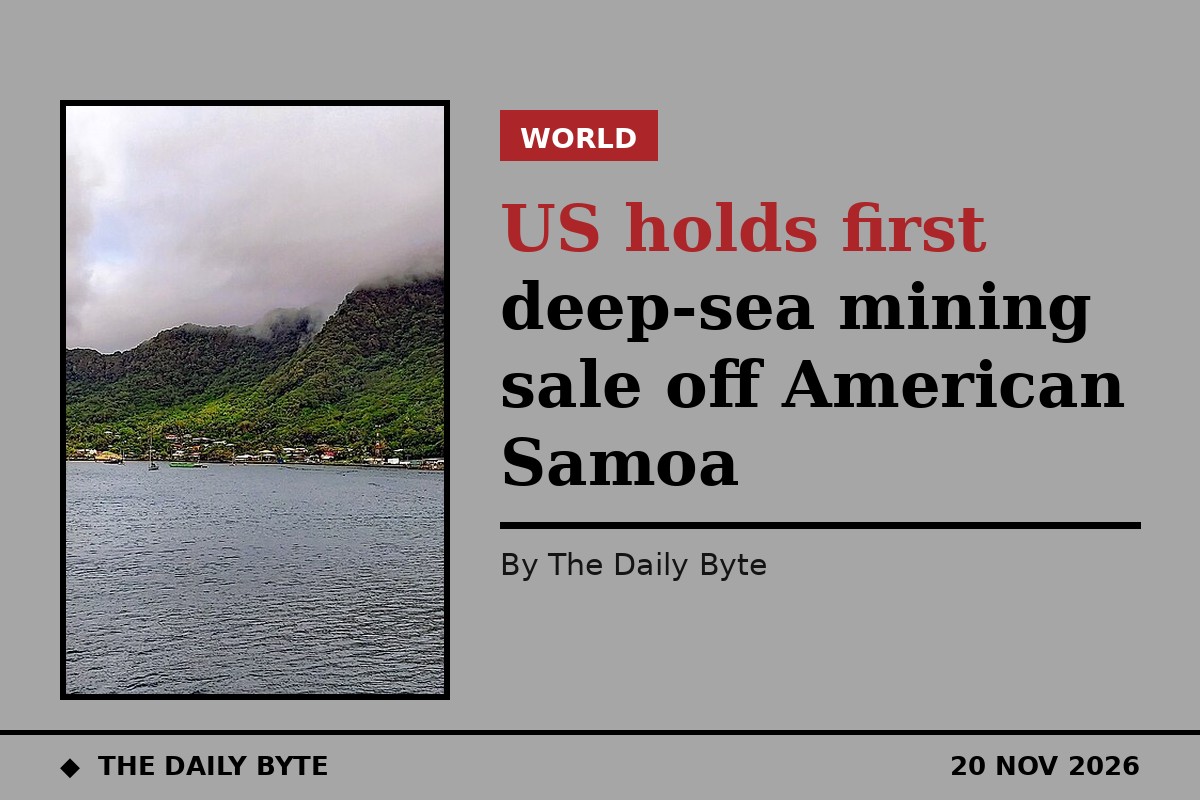
The Trump administration held the first deep-sea mining lease sale in United States history on Thursday 19 November, selling rights to about 31.5 million acres of Pacific Ocean seabed off American Samoa for $6 million, just days after a federal judge ruled that the plan had violated the law on endangered species.
The sale was run by the Marine Minerals Administration, the Interior Department agency that oversees offshore leasing. The 20-year leases cover seabed next to the Rose Atoll Marine National Monument, and the agency did not immediately announce who had won the auction. Interior Secretary Doug Burgum called the sale “a historic step for America's energy and mineral security”. Supporters of deep-sea mining say it is a matter of national security, arguing that it would let the United States reduce its reliance on China for critical minerals used in batteries, electronics, defence technology and data centres.
Court ruled days before the sale
On 16 November, a federal judge in Hawaii ruled that the administration had failed to even attempt to consider the potential effects of the lease sale on endangered species when it approved the auction. Chris Eaton, an attorney with Earthjustice, one of the groups suing over the lease sales, described the decision to go ahead despite the ruling as “a renegade, unlawful act”. He said the groups would “use the full extent of the law to vigorously push for the leases to be voided”. The Marine Minerals Administration said after the sale that it “acknowledges the court’s opinion” and had started formal consultation on a wider scope of activities, including the harvesting of deep-sea minerals.
Lawsuit and local opposition
Finafinau, a youth-centred environmental group in American Samoa, and the Natural Resources Defense Council sued the Trump administration on 18 November over the sale. The lawsuit, filed in the US District Court for the District of Hawaii, argues that the Marine Minerals Administration shortchanged the environmental review process, violating the Administrative Procedure Act, the National Environmental Policy Act, the Outer Continental Shelf Lands Act and the National Historic Preservation Act. The groups are asking the court to strike down any leases executed under the sale. American Samoa’s governor, its legislature and its congresswoman all oppose commercial deep-sea mining, and the overwhelming majority of the more than 76,000 public comments filed on the proposal opposed it. The territory banned deep-sea mining in its own waters in 2024, and the lease areas sit just beyond those waters, on the federal Outer Continental Shelf.
What the leases allow, and what comes next
The leases allow their holders to carry out research and pilot tests and other preliminary activities. They will not be able to begin testing or mining until they complete further environmental reviews, although environmental groups have suggested the government will have difficulty refusing future uses. “This sale is the blueprint for every one that comes after it,” said Taryn Kiekow Heimer, director of ocean energy at the Natural Resources Defense Council. “These leases last at least 20 years. The Commonwealth of the Northern Mariana Islands and Guam are next in line.” Julia Singer, campaign manager for Oceana, said the push to exploit the deep sea before it is fully understood “will have catastrophic consequences that reverberate for generations”. The waters around American Samoa are home to protected species including sea turtles, whales, corals and sharks, and the polymetallic nodules targeted by miners take millions of years to form. Deep-sea mining has never been carried out at commercial scale.
Sources: USA Today; Natural Resources Defense Council.


