US and Israel Weigh New Assault on Iran, CBS Says
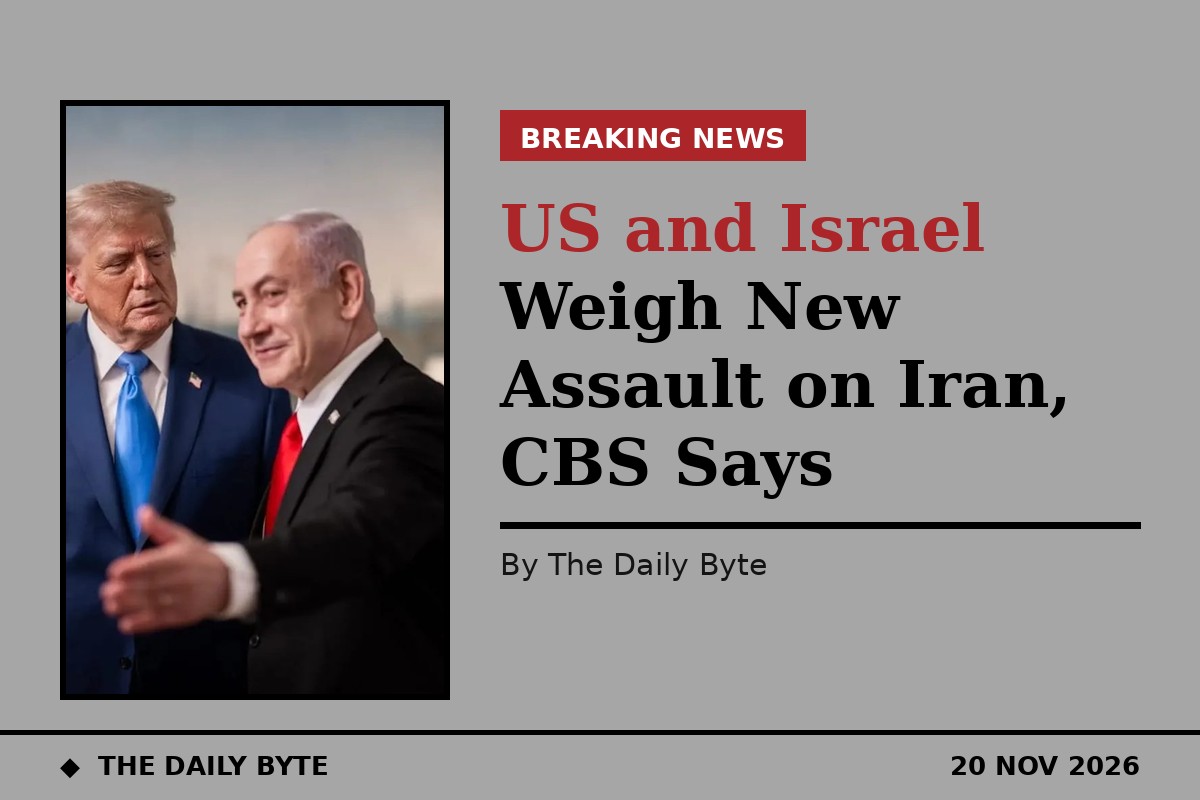
The United States and Israel are weighing a new assault on Iran in the short term, according to sources familiar with the matter cited by CBS News on Friday, in a sign that the war that has dominated the region for most of this year could enter a third round of major hostilities.
The sources told CBS News that Prime Minister Benjamin Netanyahu's government is concerned about how quickly Iran is rebuilding its ballistic missile manufacturing capability, and about the pace at which Tehran is moving military and nuclear infrastructure underground to shield it from attack. Israel's military is prepared for a new round of fighting and is in what the sources called a peak defensive posture, ready to respond to any first strike by Iran.
Netanyahu would prefer any new operation to be conducted jointly with the United States, the sources said, but it remains unclear whether President Donald Trump wants to order new military action, and if so, of what kind. Neither Netanyahu's office nor the Israeli military responded to CBS News' requests for comment on planning for renewed attacks. The White House and the US military declined to comment on the administration's thinking, although American commanders have long said they are prepared to carry out any orders Trump gives.
Forces in place within days
The United States already has tens of thousands of troops in the region, along with carrier strike groups and dozens of warships and aircraft. According to the sources, a new offensive operation could be mounted within two to four days if the president gave the order.
Military consultations between the two allies are continuing. US Central Command chief Admiral Brad Cooper met senior Israeli security officials at Israel's defence ministry on Wednesday for what the Israeli military called a joint, comprehensive situational assessment. Israel's most senior general, Eyal Zamir, and Mossad director Roman Gofman were among those who met Cooper. Gofman also met US officials in Washington last week, including CIA Director John Ratcliffe, according to people familiar with the matter.
Trump's own signals have been mixed. He told Fox News on Wednesday that he still wants a deal with Iran, but one that lasts, and he renewed his threat to use force. "I'm going to finish it off," he said of the war. "Yeah, soon. I mean, one way or the other, we'll finish it off." On Thursday, however, he told Israel's Channel 12 that he is "not rushing into any decision", indicating a willingness to let the standoff drag on into 2027. "We will see what happens after the beginning of the year," he said.
Diplomacy stalled over blockade
Months of indirect negotiations between Washington and Tehran have failed to produce a ceasefire deal that would reopen the Strait of Hormuz. Iran has refused to discuss its nuclear programme unless the United States lifts its naval blockade and accepts six other key conditions, including an end to hostilities on all fronts in the Middle East and an end to the blockade of Iranian ports and vessels.
Trump also said this week that Iran may be seeking to develop chemical or biological weapons, although he provided no evidence to support the claim. Iran's foreign ministry rejected the allegation on Thursday. Spokesman Esmaeil Baqaei compared it to the US claims that Iraq was developing weapons of mass destruction before the invasion launched in 2003, saying Tehran faced "ominous new allegations and a narrative that appears to be following the same fraudulent script".
The speculation about a major new operation comes amid a renewed exchange of fire. The US launched a strike on Iran's strategic Qeshm Island in the Strait of Hormuz on Tuesday, which American officials described as self-defence in response to Iranian strikes targeting US assets in Bahrain. Iran has also launched strikes against Kuwait this week, with officials saying they caused no damage.
Warnings on both sides
Iran has warned publicly that its response to any new attack would reach farther than its previous actions. A recent statement attributed to Iran's Supreme Leader, Ayatollah Mojtaba Khamenei, said that in the event of a return to open hostilities, "there would be no geographical limit for Iranian missiles". Senior Iranian officials have threatened to widen retaliatory attacks beyond Israel and US military infrastructure in Gulf states to US bases in Europe, Gulf energy infrastructure and undersea internet cables.
For both leaders, the timing is politically sensitive. Netanyahu could lose his position as prime minister in the coming weeks after Israel's national election late last month, with his political rivals tasked with forming a government. Trump's Republican party will lose control of both houses of Congress in January, giving his opponents far greater say over financing of the war.