US Level 4 Travel Warning for Four African States
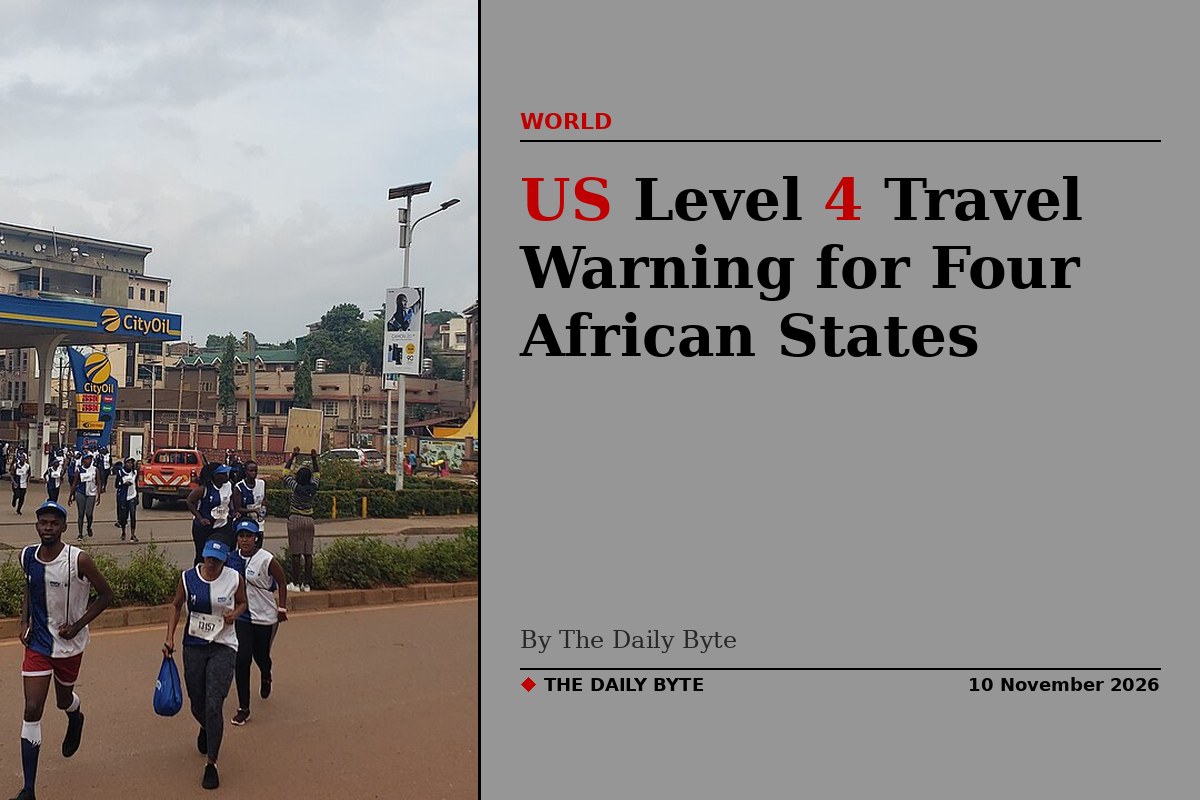
The United States has confirmed its highest travel warning for Uganda, Somalia, South Sudan and the Democratic Republic of Congo, urging its citizens not to travel to any of the four African states. The State Department’s TravelGov accounts highlighted the four countries on 9 November among the destinations listed at Level 4, the most severe category in its four-tier advisory system, citing terrorism, violent crime, kidnapping, political unrest and health risks, and warning that American officials have limited capacity to provide emergency help there.
Level 4 means “do not travel”. The department advises Americans already in a Level 4 country to consider leaving when it is safe to do so, and to register with its Smart Traveller Enrollment Program, known as STEP, for security updates and emergency contact. In total, 23 countries worldwide currently carry a Level 4 advisory, including Afghanistan, Iran, North Korea, Sudan, Mali, Niger, Burkina Faso, Libya, Chad and the Central African Republic.
Which countries are affected and why
Each of the four African states carries its own mix of risks, according to the advisories:
- Uganda: crime, health, terrorism and unrest, including threats of attacks on religious sites, schools, government buildings, police stations, transport hubs and tourist attractions, particularly in Kampala, as well as armed robberies, home invasions and sexual assaults.
- Somalia: crime, kidnapping, terrorism, unrest, health risks and landmines, with Americans advised against travel there for any reason. The advisory also raises piracy and the mistreatment of women and gay people.
- South Sudan: armed conflict, violent crime, kidnapping and sporadic clashes, with limited infrastructure and emergency support.
- Democratic Republic of Congo: health risks, crime, unrest, terrorism and kidnapping.
For Uganda, the warning also notes that demonstrations can begin without warning, especially around political events, and that security forces have previously used tear gas, batons and rubber bullets against protesters. It also flags Uganda’s Anti-Homosexuality Act of 2023, which criminalises consensual same-sex relations and applies to citizens and foreigners alike.
Uganda’s warning is not new
The 9 November listing was a reminder rather than a fresh upgrade for Uganda. The country was raised from Level 3 to Level 4 in May 2026, after the World Health Organization declared Ebola a public health emergency of international concern, and the advisory was renewed at Level 4 on 4 June, citing crime, health, terrorism and unrest. Uganda’s health ministry declared the Ebola outbreak over on 28 July, but the American advisory still lists health among its concerns, alongside the security risks. Tour operators in Uganda have warned that the Level 4 status is deterring American visitors and complicating insurance for trips already booked.
The advisories are reviewed on a rolling basis rather than a fixed schedule, and the State Department encourages travellers to check its country-specific pages before making plans. Read the full reports in 254 News and The Traveler.
Frequently asked questions
What does a Level 4 travel advisory mean? It is the highest of the four US travel advisory levels and urges citizens not to travel to the country for any reason, because of life-threatening risks and limited American government capacity to help in an emergency.
Which African countries are at Level 4? Eleven African states are currently listed: Burkina Faso, Central African Republic, Chad, Democratic Republic of Congo, Libya, Mali, Niger, Somalia, South Sudan, Sudan and Uganda.
Is Uganda’s Level 4 warning new? No. Uganda was raised to Level 4 in May 2026 and the rating was renewed in June; the 9 November TravelGov post was a reminder that the warning remains in place.


