US Midterms Rattle Latin America as Milei Debt Slides
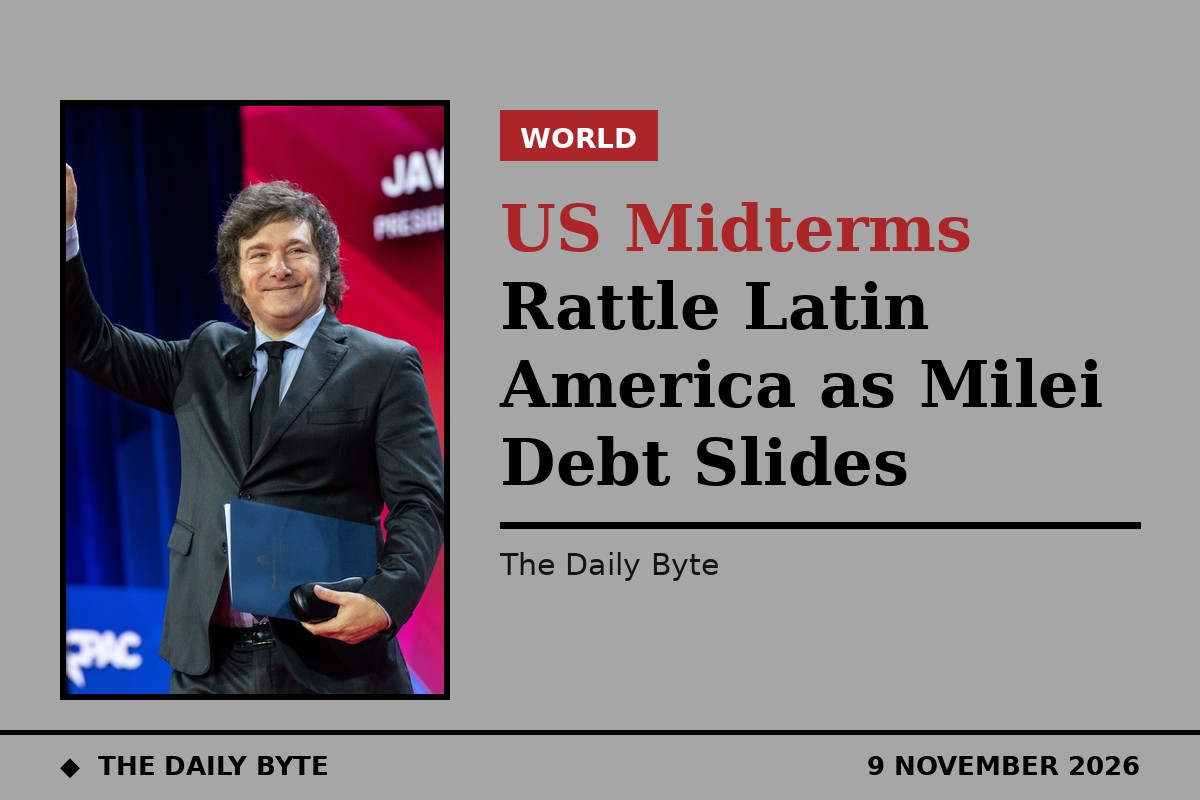
The United States midterm elections are rattling markets across Latin America, with Argentina's debt sliding as investors ask whether Donald Trump's political setback will weaken Washington's support for President Javier Milei.
Bloomberg reported on Monday 9 November that the fallout from the US vote is changing investors' calculations across the region, particularly in countries led by Trump allies that had counted on continued American backing.
Argentine debt lagged in the days after the vote, Bloomberg reported, on concern that the result could add to the challenges facing Milei as he seeks re-election in 2027. In Venezuela, where the US detained leader Nicolas Maduro in January, investors are weighing whether the new political landscape in Washington could constrain Trump's plans for the country.
Milei's re-election odds collapse
The market verdict on Argentina has been brutal. The country's risk spread, measured by a JPMorgan index, widened by almost 140 basis points to 928 in the first four trading days of last week, more than double its July low and closing on the 1,000-point mark that signals distress.
The benchmark bond maturing in 2035 lost more than three cents in a week, with its yield climbing to 13.77 percent from 12.67 percent, and the bond has shed almost 20 cents since July, according to Bloomberg data.
Behind the sell-off is a collapse in confidence about Milei's political future. The market-implied probability of his re-election has fallen from about 90 percent in July to roughly 45 percent, according to a model from Buenos Aires broker Portfolio Personal Inversiones.
Debt deadlines pile up in 2027
The politics matter because the debt calendar is unforgiving. Argentina faces roughly 25 billion dollars in hard-currency payments in 2027, and its Treasury must roll over 10.5 trillion pesos in its next auction alone, with another 66 trillion pesos falling due across the two auctions after that.
Traders suspect the government has stepped directly into its own peso-bond market to hold yields down ahead of those sales, with participants estimating it bought about two trillion pesos of local notes in a single session.
Milei's approval rating now sits near 38.5 percent, according to a September survey by AtlasIntel, while the Peronist opposition is organising a comeback under former president Cristina Fernandez de Kirchner.
A 'friend-or-foe' gauge for the region
Under Trump, closeness to Washington became a key measure for investors in Latin America, fuelling bond rallies from Argentina and Ecuador to El Salvador, where ties with the US bolstered the investment case. That trade gained further momentum after the US detained Maduro in January.
The midterm results have unsettled that calculation. Democrats took control of both chambers of Congress in the 3 November elections, and right-wing populism in the region has already suffered a blow: Brazil's Flavio Bolsonaro lost the presidential election to Luiz Inacio Lula da Silva last month.
Argentina's bonds were the worst performers in emerging markets on Thursday, with some notes losing two cents on the dollar, as traders questioned the government's ability to meet next year's debt payments. The one-day peso borrowing rate jumped to an annualised 190 percent, its highest since the October 2025 midterm elections.
For Milei, the problem is that the market is no longer pricing his reforms. As one analysis put it, his programme is now being priced as an election bet, and the odds have moved sharply against him.


