US Seeks Kenya Refugee Files in Ilhan Omar Probe
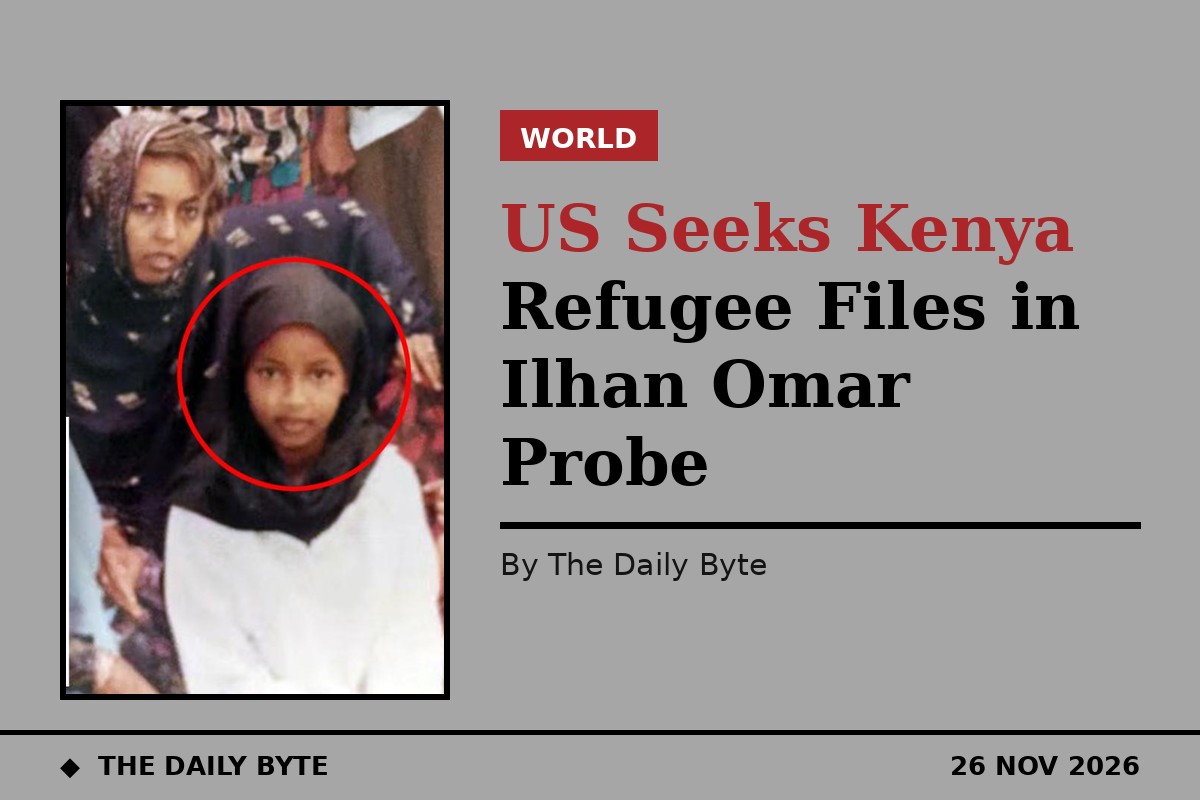
US investigators are seeking decades-old refugee registration records from a camp in Mombasa, Kenya, as part of a federal investigation into Congresswoman Ilhan Omar's immigration history, the New York Post reported.
The records were completed by Omar's late father when the family registered at the Utange refugee camp after fleeing Somalia's civil war in 1991. The family spent about four years in Kenya before moving to the United States in 1995.
The documents could show the names and dates of birth the family gave on arrival, letting investigators compare them with details later submitted to American authorities. Omar says she was born on 4 October 1982, but heavily redacted court documents linked to a search of her Washington home indicate investigators are examining possible offences dating back to 1980, and refer to her under the name Ilhan Nur Said Elmi.
What the UN refugee agency said
The UN refugee agency, UNHCR, told the Post it undertook the registration and documentation of Somali refugees arriving in Kenya after the civil war broke out in 1991, but noted that some people may not have been captured by its registration processes.
Mohamed Haji Ingiriis, a Somali-born historian and fellow at King's College London, told the Post he believes Omar's father did register himself and his children at Utange. He said that if UNHCR releases the family's files, the Justice Department could determine her real age and other details about her early life.
No charges filed
A federal grand jury in Washington has been convened to examine evidence gathered by investigators, and prosecutors in Washington and Minnesota are handling the inquiry. No criminal charges have been announced against the congresswoman.
The investigation has also revisited Omar's 2009 marriage to Ahmed Nur Said Elmi, a British national. Omar has denied wrongdoing and has described the investigation as politically motivated.
The search of Omar's Washington home was carried out on 12 October 2026 by Homeland Security Investigations agents under a judicially authorised warrant, the first physical enforcement step in the inquiry. Days later, the US Attorney for the District of Columbia confirmed that several investigations were under way. A federal judge unsealed the redacted search warrant on 23 November, revealing filings in which prosecutors allege immigration-related crimes "between 1980 to the present" in what one filing calls a pre-indictment investigation. The following day, the Post reported that a federal grand jury had been empanelled in Washington to consider the evidence gathered by prosecutors in the capital and in Minnesota.


