US Senate passes energy permitting bill 62-33
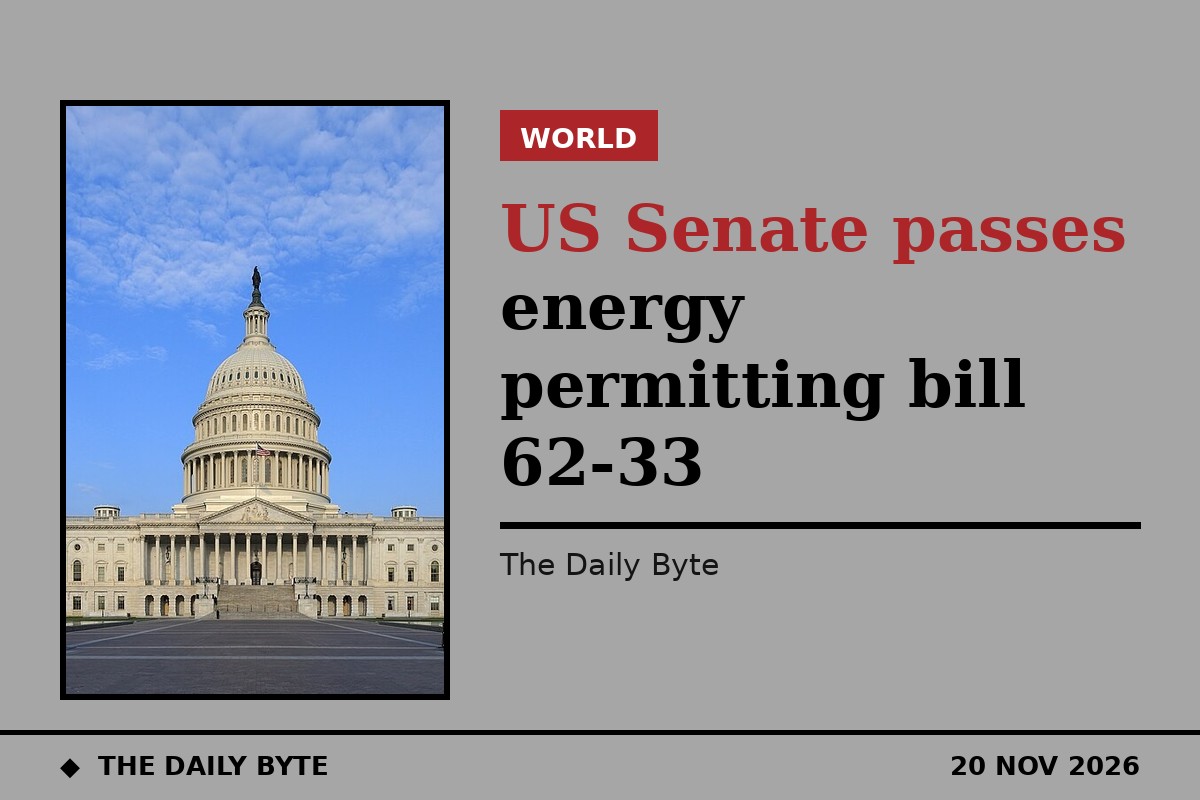
The United States Senate voted 62 to 33 on Thursday to pass a sweeping bipartisan bill to overhaul federal permitting rules, in Congress's most significant attempt in years to speed up approval of large energy and infrastructure projects.
The Bipartisan American Affordability and Jobs Act would shorten environmental reviews for power plants, transmission lines, mines and data centres, narrow the window for legal challenges, and make it harder for a future administration to revoke permits already granted. It also requires data centres to pay for the electricity they use, after anger over rising power bills helped drive the debate.
Fifteen Democrats, including Senate Minority Leader Chuck Schumer, joined Republicans to pass the bill. Two Republicans, Josh Hawley of Missouri and Mike Rounds of South Dakota, voted against it. The measure now goes to the Republican-controlled House, and President Donald Trump has said he will sign it into law.
What the bill changes
The bill, which runs to more than 400 pages, rewrites parts of several bedrock environmental laws, including the National Environmental Policy Act, the Clean Water Act and the Endangered Species Act. Supporters say reviews that can now take five years or more have left projects that would lower energy prices frozen in planning.
The deal was negotiated by the leaders of the Senate's energy and environment panels: Republicans Shelley Moore Capito and Mike Lee, and Democrats Martin Heinrich and Sheldon Whitehouse. It was first introduced in September after months of talks.
Critics warn of weaker safeguards
Major environmental groups, including the Sierra Club and the National Wildlife Federation, oppose the bill, arguing it would lock in fossil fuel development and make it harder for communities to challenge approvals. Some Democrats also objected that it was rushed through without a full amendment process.
Sources: Reuters; Associated Press.


