US Waives Curbs on Iranian Oil Stuck at Sea
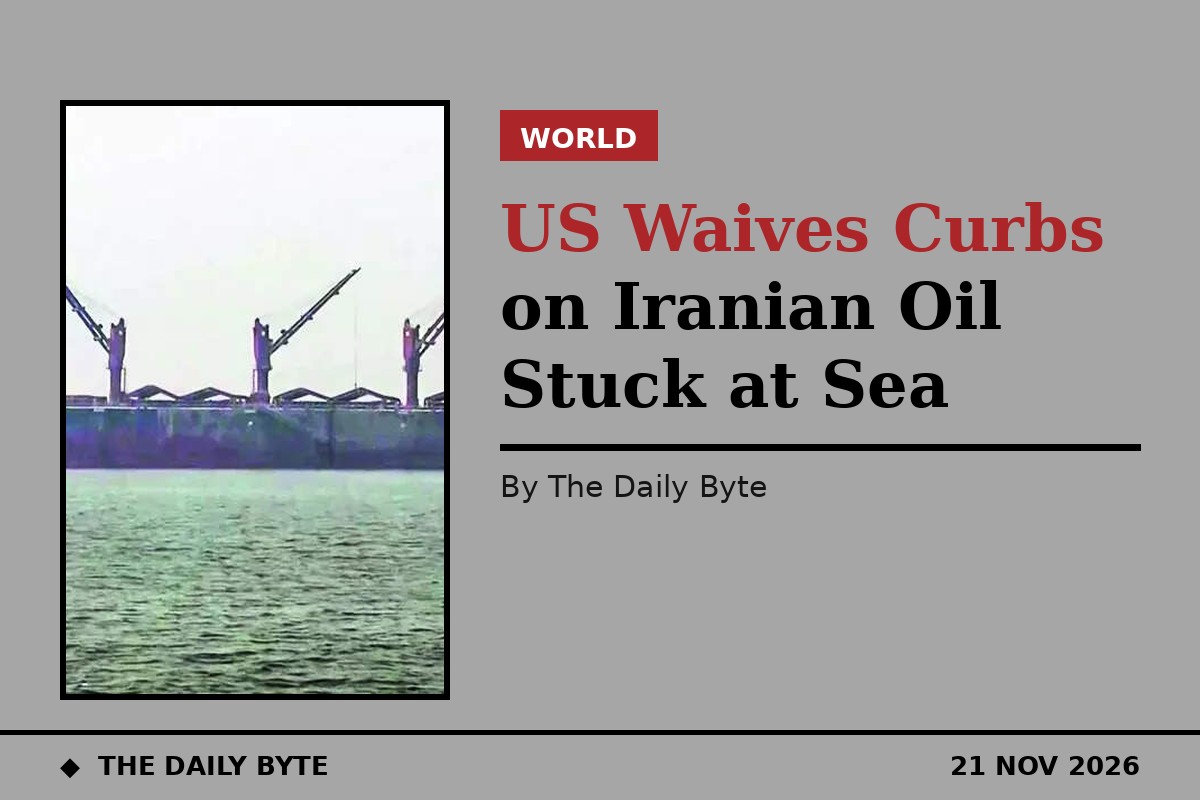
The United States has temporarily eased restrictions on sanctioned Iranian oil stranded at sea, in a move that could release about 140 million barrels onto global markets, US Treasury Secretary Scott Bessent announced on Friday.
The waiver applies only to cargoes already in transit and lasts for one month. It does not permit new purchases or new production, Bessent said, describing the step as a short-term measure to expand supply and hold down prices while Washington keeps up its economic pressure campaign against Tehran.
"In essence, we will be using the Iranian barrels against Tehran to keep the price down," Bessent said, adding that the authorisation was strictly limited to oil already in transit.
Indian refiners eye the cargoes
Indian refiners said on Saturday they would be keen to buy the crude. A senior official at a state-run refinery said teams across refiners were working hard to strike deals and secure oil and gas, noting that the heavy and light grades of Iranian crude are well suited to Indian refineries and that securing cargoes would benefit oil companies.
India has been trying to source oil from every available avenue as supplies have been disrupted by the military conflict in the Gulf, the official said, with refiners working to procure both oil and gas.
Tehran disputes the premise
Iran's oil ministry pushed back against the announcement. Its spokesperson, Saman Ghodousi, said Iran essentially had no crude oil left floating on water or held in surplus for sale in international markets, and argued that the US statement was aimed at giving hope to buyers and psychologically controlling the market.
The disagreement goes to the heart of the US case. Bessent told CNBC on Friday that, for the first time since Iran began producing oil, it had no oil on the water for anyone to buy. "What we've seen is the world can live without Iranian crude," he said.
The wider economic squeeze
The waiver sits inside a broader campaign the administration calls Operation Economic Outcast, which Bessent described as the greatest economic isolation of any country in history. It is now about two and a half months old and combines a US naval blockade of Iranian ports with sweeping sanctions on aviation, shipping, banking and digital exchanges.
Bessent also said the previous night had seen the largest amount of crude pass through the Strait of Hormuz since the conflict began, even as Iranian threats to shipping continue. The strait carries nearly a fifth of the world's oil trade, and supply through it has become a central pressure point in the confrontation.
Washington issued a similar temporary waiver earlier this month for sanctioned Russian oil already in transit, as benchmark prices surged amid tightening supplies.
Bessent, who accompanied President Donald Trump to China for talks with the leaders of Russia and China, said the three countries had agreed that Iran must never acquire a nuclear weapon and that freedom of navigation through the Strait of Hormuz was paramount. He also confirmed he continues to live on a military base because of threats attributed to Iran, saying he would not be cowed.
Whether any of the stranded cargoes actually move in the coming weeks, and what that does to prices, will be the first test of the waiver. It expires after a month, and it covers only oil that is already at sea.


