Vance-Rezaei Doha Meeting Claim Denied by Tehran
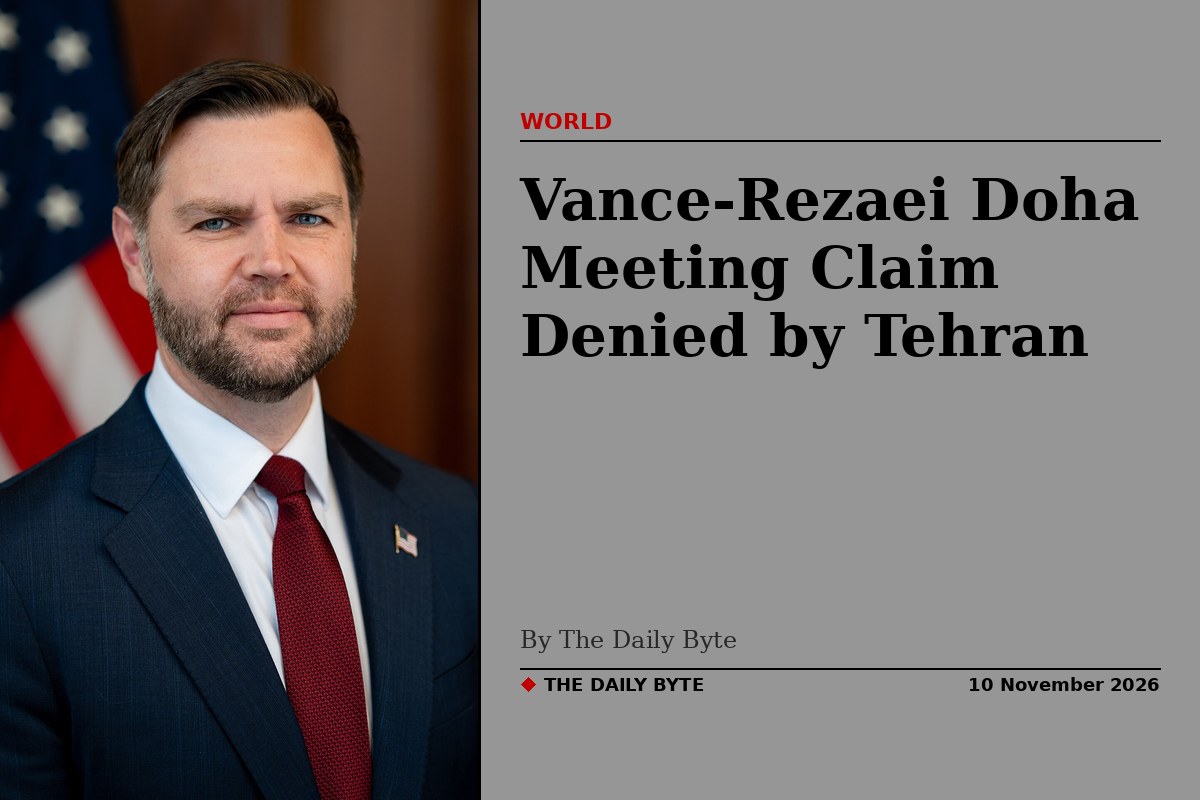
A claim that US Vice President JD Vance will meet Iran’s security chief Mohsen Rezaei in Doha next week was denied by Tehran within hours on Monday, 9 November, underlining how far apart the two sides remain.
Turkish intelligence chief İbrahim Kalın said on Monday that Vance and Rezaei, secretary of Iran’s Supreme National Security Council, would travel to Qatar next week for talks. He described the meeting as an important chance for a breakthrough.
The claim
Kalın’s comments came as Qatar continued to mediate between Washington and Tehran. The outreach began with a letter from Vance delivered through Qatari mediators last month, offering direct talks focused on Iran’s nuclear programme while noting Tehran’s interest in easing sanctions and rebuilding its economy.
Kalın also said Turkish President Recep Tayyip Erdoğan had urged President Donald Trump over the weekend not to escalate against Iran. Trump met Qatar’s prime minister, Sheikh Mohammed bin Abdulrahman Al Thani, at the White House on Monday and has said renewed US strikes are “highly unlikely” if talks make progress.
Tehran’s denial
A senior Iranian security official denied any plans for a meeting between Rezaei and Vance in Doha, according to Tasnim News Agency. The official said Iran’s policy and plans on negotiations remained unchanged.
“Unless the American side takes practical action within the framework of the seven conditions stipulated by Iran, there will be no plans for negotiations with the US side,” the official said.
Iran’s English-language Press TV carried the same denial, reporting that a source had said there would be no negotiations with the United States until Washington took practical steps to meet Tehran’s seven conditions, which include lifting sanctions, releasing frozen Iranian funds and ending the US naval blockade of Iranian ports.
Rezaei’s central role
Rezaei, a hardline veteran and former commander of the Islamic Revolutionary Guard Corps, was appointed secretary of the Supreme National Security Council on 9 August. The Institute for the Study of War (ISW) assessed that his growing prominence in the negotiations indicates Iran will likely maintain its maximalist demands, including recognised control of the Strait of Hormuz and the maintenance of its nuclear programme.
Rezaei has publicly insisted that Iran will only reopen the Strait of Hormuz once the United States meets all seven of its conditions, and has said that “not a single gram of enriched uranium will be removed from Iran”. The New York Times reported on 5 November, citing two Iranian officials and a US official, that Rezaei had privately shown “more openness to discussing” the nuclear programme than his public comments suggest.
What happens next
No meeting has been confirmed by Washington either, and no date or venue has been agreed. The episode shows the gap between the mediation track, where Qatar and Turkey are pushing for direct contact, and Tehran’s public position, which makes any talks conditional on prior US concessions.
Qatar’s mediators remain the main channel between the two sides. Iran’s foreign minister, Abbas Araghchi, met Qatari mediators in New York on Monday and said he hoped to receive Washington’s final response to Tehran’s proposal by Tuesday.


