Six sailors missing as Iran war's toll at sea grows
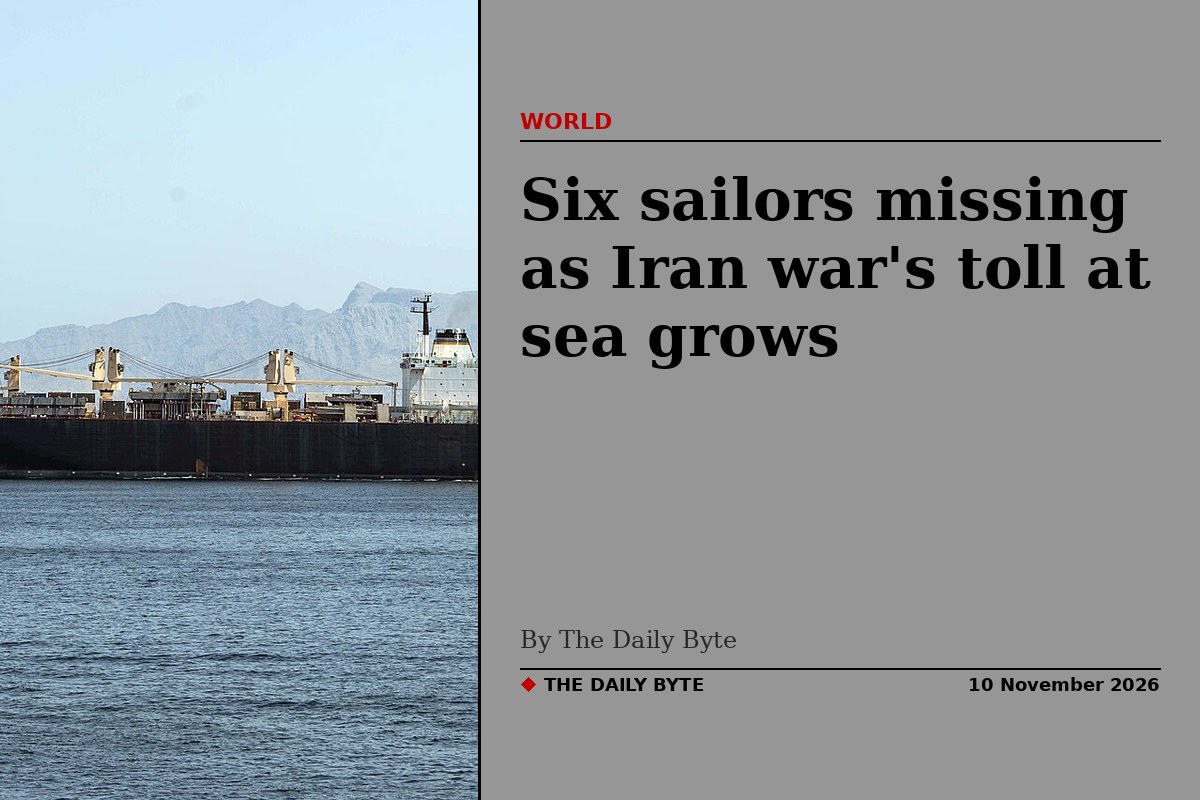
Six sailors are still missing more than six months after the two cargo vessels they were working on vanished in Iranian waters, in a case that captures the human cost of a war that has turned one of the world's busiest shipping lanes into a danger zone.
Naveen Kumar, a 23-year-old Indian sailor, was one of the six crew members assigned to the vessels Bridge 1 and Bridge 2, which disappeared around 9 May. His mother, V. Pandiselvi, 45, has not heard from her son since, and still replays his old voice notes at the family's one-bedroom home in Dindigul, in the southern Indian state of Tamil Nadu.
A voyage that went wrong
Kumar's family took on loans of around 1.5 million Indian rupees, about 16,000 US dollars, so he could complete a marine course and pursue his dream of working at sea. He left for what he had been told was a six-month crew contract based in Dubai, only to find himself in Iran a week later, to his family's distress.
Even before the war broke out, his family was desperately trying to bring him home. Then came radio silence. His mother told Reuters her mental condition had deteriorated, and that she keeps sending voice notes to a number saved as Naveen Mariner, hoping one day for a reply.
The two vessels were last tracked about eight nautical miles from Iran's Kish Island, with their automatic identification system transmitting a final position at 4:50pm on 9 May. Iraq said in May that it was monitoring the disappearance of the two Bolivian-flagged vessels. No distress signals were received, and Gulf ports asked for information after contact with the crew was lost.
Families left without answers
The other missing crew members are three Iraqis, one Pakistani and another Indian. Haider Rahman al-Mayahi, a 22-year-old Iraqi sailor, left behind a one-year-old daughter and a father who suffered a stroke from the grief of his disappearance, his brother Youssef Rahman said.
Al-Mayahi's family travelled to Iran seeking answers and located the vessels' owner, identified only as an Iranian, who told them he had no information. The head of the Iraqi maritime foundation in Basra, Khaled Saad al-Thaalibi, said the Iranian search and rescue service had looked for the vessels the day after contact was lost and found nothing. Shipping sources told Reuters the vessels were involved in Iranian trade and carrying steel.
Conflicting theories have reached the families. Some shipping sources said the ships may have been struck and sunk, while others speculated the crew had been detained by a Gulf state or Iran. Thaalibi said simply: we do not know if the vessels sank or were confiscated by a country.
130 attacks and 25 seafarers killed
Commercial ships have come under fire since the United States and Israel launched their war on Iran on 28 February. Tehran has attacked ships to assert control over the Strait of Hormuz, and the United States has in turn struck Iran-linked ships to enforce a blockade on Iranian ports.
The United Nations' International Maritime Organization has confirmed 130 incidents, mainly attacks, in the region since the conflict began, with at least 25 seafarers killed. The latest confirmed death came aboard the tanker Velos Sapphire, attacked in the Strait of Hormuz on 5 November, according to the IMO Council, which met in London last week.
The agency's secretary-general, Arsenio Dominguez, warned that seafarers continued to lose their lives, suffer serious injuries and face abandonment, and that thousands remained at risk, including crews on ships unable to leave the Persian Gulf.
Recruitment under scrutiny
Kumar's family said the Mumbai-based agency that hired him, Lascar Marine Services, first assured them he would return soon, then said it had no information, and later stopped answering calls. An order published on an Indian government website on 22 May showed the Seamen's Employment Office had withdrawn the agency's recruitment licence and barred its past and present directors from maritime business for five years, citing repeated failures to repatriate seafarers, including Kumar, or pay their wages.
Since the war began, the cost of hiring sailors has tripled, with many working just one journey as the risks mount. A captain, the highest-paid crew member on a vessel, could make around 8,000 to 13,000 US dollars a month before the conflict; now they can earn about three times that. For Pandiselvi, the money means nothing. Her son's fate remains unknown, and every passing minute, she said, is agony.
Source: Reuters and Devdiscourse.


