Venezuela to repeal law barring opposition from office
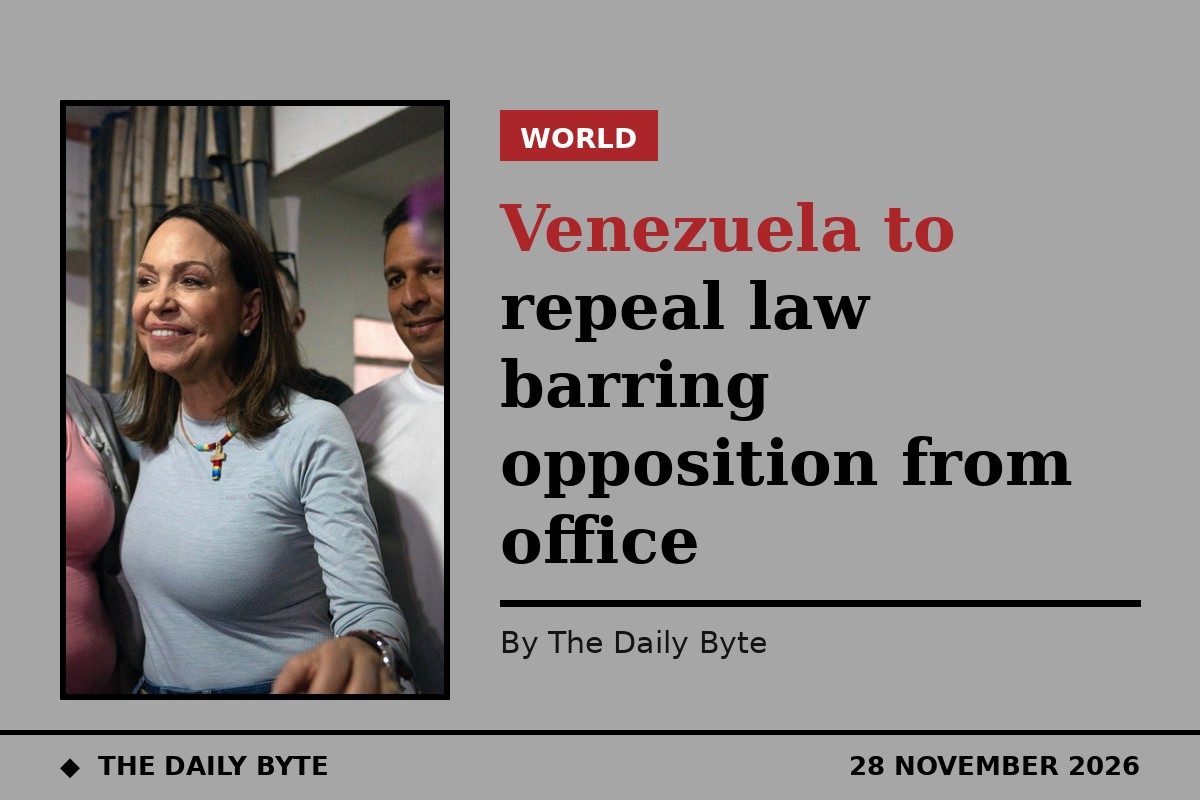
Venezuela's National Assembly will repeal a 2024 law that barred people who backed foreign sanctions from holding public office, the assembly's president, Jorge Rodríguez, has announced.
The Simón Bolívar Organic Law against the blockade was passed in late 2024, months after the July presidential election in which Nicolás Maduro was declared the winner despite widespread allegations of fraud. Under the law, anyone found to have requested or supported sanctions faced long prison terms, bans from political office and the confiscation of assets. Rights groups and opposition parties described it as a tool for persecuting critics.
“We are going to take the legislative initiative so that the so-called Simón Bolívar Organic Law against the blockade is repealed,” Rodríguez told reporters at the assembly on Thursday. He said the law “responded to a very specific moment” in Venezuela and that no politician had been subjected to its provisions. He said he would formally present the repeal on Tuesday, 1 December, and expected it to be approved next week.
The move is part of political transition talks between the interim government and sections of the opposition. Delcy Rodríguez, Jorge Rodríguez's sister, has led an interim government since January, when Maduro was seized by US forces. She promised at the United Nations in September that Venezuela would hold free and fair elections, without setting a date. Rodríguez said the dialogue had agreed to review several laws, including the one now set to be repealed.
The repeal would not on its own restore the political rights of María Corina Machado, the opposition leader who won the opposition primary in 2023 but was barred from running against Maduro the following year. Her ban rests on a separate provision, Article 105 of the law governing the Comptroller General's office. Dinorah Figuera, who heads the opposition delegation in the talks, told the EFE news agency this week that negotiators were seeking to amend that article so those affected could apply to have their rights restored, rather than drawing up a list of names.
Machado, the 2025 Nobel Peace Prize laureate, returned to Venezuela in October after months in exile and has been excluded from the transition talks. On Thursday she launched a programme of neighbourhood assemblies to gather proposals for a future government and a democratic transition. Her team said about 2,000 meetings were held in Venezuela and abroad on the first day, and the assemblies are expected to bring together more than a million people over several months.
In a social media post after the first meetings, Machado said neighbours were “breaking down barriers that many thought were impossible” and “designing the transition to democracy, the Venezuelan way”. Nineteen questions are put to each assembly, with responses fed into a digital platform. The topics range from dates for a presidential election to changes in the justice, education, health, wage and pension systems.
No election date has yet been set, and no timeline has been given for when the repeal will take effect. The announcement nonetheless removes one of the legal obstacles that has kept prominent opposition figures off the ballot, as Venezuela's political transition continues to unfold.


